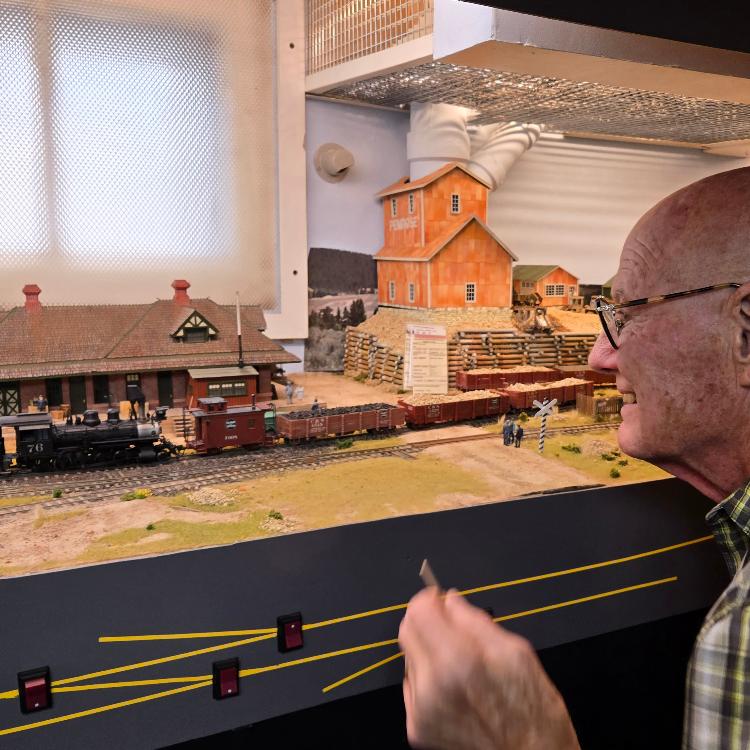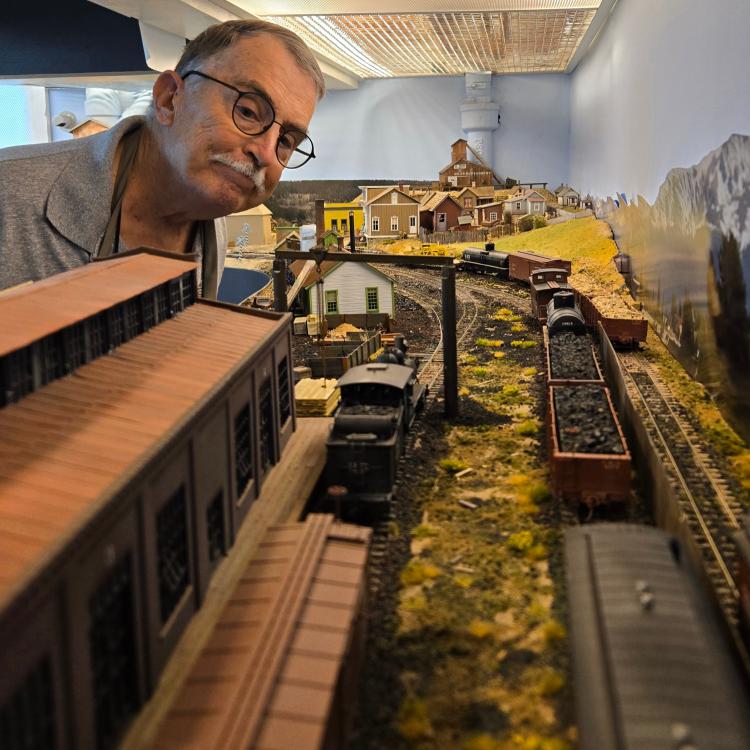
Let's talk about the elephant in the room. Or at least in Leadville. Electricity is tough for me. I tried to set thoughtful standards and check my work and to be honest, success has been intermittent. A few weeks back, after consulting some local friends I made the decision to upgrade my 20ish year old Digitrax system to a new duplex radio system. That, some careful track cleaning, current keepers and more regular operations has reduced the number of stalls. So now it is time to tempt fate and host an ops session.
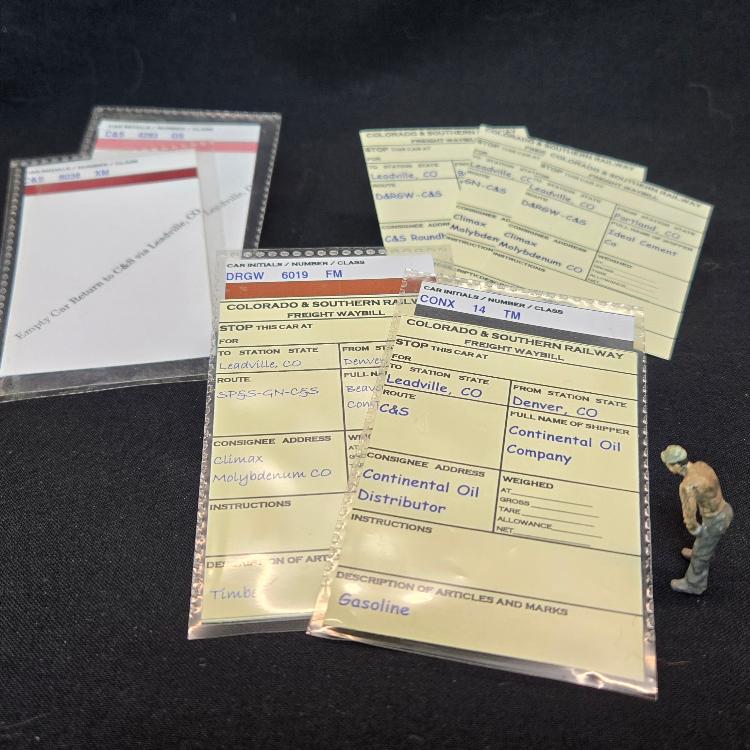
This is my first one in about a year. Previously I have used switch lists and the time has come to graduate to car cards and waybill. My Friend, Rich Gibson gave me this nice car card format.
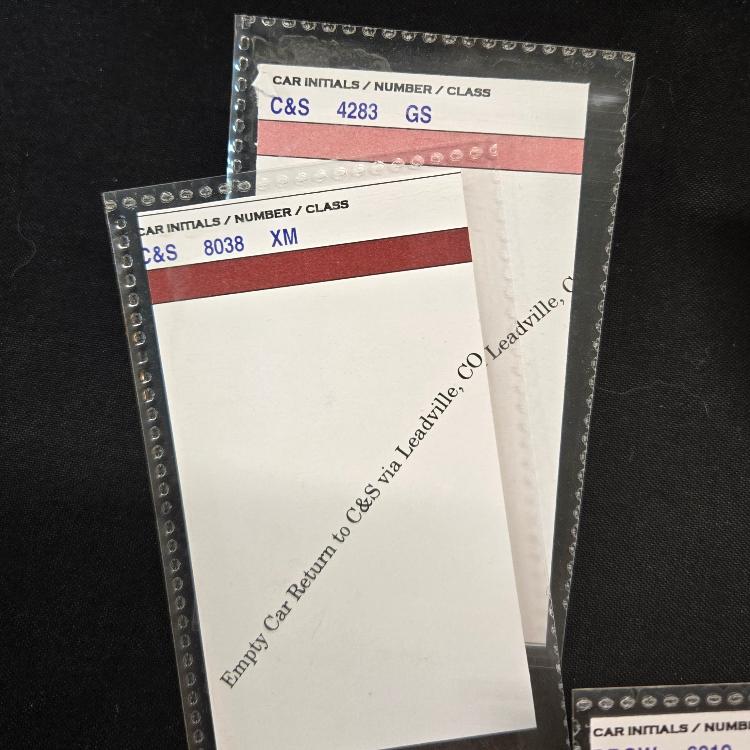
Someone suggested making car cards and waybill the size of business cards and using plastic sleeves as the organizers. I had some old sleeves at the office that were no longer needed and pressed these into duty.
Rich's form had a black stripe on it, and I thought to make this a color to at least give you an idea of what color car you are looking for. Rich has also been using empty car routing on his Maine Central layout, and I thought to add, "Return To..." language to the blank card. I am pondering adding some data made data at the bottom, if I refine this--manufacturer and build date, perhaps.
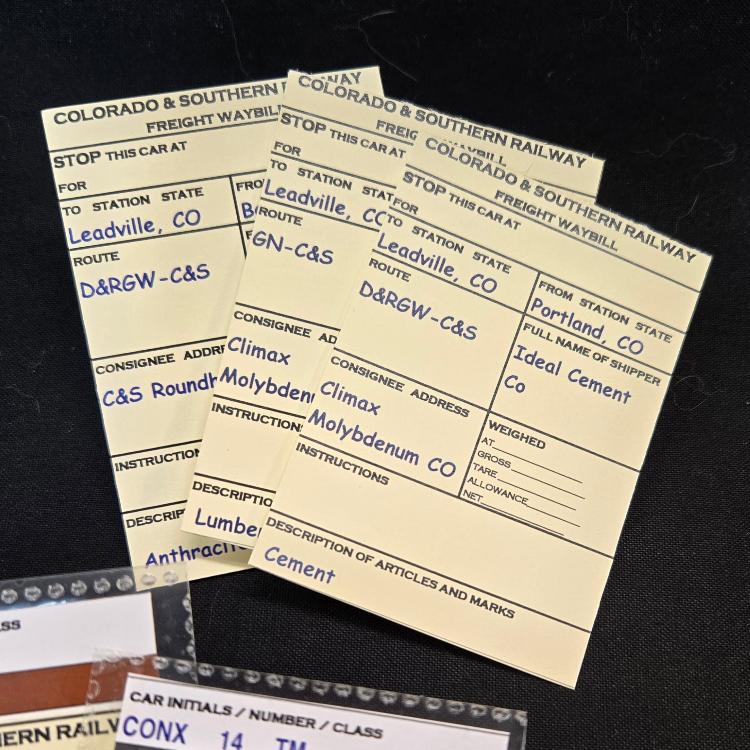
The waybill are also from a spreadsheet provided by Rich. I changed the name to protect the C&S from any legal action from the MCRR. It has all the typical information. I used industry data from the OPSIG website to generate some of the more distant originating industries and routing. This still needs a lot of work, but these are a start. I am also thinking I need to somehow indicate what sort of car is needed for the load. Low grade ore needs a coal, but high grade deserves a boxcar.
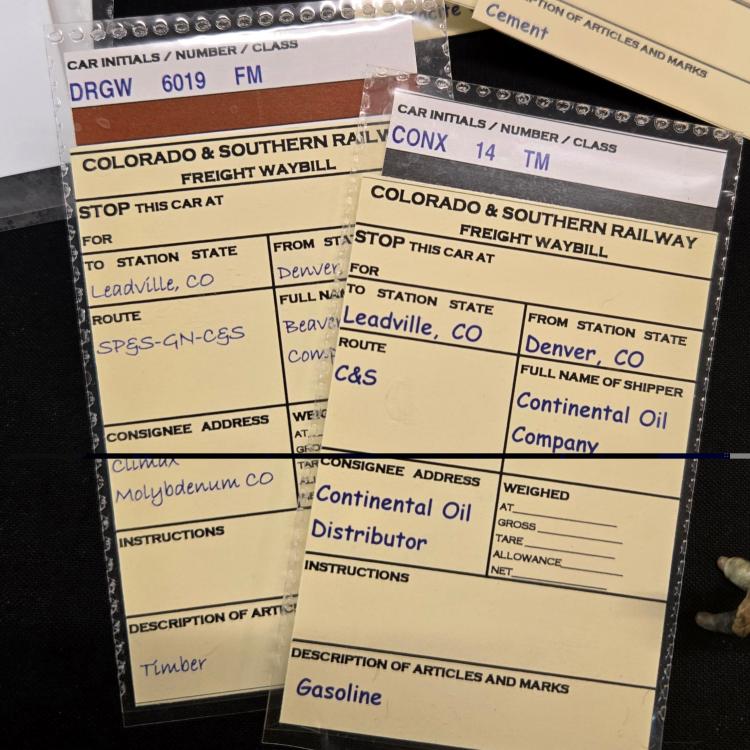
All together, this is what it looks like. I like the realism, and needed to make some format adjustments. For example, the waybill looks reasonable like the real thing, but I think the information you really need--where does this car go?--needs to stand out more.
Granted, on the highline, train lengths will be the cars or less, just the same. we want to make it easy so the train crew can enjoy running the train! (I hope these pics come in the right way--my phone camera seems to like to apply RAW data that Nabble uses to rotate the image back to the original)
Keith Hayes
Leadville in Sn3


 Locked