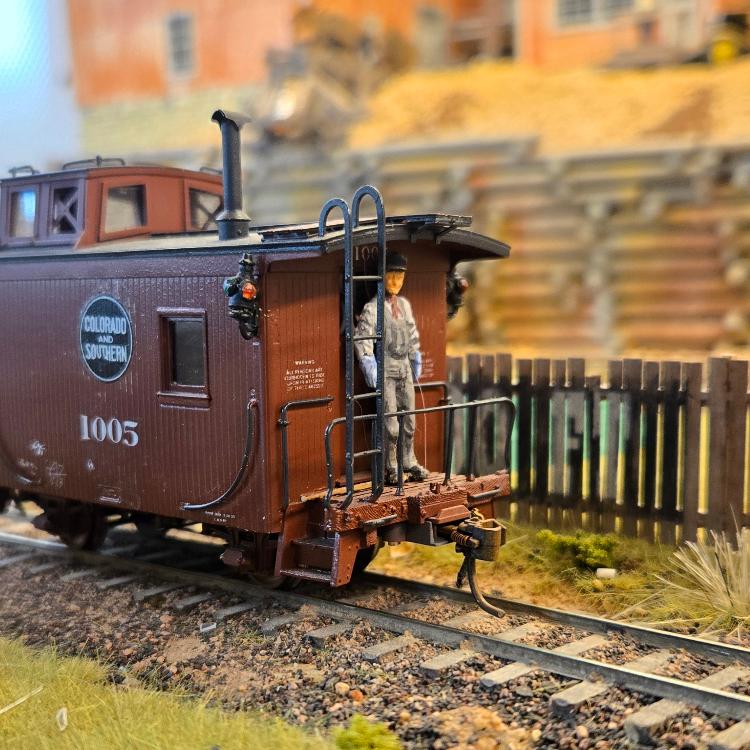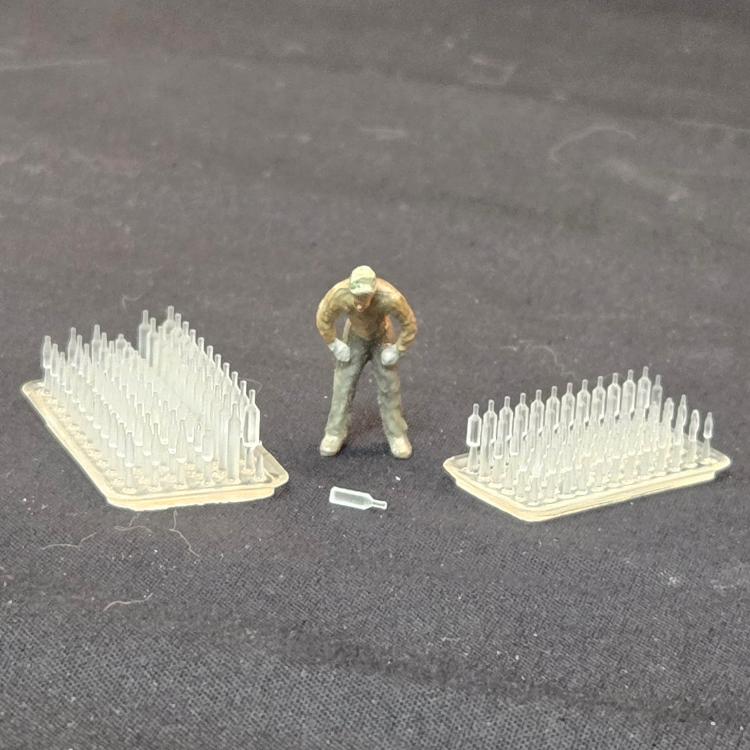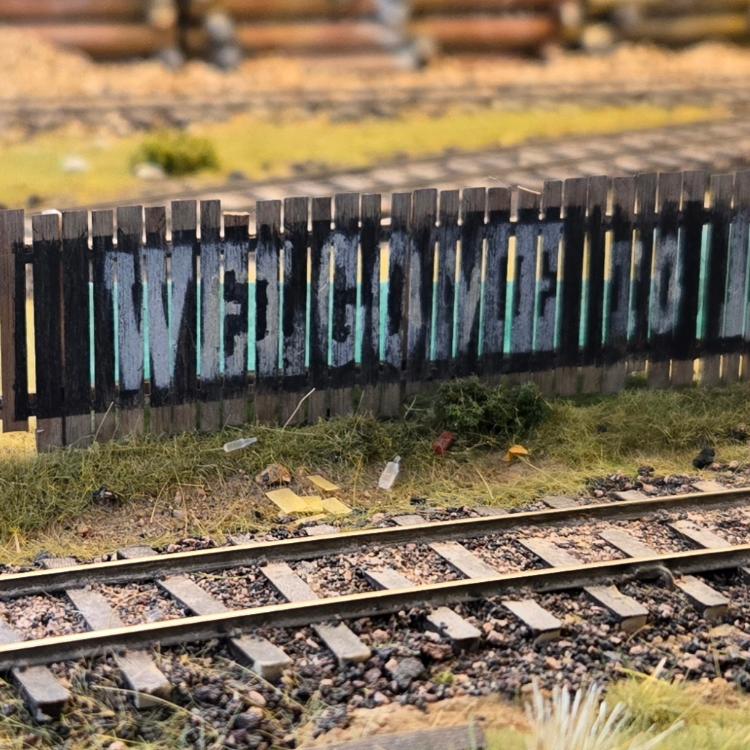
I have been printing using an Elegoo ABS- like product. I have been very happy with the detail and, this is a brittle material. For reasons I don't know, I turn into fumble fingers when I am handling these parts and drop them. The parts generally survived the fall to the carpet tiles on the floor, but then there is the matter if me rolling my chair across the dropped part. The result is not good: ask me how I know. And the resulting break doesn't want to glue up.
I continue to be amazed at how a very complex photo-chemical process has been brought to the hobby world.
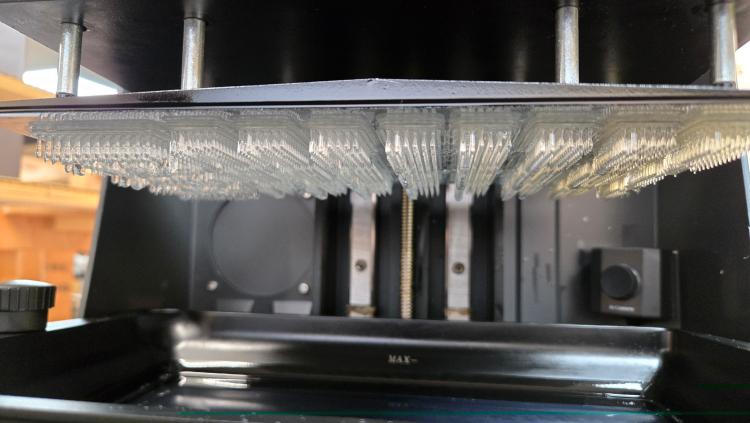
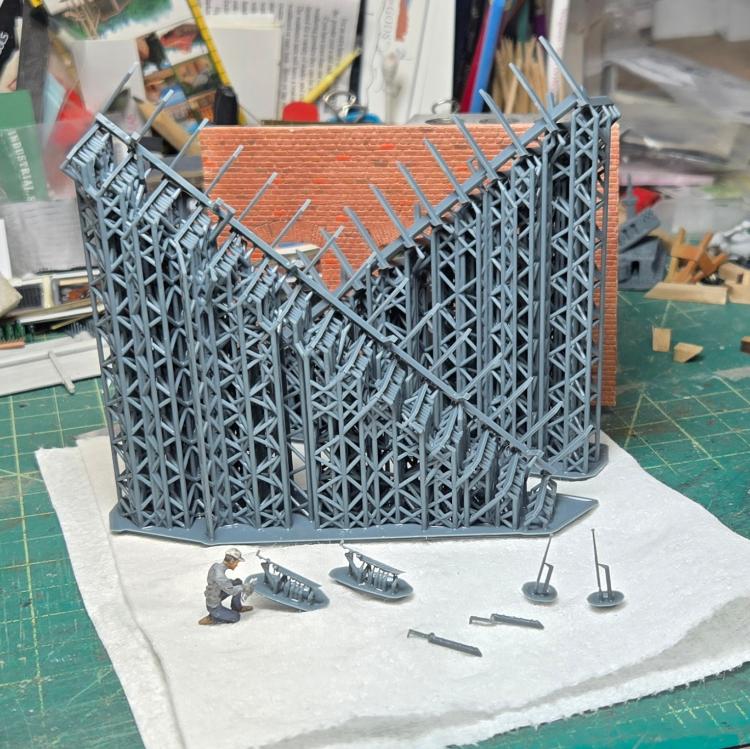
Many 3d hobbiests advocate rotating parts. This accomplishes two things: it reduces the suction force within the resin bath as the print is pulled away from the FEP film; it also allows successive layers to cantilever off the previous layer, with possibly fewer supports. Game printers also claim the resolution is better, though I have been very pleased with the resolution of my models.
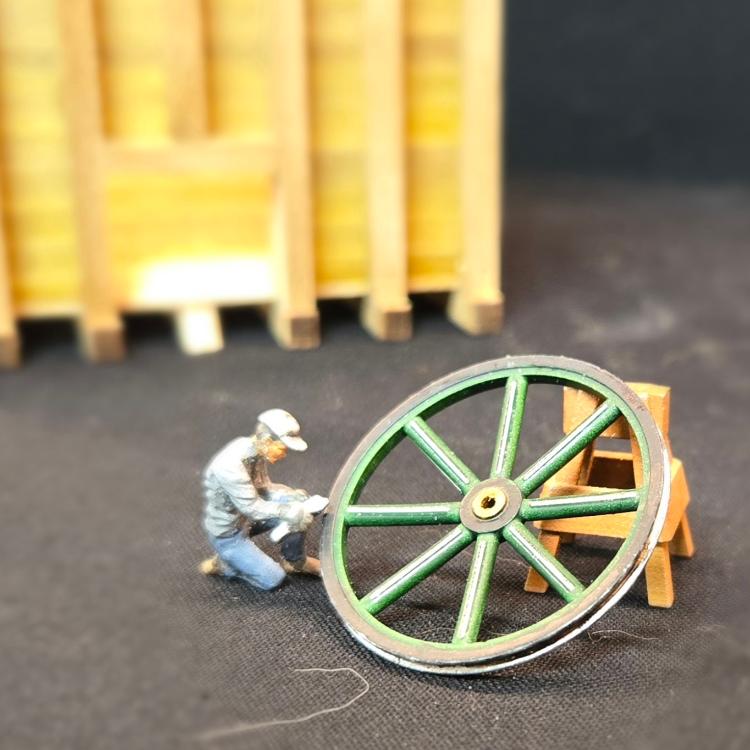
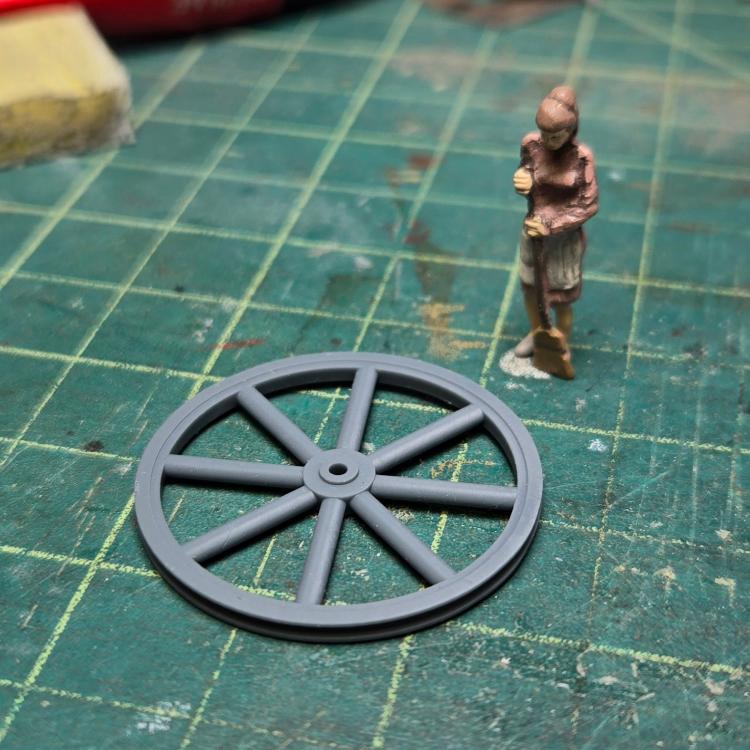
At the NNGC convention, I learned that resin parts are the most accurate in the X-Y plane, so dimensionally-critical parts should be printed flat to the bottom of the tub. My parts have been more dimensionally tolerant, so this has not been an issue for me. I can tell visually that the bull wheel is not perfectly round, it is pretty close.
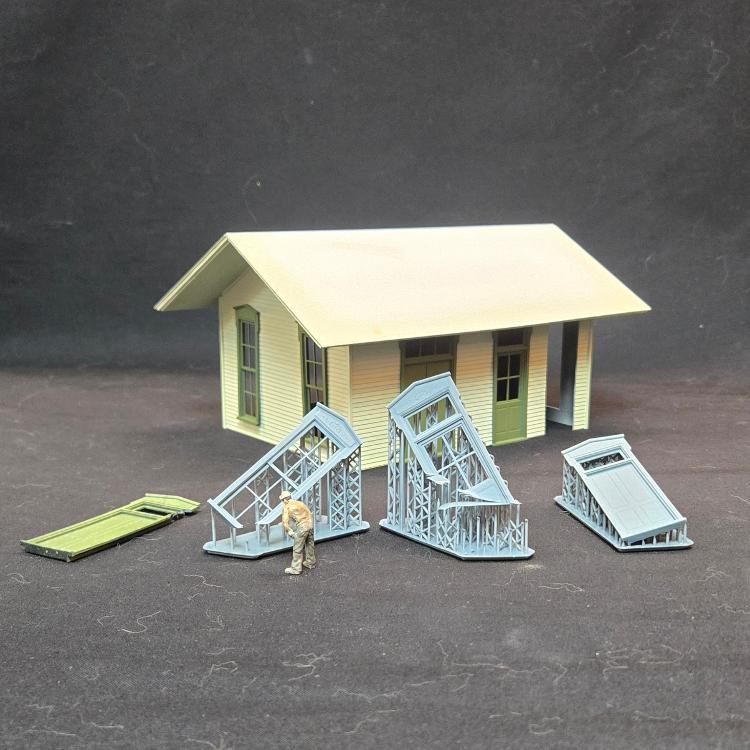
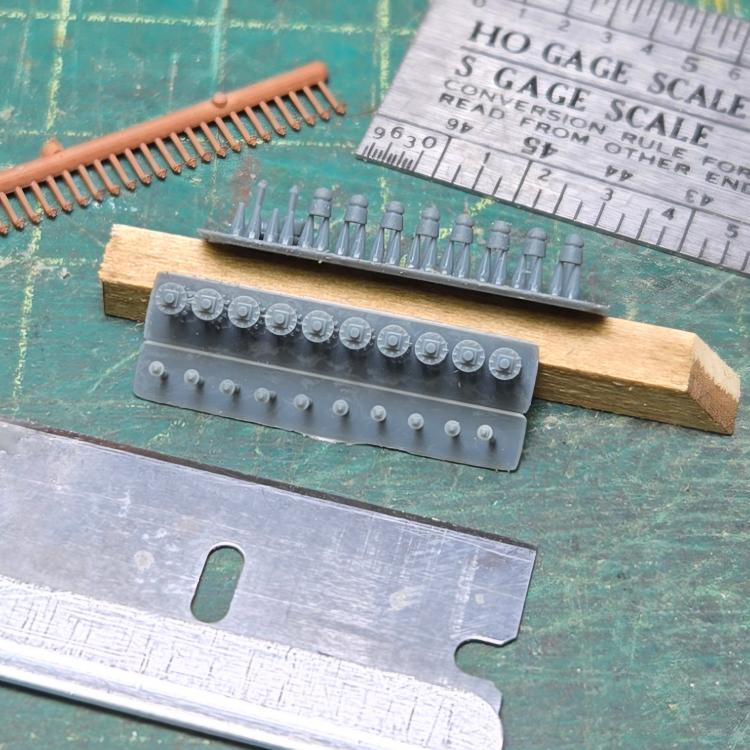
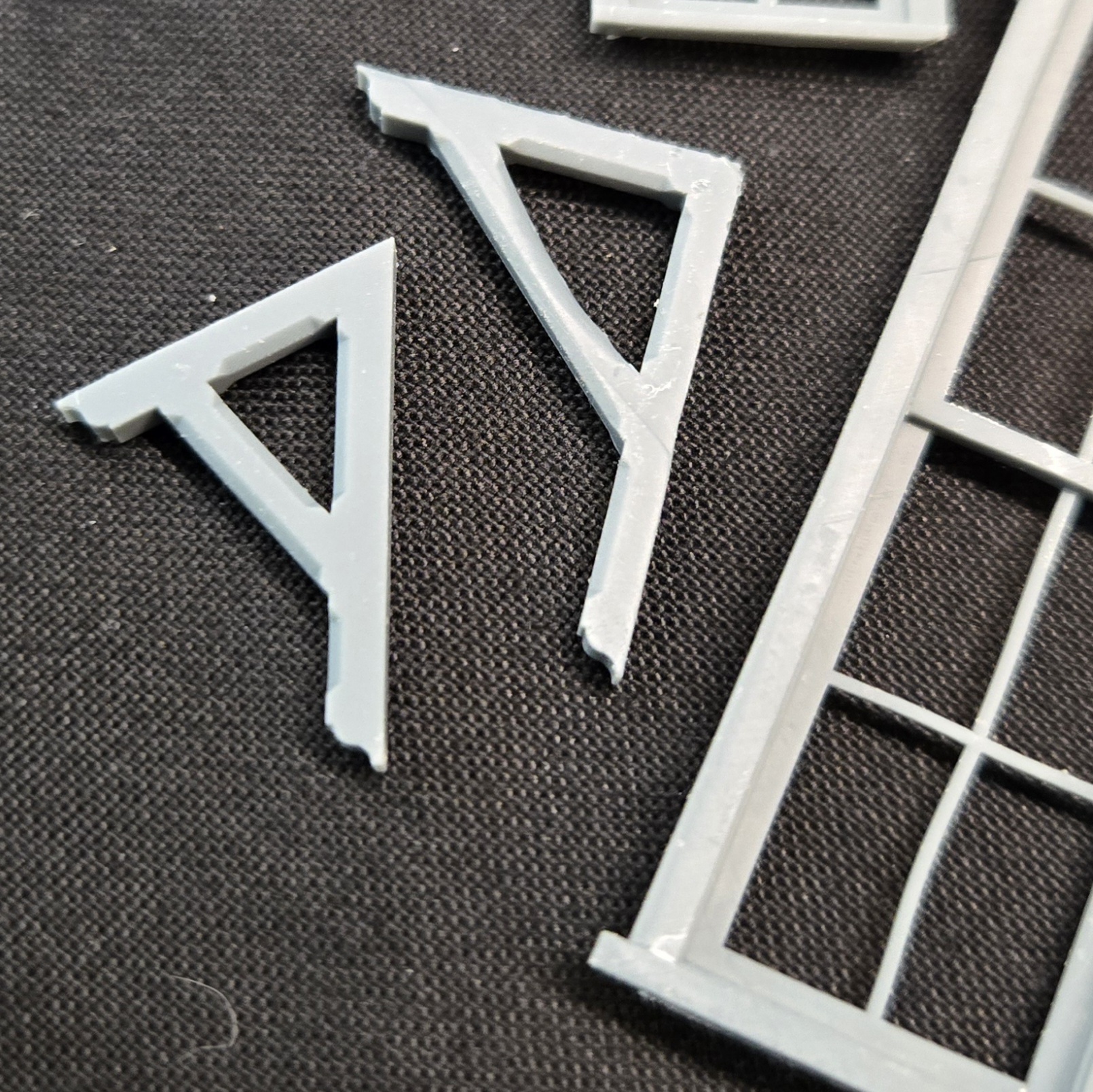
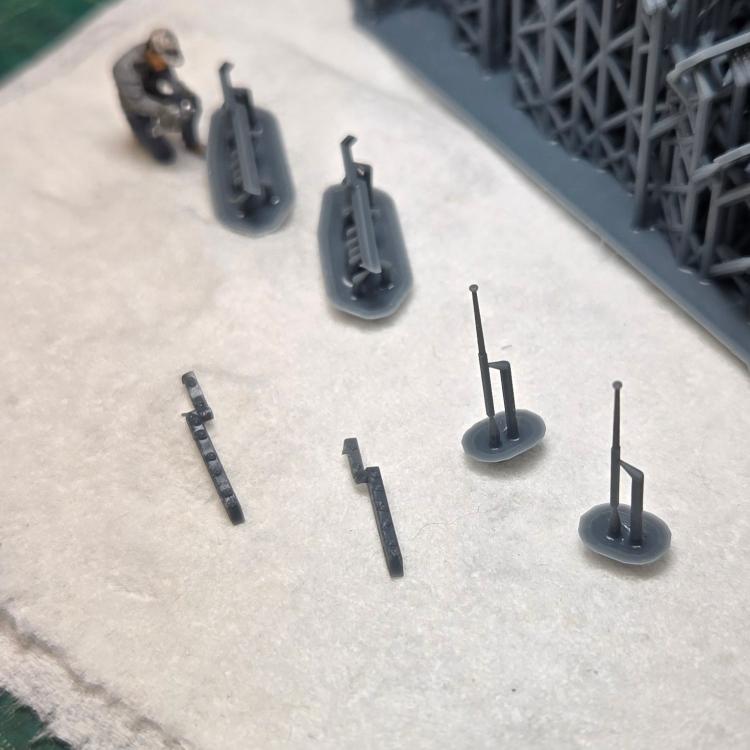
Speaking supports, the slicing software has an auto-support feature, but I have found it over-does. So I have been hand-placing supports. I don't have this down to a science, and have had failures where I did not provide enough supports. The middle prints above--I was rushing and felt the low end of the parts did not need as much support: wrong. The resin is exposed to the light, but without a support, floats in the resin like a flag in the wind, with the results being the prints shown. The higher parts had enough support and printer fine.
Print time is a factor of the Z dimension. The more severe rotations results in a taller part and a longer print. This time I only rotated the parts 15 degrees, which reduces the print time by half.
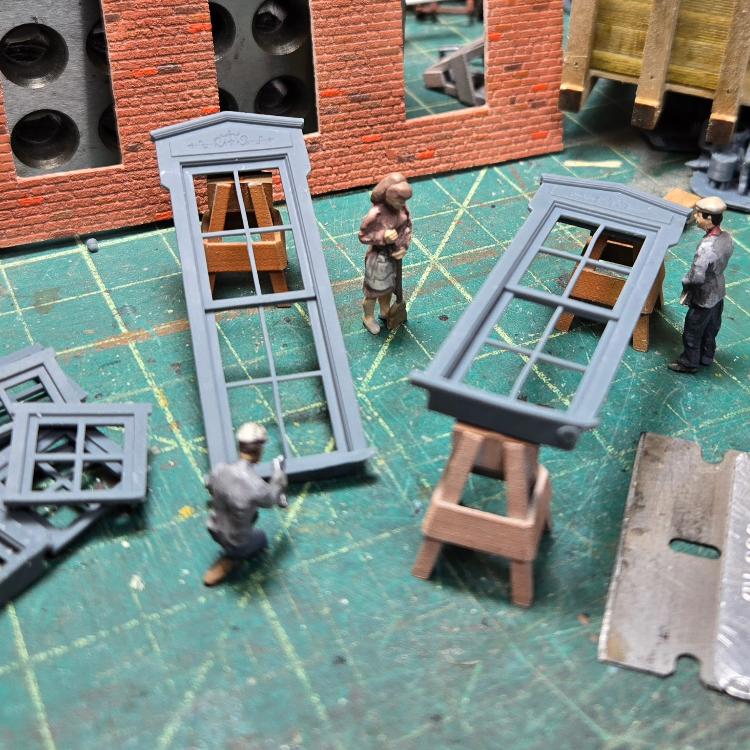
Once the part is printed, you are only halfway-there. Next comes removing the part and washing the excess resin off. Most folks seem to use a two-step process with a dirty wash, followed by a rinse in cleaner alcohol or detergent. On an earlier print, I thought a longer wash would be better, but I found that the detergent I have warped the mullions, so now I only wash the parts for a couple minutes and rinse them off in warm water.
I also am discovering that it is not necessary to cure the parts for very long, either. I have been taking the supports off after cleaning, as the resin is still soft, and then curing parts for only a minute or two. Earlier parts I would cure for five or more minutes, or set in the sun. I have found with clear parts, UV curing can cause yellowing, so I a sticking with a light touch.
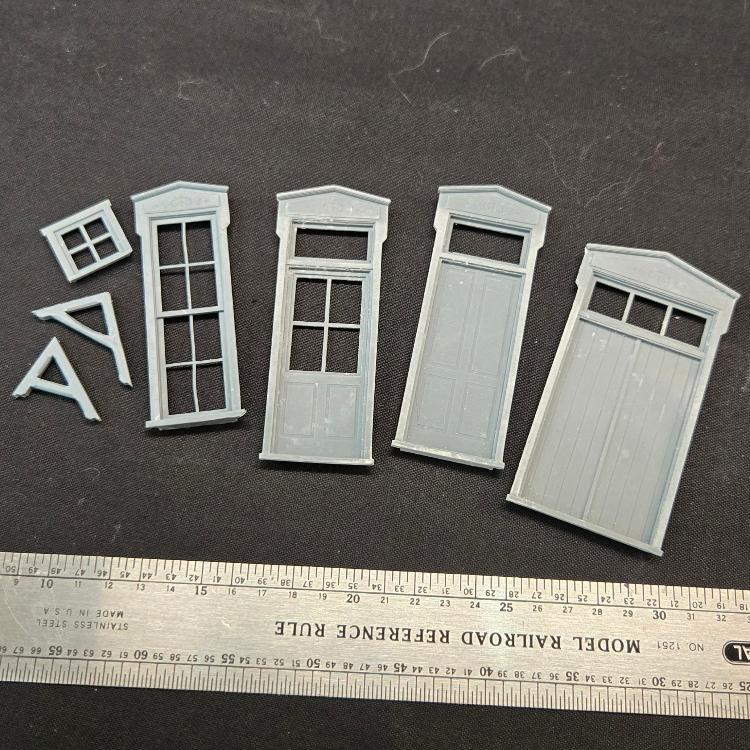
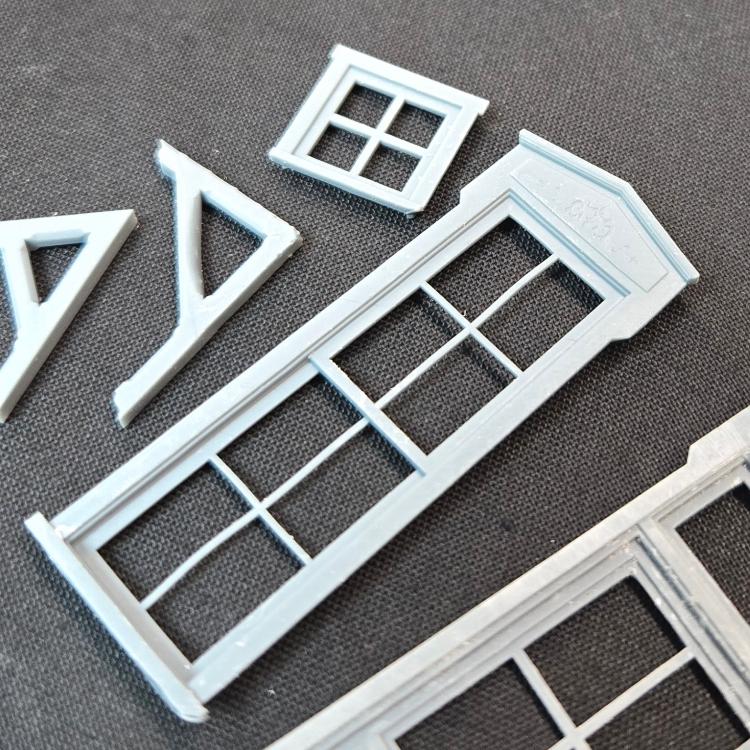
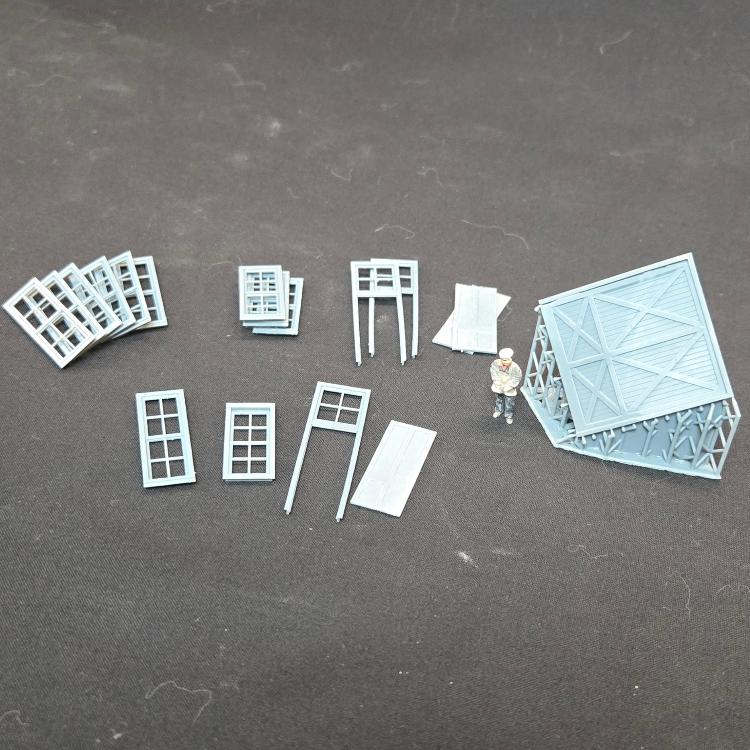
Now I have all the parts for one depot, and can continue the build.
Keith Hayes
Leadville in Sn3


 Locked




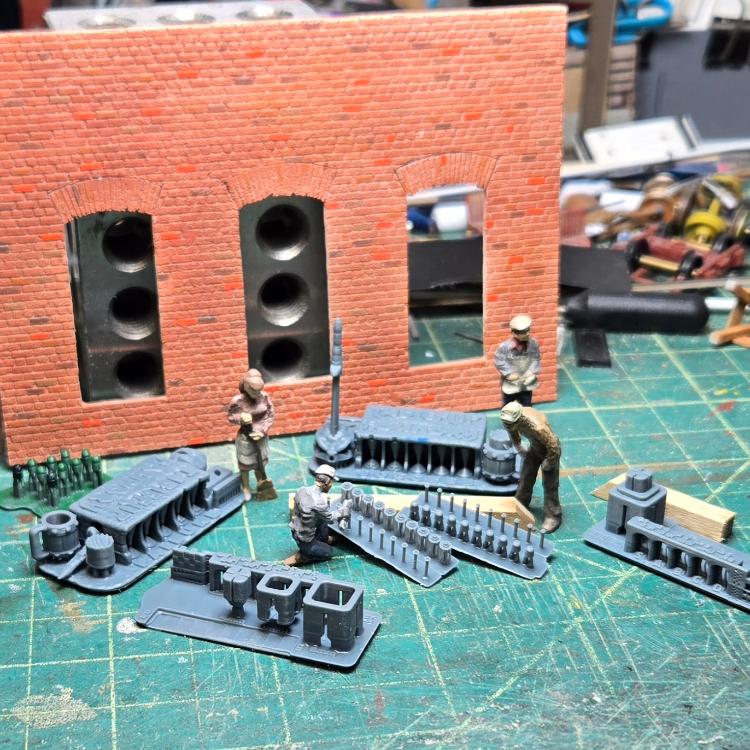





 )
)