C&S Snowshed Folio

Previous Topic Next Topic
 
classic Classic list List threaded Threaded
37 messages Options
12
Reply | Threaded
Open this post in threaded view
|

C&S Snowshed Folio

Keith Hayes
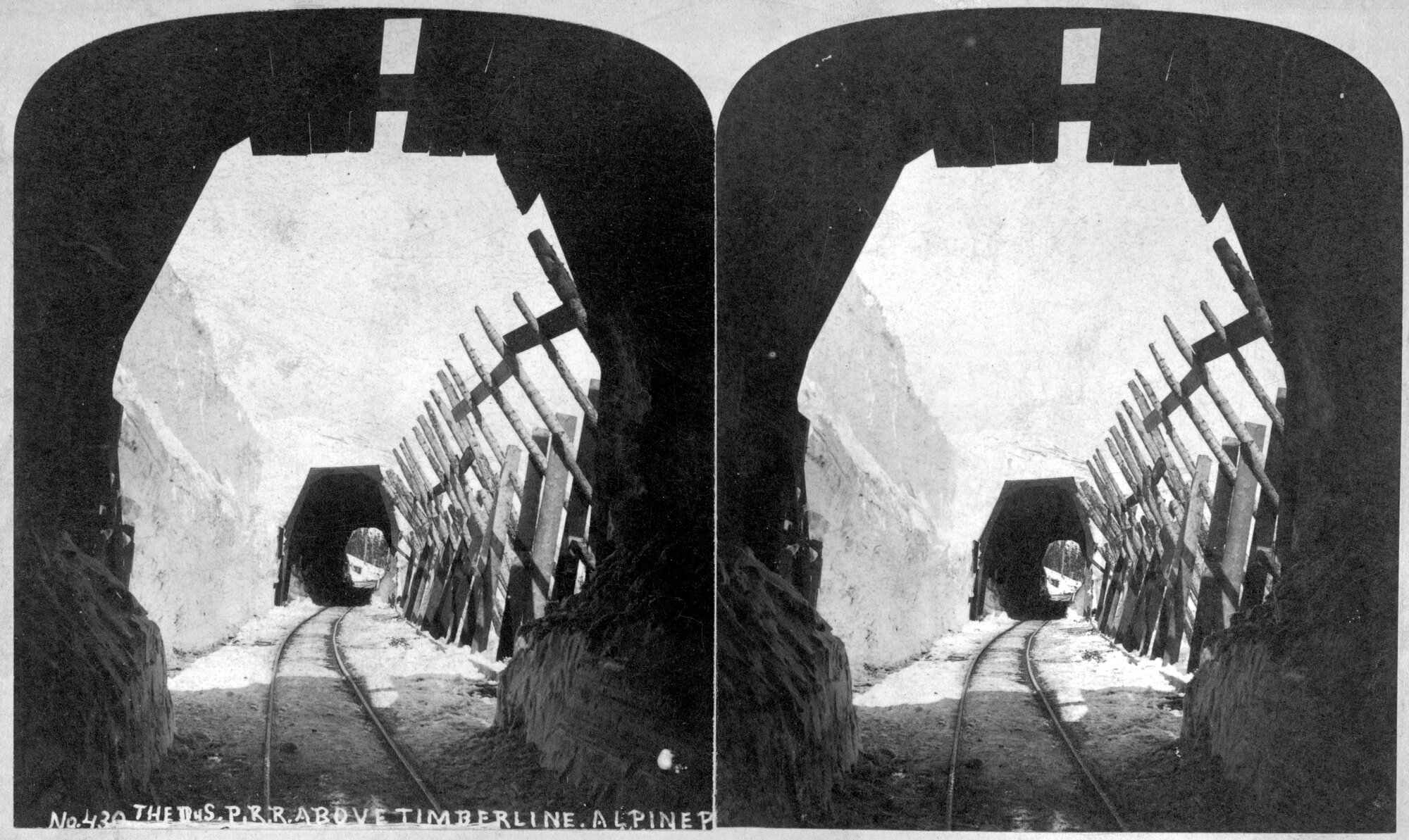
I am always thinking one or two projects ahead of myself. As the March to Fremont Pass continues, there are several problems to solve, one being how to disguise the point where the track disappears into the helix above Kokomo. Fortunately, the prototype provides a solution: a snowshed! I asked Jim Courtney if he had a folio for snowsheds and he does not. Jim did provide several excellent photos.
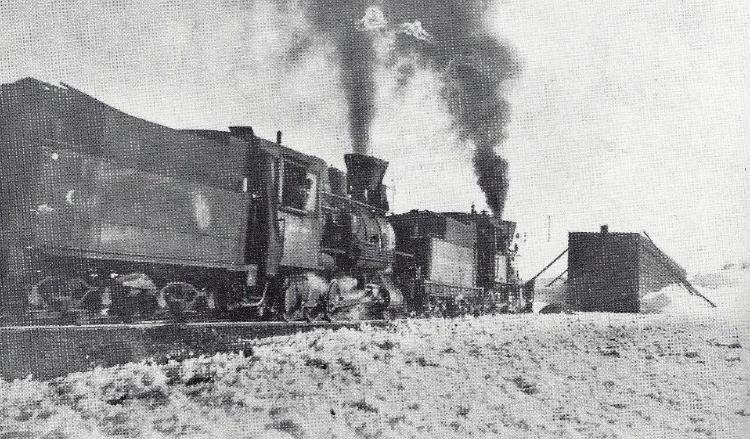
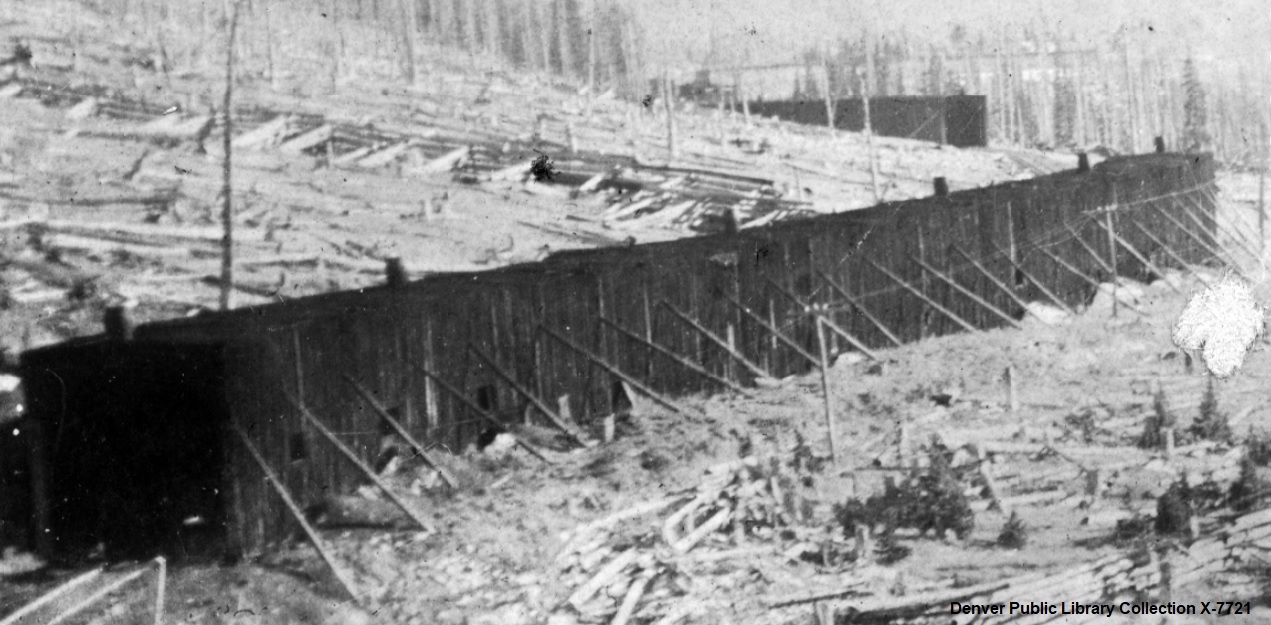
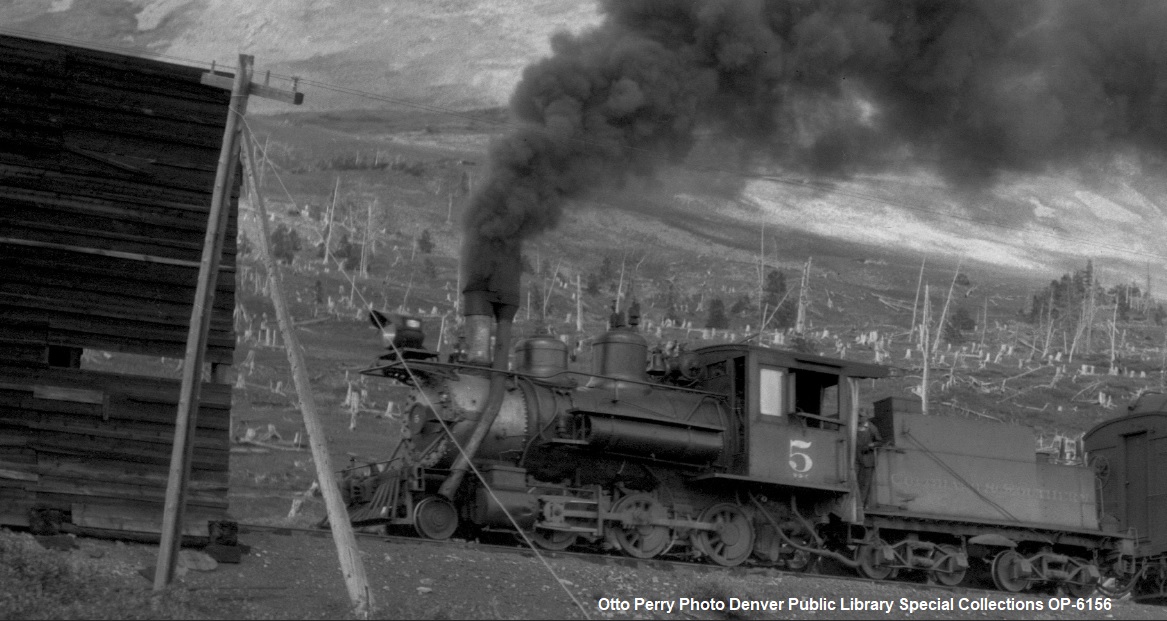
Here are two locomotives charging up the east side of the pass towards the shed.
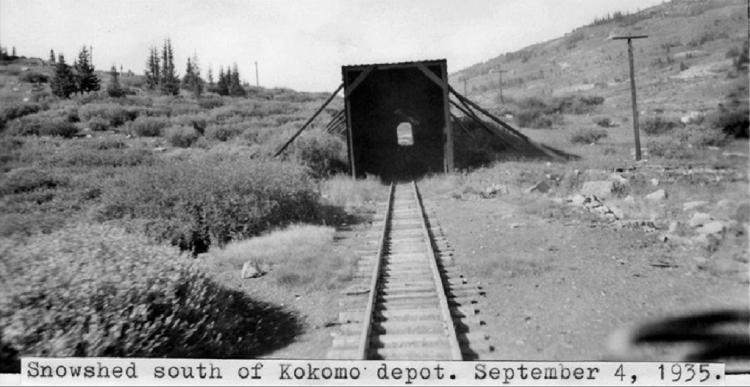
An excellent view of the end frame from the rear platform of the passenger train.
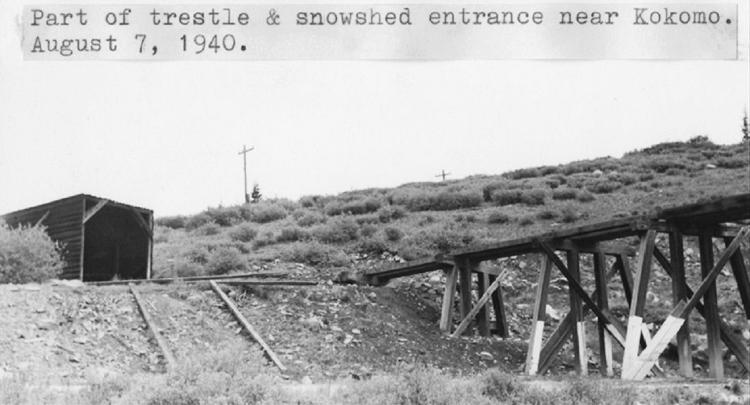
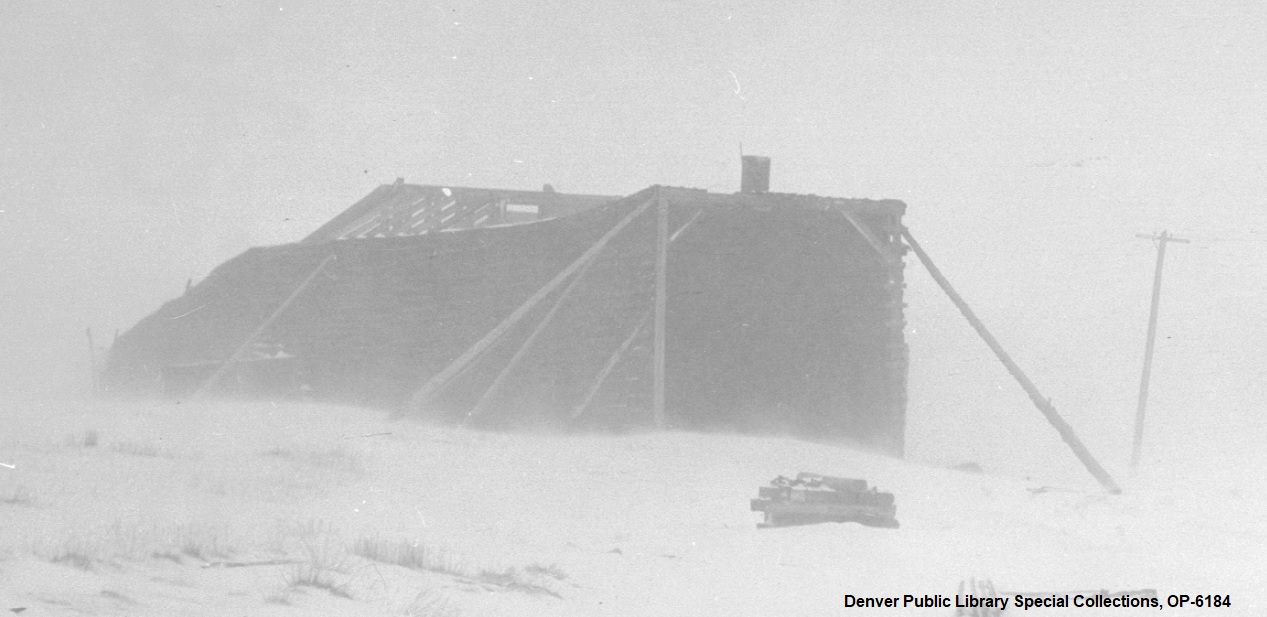
A most helpful image from below.

Jim and I opined on the sizes of members. My guess is that the frames are made of 12 x 12s, but Jim shared that the RGS snow shed at Lizard Head has 6 x 8 posts and 6 x 12 cross members. Cumbres Pass on the D&RGW is noted as having 8" to 10" diamater round posts with 8 x 12 cross members.

I did some measuring downstairs and figured my posts need to be 16'-0" apart clear, and the bottom of the joists need to be 20'-0" above grade, about 17'-6" above top of rail.
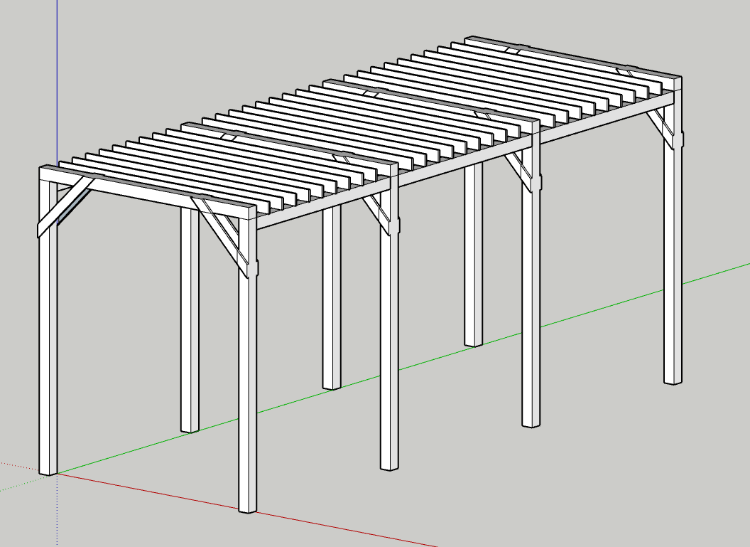
I figured 10 x 10 posts and cross members to form the frames. The corner braces are 2 x 8s. I spaced the frames about 15'-0" on center, though the image from below suggests frames might be as close as 6'-0" on center. I added some 10 x 10s between the frames at the top to support roof joists, which are 2 x 10s.
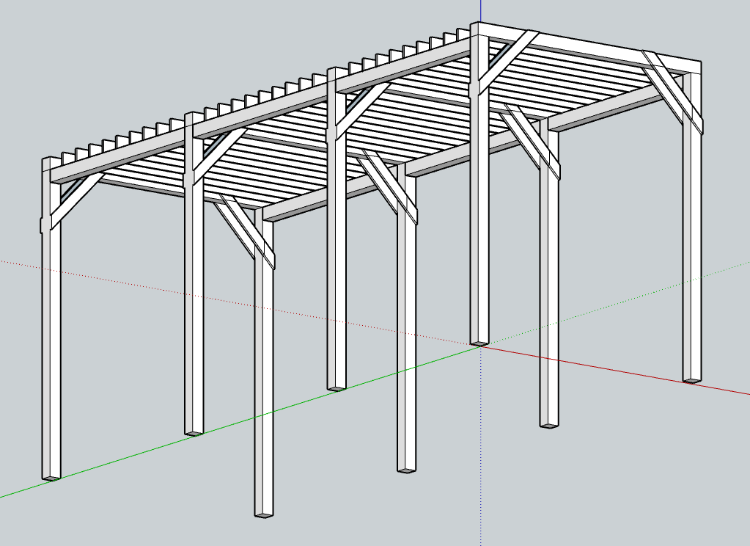
The photos indicate the top sheathing is parallel to the rails, likely 2 x 10s, with battens to cover the joints. The siding is also 2 x 10s, but note that there is only one shadow line, which let Jim to suggest the siding is ship lapped. Interesting.

Every couple bents have a diagonal pole to brace the shed laterally. As any modeler will tell you, these structures eat wood, and I appreciate that C&S was trying to cover the most with the least. Lacking the real thing, let's consider this a C&S folio for the Kokomo Snow Shed.

An amusing afterthought. During one of my first Friends of the C&TS work sessions, I was dispatched to Cumbres to document the section house there. All the section houses along the C&TS are built to a common plan, which is two rectangular rooms in plan in a 'T' shape. The three surviving structures differ based on the she additions added to the rear.  Anyway, my job was to figure out how the thing was built, and being young and perhaps a bit naive, I got a ladder and quckly found myself on the roof. Turns out the roof of the Cumbres section house is constructed of 2x4 roof joists, 24" on center with lath above and wood shakes over the lath. Pretty light stuff for someplace that regularly has 120" of snow! Granted, the joists were a full 2" x 4", but today at that location they would be at least 2 x 12s at 12" on center.

As soon as I realized the precariousness of my position, I gingerly moved back to the ladder and returned to terra firma.

Keith Hayes
Leadville in Sn3
Reply | Threaded
Open this post in threaded view
|

Re: C&S Snowshed Folio

Chris Walker
Boreas

DPL-X-7721

DPL_OP-6184

DPL_OP-6156

DPL_OP-6396


Alpine
DPL_Z-2546


but wait..... there's more.....
UpSideDownC
in New Zealand
Reply | Threaded
Open this post in threaded view
|

Re: C&S Snowshed Folio

Keith Hayes
Thanks Chris!

I should point out that the Alpine and Hook Eye sheds differ in that they have a narrower (and much more complex) profile. Boreas seems to be closer to Kokomo. No doubt variations due to era and common practice at the time.

Now I can't wait for more!

(PS, I already put in a giant lumber order to Mt. Albert)
Keith Hayes
Leadville in Sn3
Reply | Threaded
Open this post in threaded view
|

Re: C&S Snowshed Folio

Pat Student
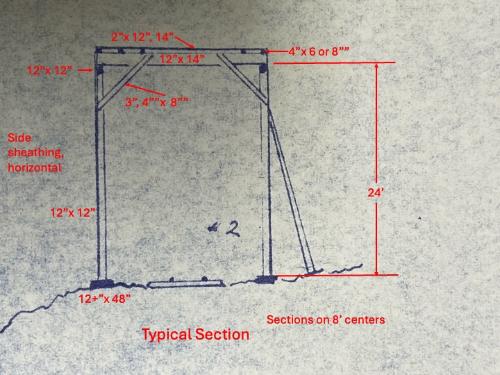
For reference, I looked at my drawings for the Marshall Pass snow shed. Following is a single track section marked with material sizes.

Reply | Threaded
Open this post in threaded view
|

Re: C&S Snowshed Folio

Chris Walker
but wait..... there's more.....

Dimensions of Colorado & Southern Snowsheds    previously posted by Rick Steele.
http://c-sng-discussion-forum.254.s1.nabble.com/Two-Railroad-Rosters-tp14478p14580.html
UpSideDownC
in New Zealand
Reply | Threaded
Open this post in threaded view
|

Re: C&S Snowshed Folio

Keith Hayes
In reply to this post by Pat Student
Using the data Rick posted it seems that the sheds which lasted into the 20th century were 18'-0" clear above the rails and 15'-8" clear from side to side.

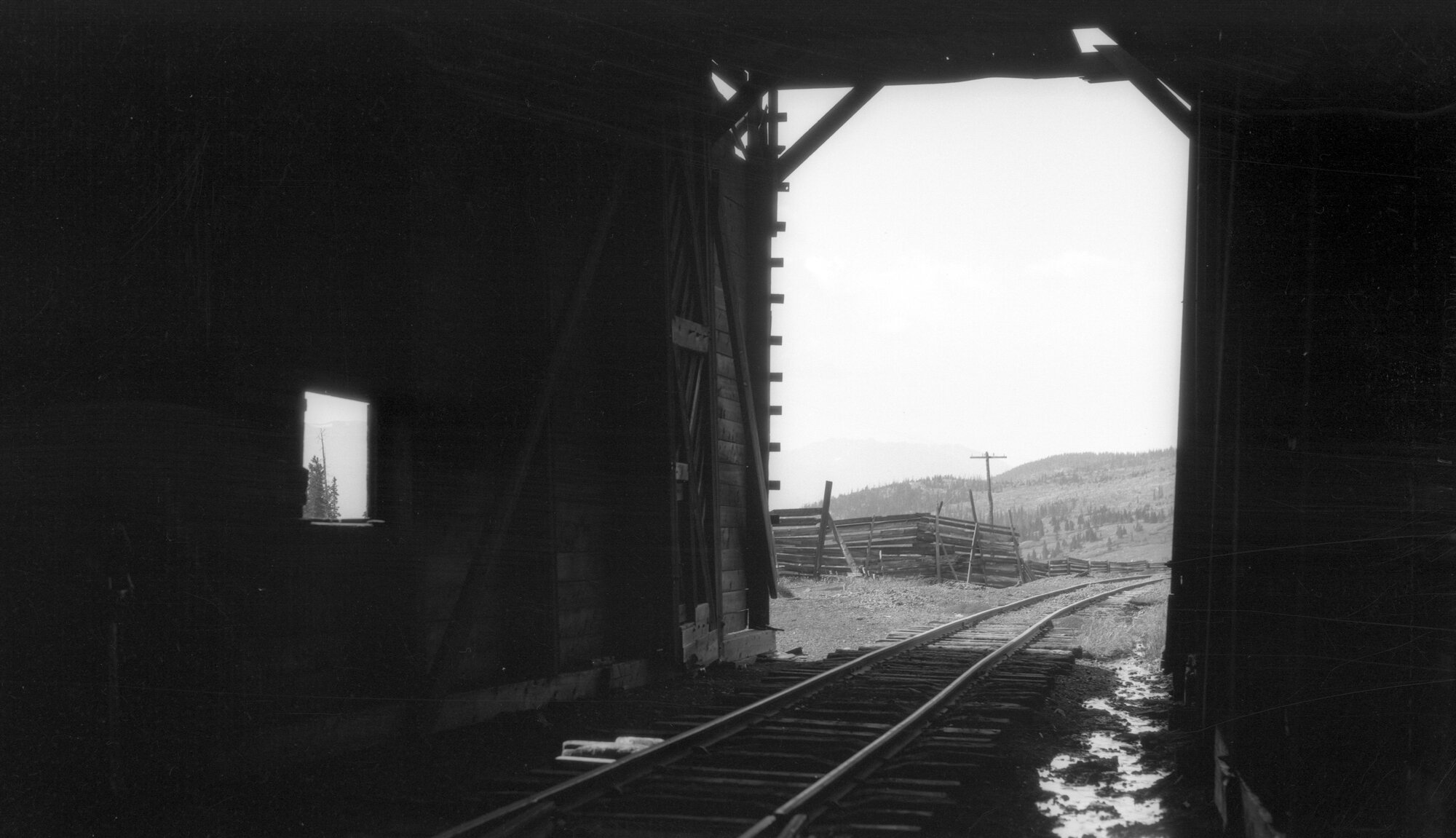
The photo Otto took looking out of the Boreas shed is also most helpful. I see some mudsills on the ground atop which rest the verticals. I happen to have some nice Vitero stain with a reddish hint, and it seems good practice that the sills would have been made of redwood.

Otto's photo also shows the frames more closely spaced--maybe five or six feet apart with some diagonal bracing. I also spy a door set about four feet in--good at Boreas for keeping snow out between trains. The section crew stationed atop the pass could easily open and close the doors before and after train time. As no similar section house was at Kokomo, my shed will have no doors.

I spy some short bits of wood on the far post: could that be a ladder to gain roof access?
Keith Hayes
Leadville in Sn3
Reply | Threaded
Open this post in threaded view
|

Re: C&S Snowshed Folio

Dave Eggleston
In reply to this post by Keith Hayes
A thought: Was there truly a single shed standard? I wonder how much the sheds in the last years were composites of original 1880s and modern thinking. Even when built during a single timeframe there is suggestion of differences: The Sept 4th 1895 Chaffee County Republican reported on new sheds being built for the reopening Alpine Tunnel: "[...] On the western slope the number of sheds will not be as great as on the eastern side  but their construction will be much heavier [my emphasis] on account of the precipitous sides of the mountains around which the road winds [...]."

These are expensive structures to build and maintain. Which then has me thinking about lumber sourcing for the sheds. I want to believe, for my period of interest, the UP reused recoverable timbers from collapsed sheds but I can't prove this. The idea popped in my head thanks to this Nov 26 1885 Fairplay Flume tidbit: "The report that the Union Pacific will make but little effort to keep open the Alpine pass route this winter is generally credited, as much of the snow fence from the line has been taken away and placed on the High Line, between Como and Leadville." Did some of those snow fences seen around Alpine Tunnel and St Elmo end up on Fremont Pass?

As early as Feb 1883 the Fairplay Flume talked about sheds around Alpine Tunnel being swept away by avalanches. A month earlier the Gunnison Review Press reported about a mile of new sheds was under construction--how much of these were lost the next month? In January 1884 the Delta Chief reported 1500' of sheds on that line had been swept away. In June 1885 the Fairplay Flume reported that most of the original sheds between Hancock and Woodstock had fallen in. The UP rebuilt them, sometimes it seems extending the length and sometimes reducing it, at least into the mid-1880s, at significant expense.

With the lengthy Tunnel closures starting in 1884, the UP must have rethought the snowsheds around Alpine Tunnel. Was it worth repairing those on a line closed during the worst of the snow season? Maybe experience after a few years suggested fewer sheds around Alpine Tunnel, only in the most strategic locations, something that seems supported by photos. If so, did the UP move available snowshed timbers from around the Tunnel to be used on High Line sheds? Were the accessible sheds torn down for the lumber for other use between during the 1891-1895 Tunnel closure?

Maybe too much of a rabbit hole. But it makes me wonder if even there was a company snowshed standard, on close examination it might reveal a cobbled hash-up of construction.
 
Dave Eggleston
Seattle, WA
Reply | Threaded
Open this post in threaded view
|

Re: C&S Snowshed Folio

Dave Eggleston
In reply to this post by Chris Walker
Chris Walker wrote
but wait..... there's more.....

Dimensions of Colorado & Southern Snowsheds    previously posted by Rick Steele.
http://c-sng-discussion-forum.254.s1.nabble.com/Two-Railroad-Rosters-tp14478p14580.html
I'm not sure if it matters, but those measurements being from the 1886 B&B book are UP/South Park dimensions with DL&G-period annotations. Standing sheds may have still been of the dimensions shown, but I suspect there would be newer sections that may have been to updated thinking. Or not. Just keep feeling like these sheds had plenty of variety after 30-50 years.
Dave Eggleston
Seattle, WA
Reply | Threaded
Open this post in threaded view
|

Re: C&S Snowshed Folio

Keith Hayes
In reply to this post by Dave Eggleston
Dave, my posts have provided me with a litany of data on different sheds for different railroads.

Yes, they are all different. I threw a dart. I picked my picture. I am building the model. The earth will continue to rotate and life will move on.
Keith Hayes
Leadville in Sn3
Reply | Threaded
Open this post in threaded view
|

Re: C&S Snowshed Folio

Dave Eggleston
This post was updated on .
Keith, absolutely. And I'm neither questioning your choice nor saying that you shouldn't pursue your design! Your post triggered recollections of historical accounts that I've run across and led to thoughts about South Park construction and later UP/DL&G/C&S adaptions dealing with both locale and finances. The images in the thread include multiple prototype designs, so it seemed relevant to share a few thoughts here. Perhaps I  chose the wrong thread for this, please understand it was neither a critique nor an attempt to derail.
Dave Eggleston
Seattle, WA
Reply | Threaded
Open this post in threaded view
|

Re: C&S Snowshed Folio

Keith Hayes
No worries, Dave. We all have different modelling aims.
Keith Hayes
Leadville in Sn3
Reply | Threaded
Open this post in threaded view
|

Re: C&S Snowshed Folio

Chris Walker
In reply to this post by Dave Eggleston
Dave Eggleston wrote
I'm not sure if it matters, but those measurements being from the 1886 B&B book are UP/South Park dimensions with DL&G-period annotations. Standing sheds may have still been of the dimensions shown, but I suspect there would be newer sections that may have been to updated thinking. Or not. Just keep feeling like these sheds had plenty of variety after 30-50 years.
Dave,

I am glad you brought this up; I had considered this before I posted since I was required to possess road knowledge of clearances when sitting on either side of the cab, and examined yearly on those, and that came to mind when perusing said B&B .

It would be a safe bet that the 18ft in the clear, remained until abandonment.  15'6" for the beartrap on #74,(Ken Pruitt drawing).

So apart from rebuilding or repairing, why would the C&S enlarge beyond the standard, as that would exponentially increase both the cost and amount of required material for zero gain.

UpSideDownC
in New Zealand
Reply | Threaded
Open this post in threaded view
|

Re: C&S Snowshed Folio

Dave Eggleston
This post was updated on .
Chris Walker wrote
Dave Eggleston wrote
I'm not sure if it matters, but those measurements being from the 1886 B&B book are UP/South Park dimensions with DL&G-period annotations. Standing sheds may have still been of the dimensions shown, but I suspect there would be newer sections that may have been to updated thinking. Or not. Just keep feeling like these sheds had plenty of variety after 30-50 years.
So apart from rebuilding or repairing, why would the C&S enlarge beyond the standard, as that would exponentially increase both the cost and amount of required material for zero gain.
Agreed on this Chris. Because I tend to focus on the earlier days I see a couple of decisions that may not apply in C&S days. One is structural dimensions based on equipment size as it was prior to 1885. The other is different designs seen in those early days. Not saying the sheds were smaller nor that they were enlarged nor that they were bigger. Not saying anything definite. Just wondering aloud about possible evolution.  

Does it matter to us as modelers? For me, I'm more interested in plausibility based on what we can find in documents and photos. We don't have all the details so we have to run with what we have. This group, more than any other I watch, is the most focused on the idicyncracies of plausibility, the interest in smaller details.

As an historian I'm always intrigued by the nuances inside the bigger story. I find them opportunities to add variety and plausibility. Not necessary in a smaller structure such as Keith's, but in a large version it may add to the storytelling.
Dave Eggleston
Seattle, WA
Reply | Threaded
Open this post in threaded view
|

Re: C&S Snowshed Folio

Keith Hayes
This post was updated on .
In reply to this post by Keith Hayes
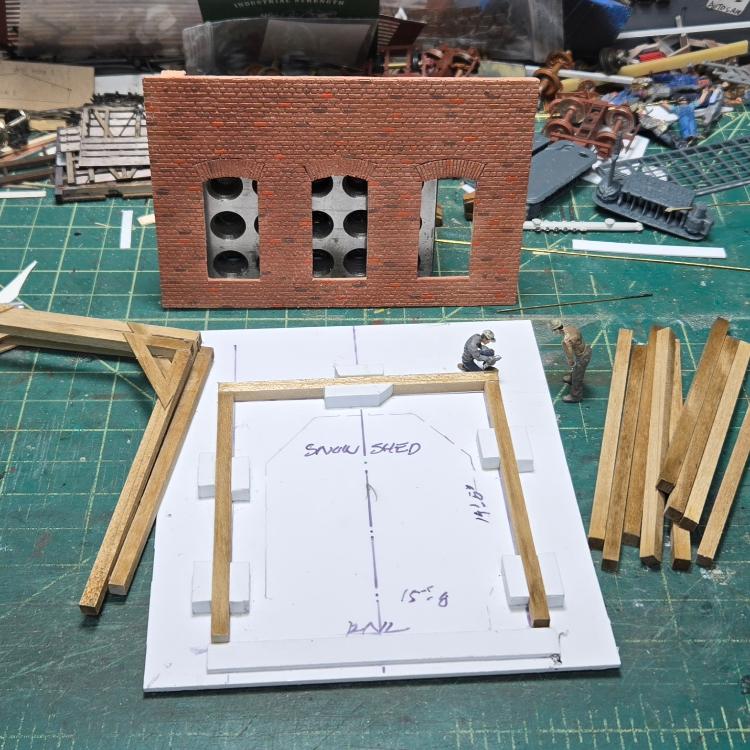
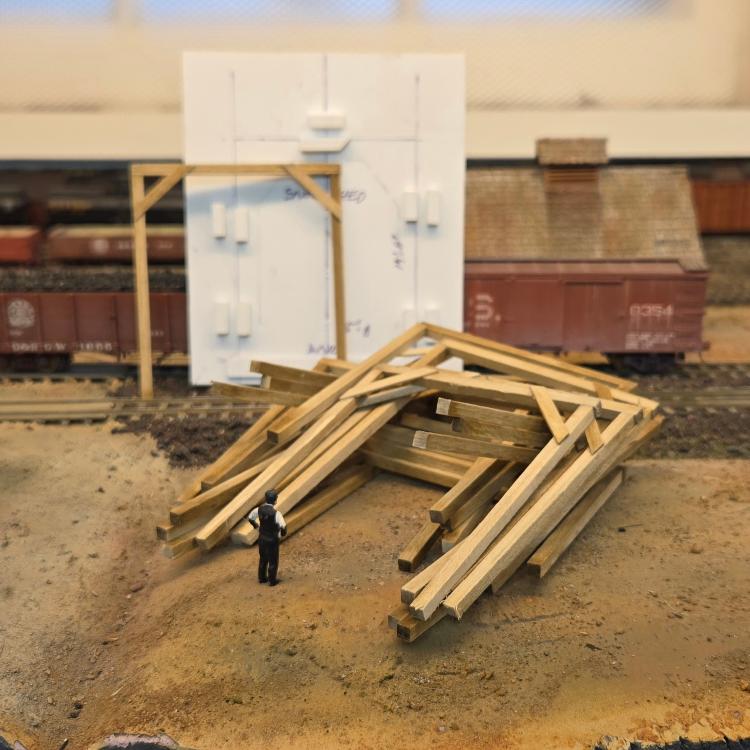
Construction has commenced.

Keith Hayes
Leadville in Sn3
Reply | Threaded
Open this post in threaded view
|

Re: C&S Snowshed Folio

Chris Walker
Hey Keith,

what have you got planned for fire protection?
UpSideDownC
in New Zealand
Reply | Threaded
Open this post in threaded view
|

Re: C&S Snowshed Folio

Keith Hayes
Chris, looks like I need to set aside a couple barrels on the roof.

That is what I am seeing. Perhaps that explains the impromptu ladder on the right side of the entrance frame at Boreas.

I don't know if the barrel would be filled with water or sand. On the high line, temps get below freezing most of the year. Heck, even with sand, if you got some rainwater or snowmelt in it, you could have a rock on your hands.
Keith Hayes
Leadville in Sn3
Reply | Threaded
Open this post in threaded view
|

Re: C&S Snowshed Folio

Keith Hayes
This post was updated on .
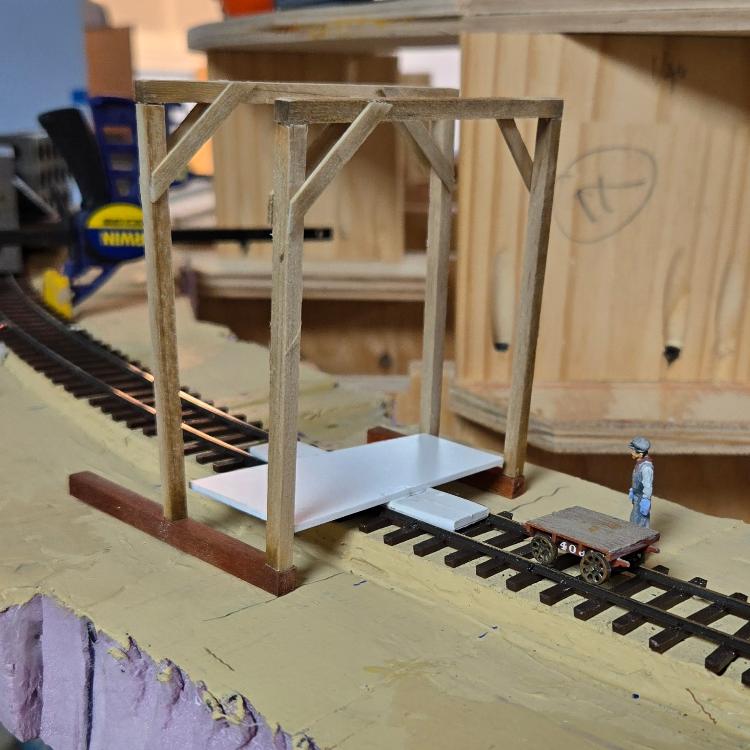
I ordered a trainload of lumber from Mt. Albert and made a jig.
Given that there are excellent dimensions and photos of the Boreas sheds, and they seem to look similar to the Kokomo shed, I elected to use the Boreas shed dimensions.

After a weekend of cutting and staining and over a week of making 1-2 bents per day, I have a stack of bents: enough for about 24 actual inches of snow shed!

Otto's artful image looking out the shed at Boreas shows a large mud sill. I used 10x10s for the frames, and 12x12s for the mud sills. I had some left over from another project, so stained them up. I glued up the entrance frame. Then I laid the track to a 36" radius and created a styrene jig to layout all the following bents.

Now I know how far apart the bents are, so I can cut and stain the joists, siding and roof deck. So lots of cutting and staining next weekend.

The plan is also to cut in some ditches on either side,  paint and ballast the roadbed, and make some puddles.
Keith Hayes
Leadville in Sn3
Reply | Threaded
Open this post in threaded view
|

Re: C&S Snowshed Folio

Chris Walker
In reply to this post by Keith Hayes
Hi Keith,
From what I read(somewhere), the Fire Barrels had a high salt content to the water to prevent freezing, and noticed some snow sheds had Barrels, a mix of Barrels and Drums, or just Drums.  I'd say that would be a "era appropriate" scenario.

p.s. you pay yourself 1-2 cents a day to make those bents?

UpSideDownC
in New Zealand
Reply | Threaded
Open this post in threaded view
|

Re: C&S Snowshed Folio

Keith Hayes
By barrels, I meant a steel drum. Interesting about the salt water--that makes a lot of sense. At least it would get the railroad through the shoulder season until the snow flew.

Yes, I pay myself 1-2 cents per bent!
Keith Hayes
Leadville in Sn3
Reply | Threaded
Open this post in threaded view
|

Re: C&S Snowshed Folio

Jim Courtney
Here is a good source of S scale steel drums with and without lids, already a rusty color:
https://www.tichytraingroup.com/Shop/tabid/91/c/s_details/p/3507-55-gallon-steel-drums/Default.aspx
Jim Courtney
Poulsbo, WA
12