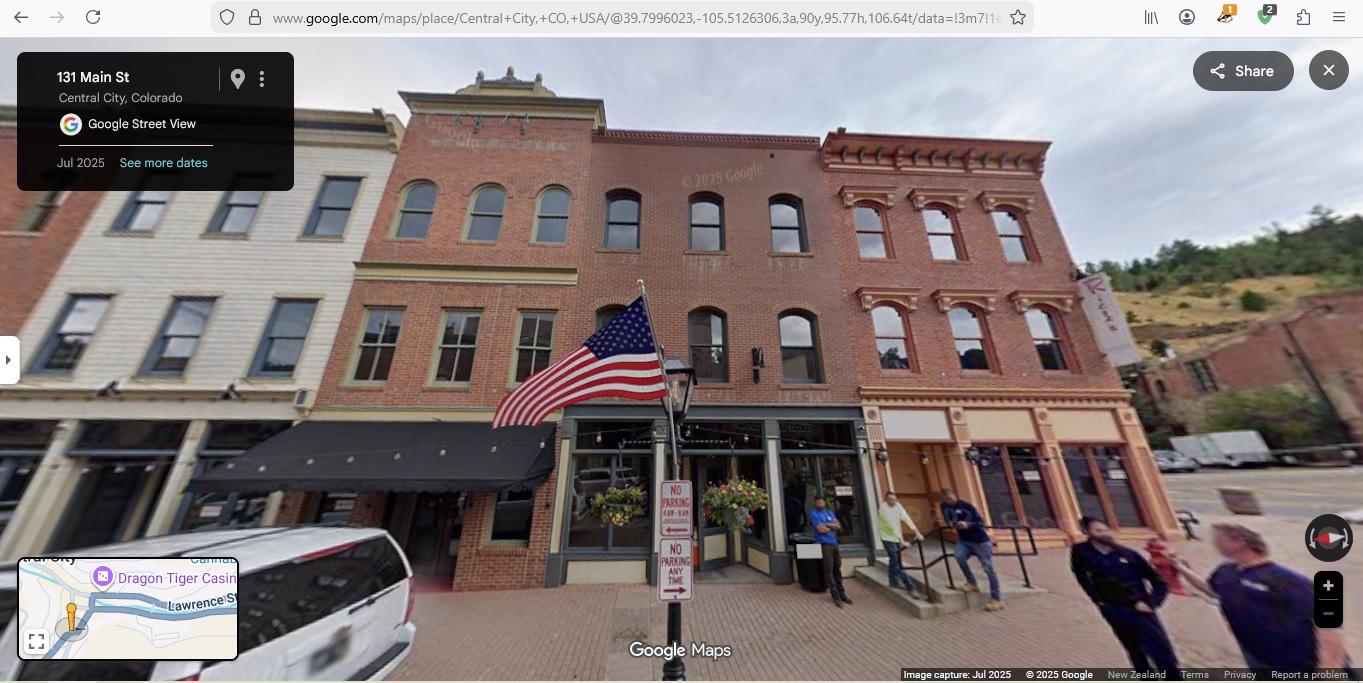
Whatever happened to the temple of fashion dry goods and carpets

Previous Topic Next Topic
 
classic Classic list List threaded Threaded
9 messages Options
Reply | Threaded
Open this post in threaded view
|

Whatever happened to the temple of fashion dry goods and carpets

ROMO
Greetings, this is my final message for tonight. I am inquiring about the fate of the Temple of Fashion Dry Goods and Carpets located in Central City, Colorado. Was it demolished? If so, what now occupies that site? If it still stands, where can it be found? Additionally, if it was relocated for safety reasons due to the excavation machinery, commonly referred to as the reckon machine, where was it moved to? Furthermore, I would like to know both the new and old addresses of the Temple of Fashion Dry Goods and Carpets building. Sincerely, Andrew Wolf.
Reply | Threaded
Open this post in threaded view
|

Re: Whatever happened to the temple of fashion dry goods and carpets

Dave Eggleston
This post was updated on .
The building was present before the Colorado Central RR arrived in 1878, it may have been built after the 1874 fire, I don't recall. It survived throughout the railroad period and was still standing when the C&S track was pulled up in the early 1930s. I don't know when/if it was torn down, but if it survived it was incorporated into a large casino, probably as just a facade mid-block. There are several new additions made to look like 1870s brick buildings on that block, all part of the casino.

Per the Sanborn maps it appears to have had the address 119 Main Street, not quite halfway between Gregory to the east and the junction of Main and Spring to the west.

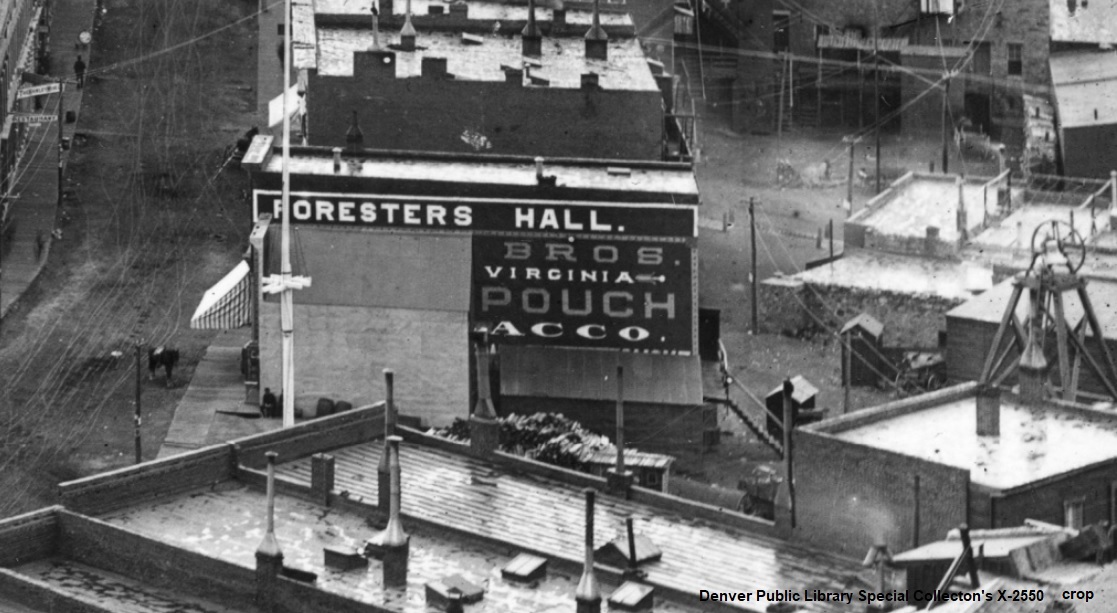
There are many photos of the building over the years in the Denver Public Library Collection that is available online (http://digital.denverlibrary.org) and in the various books on the Colorado Central RR and the C&S. When first built it had no mural but by 1878 it had the Temple of Fashion mural which on the west wall lasted into the 1880s, replaced by Blackwell's Durham circa 1890. Over the years the west side mural was overpainted with other large advertising murals, typically gum or tobacco companies (Owl, Beeman's, Bros. Pouch, Dry Climate, etc.). On the east side the Temple of Fashion may have lasted a bit longer, possibly into the early 1890s.

Dave Eggleston
Seattle, WA
Reply | Threaded
Open this post in threaded view
|

Re: Whatever happened to the temple of fashion dry goods and carpets

ROMO
Is there anyone else who is aware of what transpired with the Temple of Fashion Dry Goods and Carpets? What has taken the place of the original Temple of Fashion Dry Goods and Carpets building? Additionally, what currently exists there as of December 2025 and January 2026?
Reply | Threaded
Open this post in threaded view
|

Re: Whatever happened to the temple of fashion dry goods and carpets

Chris Walker
I've been busy.....but you can ponder these for awhile, Andrew.


UpSideDownC
in New Zealand
Reply | Threaded
Open this post in threaded view
|

Re: Whatever happened to the temple of fashion dry goods and carpets

ROMO
I am still trying to uncover the fate of the Temple of Fashion Dry Goods and Carpets, and what has replaced it since. I know for certain that it existed during the Roaring Twenties, as I’ve come across an old picture from that era.

In that vintage photograph, the Temple of Fashion Dry Goods and Carpets was the most prominent feature. Although I cannot locate that photograph right now, I sincerely hope we all can discover what happened to it and where it currently stands.

Additionally, I would like to know what occupies that building now. I still require everyone's assistance. Signed, Andrew Wolf.
Reply | Threaded
Open this post in threaded view
|

Re: Whatever happened to the temple of fashion dry goods and carpets

Chris Walker
This post was updated on .
Andrew,
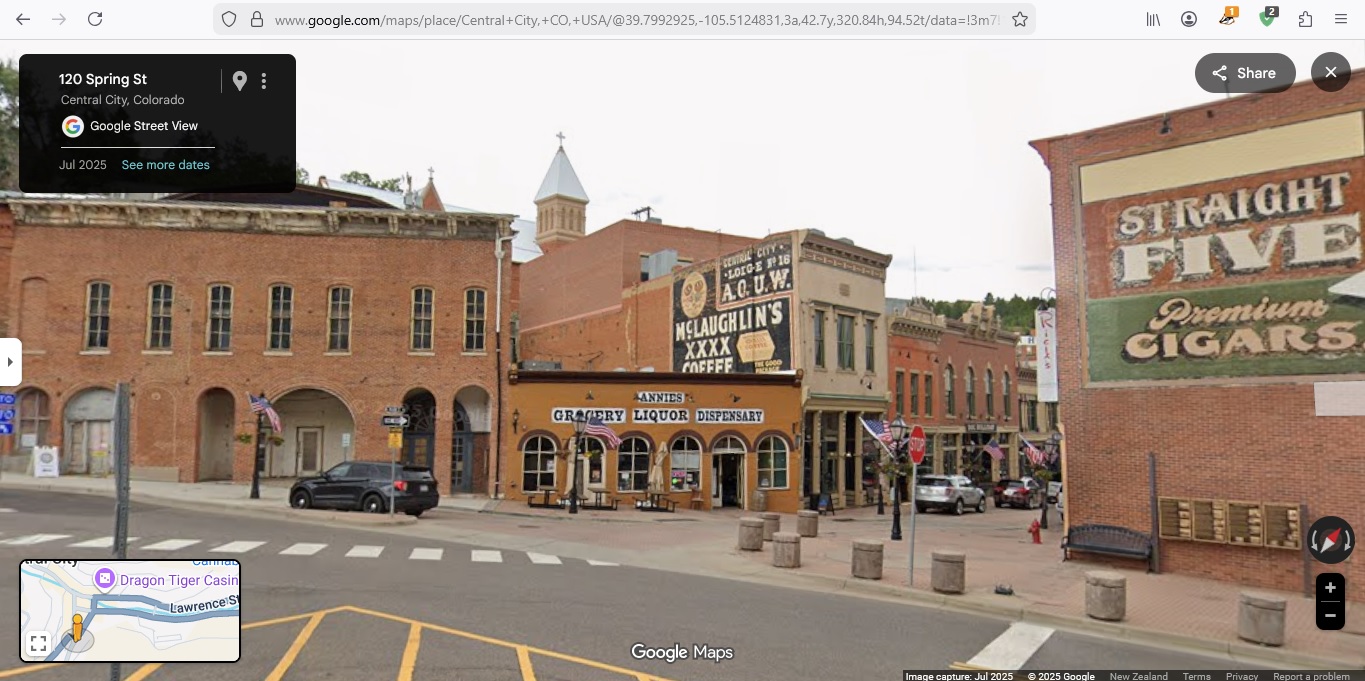
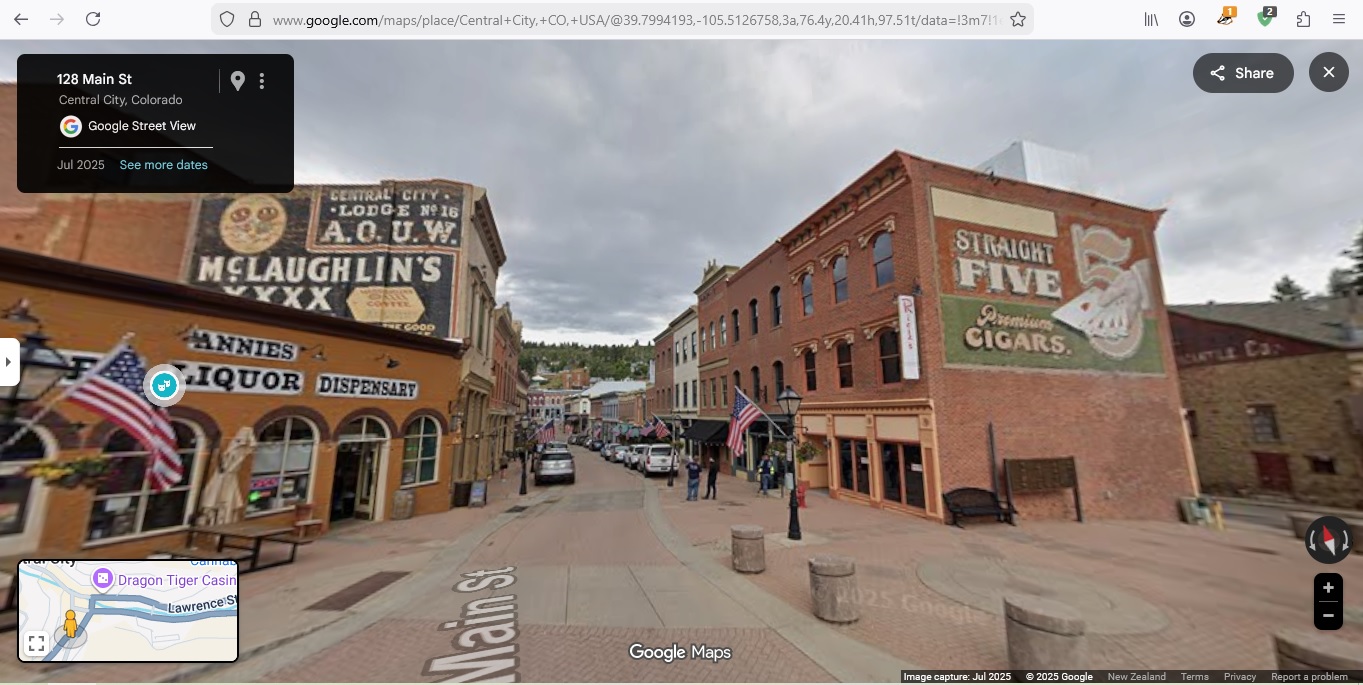
looking at my previous post of google images...the building today, appears to have been rebuilt as a similar looking facade; supposedly was rebuilt in 1992 as a Casino.

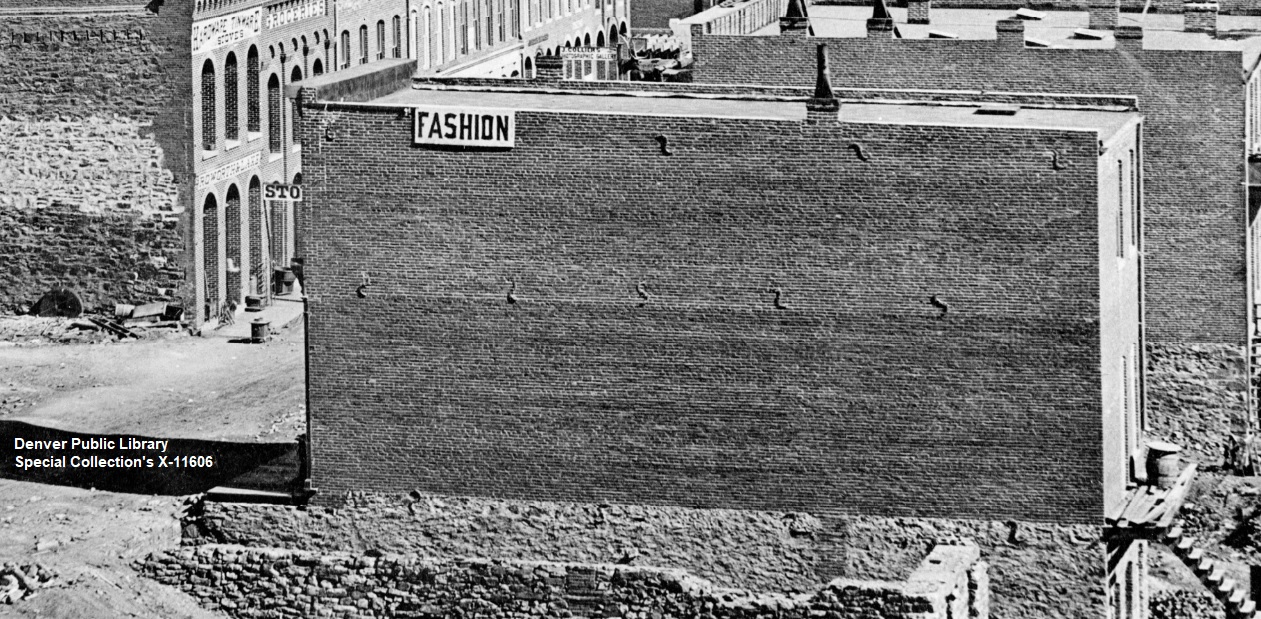
DPL X-11606 (cropped)

DPL X-2546 (cropped)
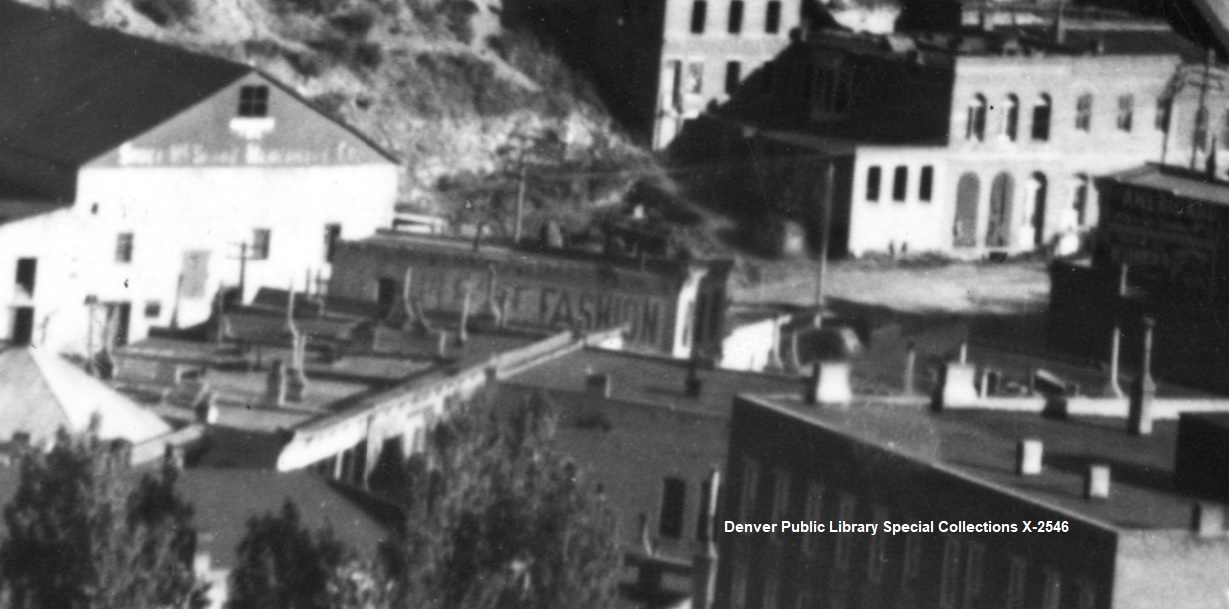

The ornamental facade atop the parapet, wasn't always there, seems to have been added when the building became the Forester's Hall.
A 1902 photo doesn't have that visible; "Forester's Hall:always ask for Beemans Gum" billboard.
The corbel's supporting the facade on the "Dry Goods & Carpets" lettering era are different to that of DPL X-11600.
The brick chimney(South-side parapet in "Dry Goods & Carpets" lettering era) is also consistant with this image.
DPL WHJ-10143
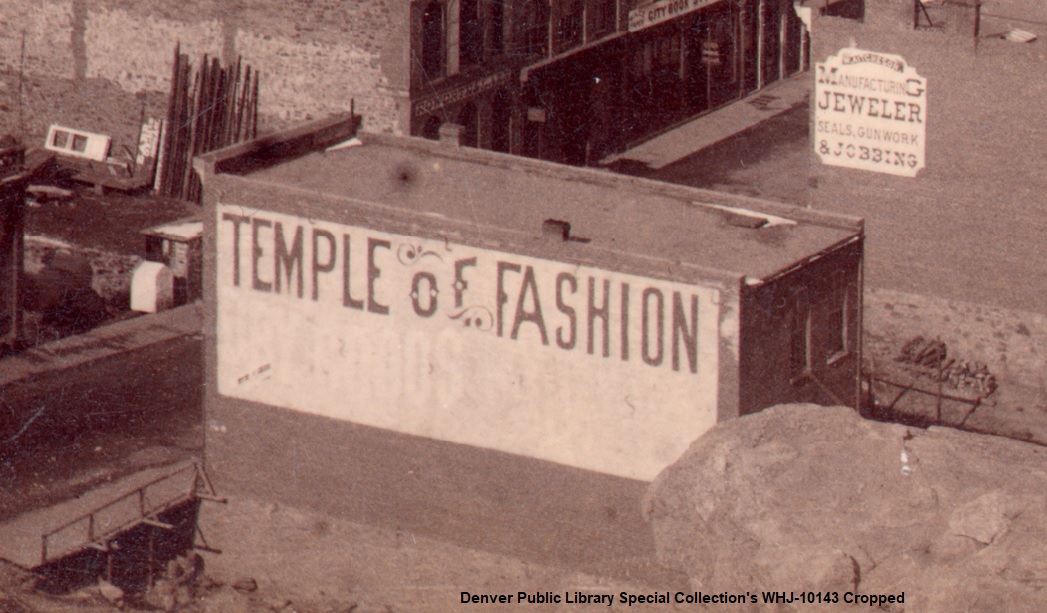
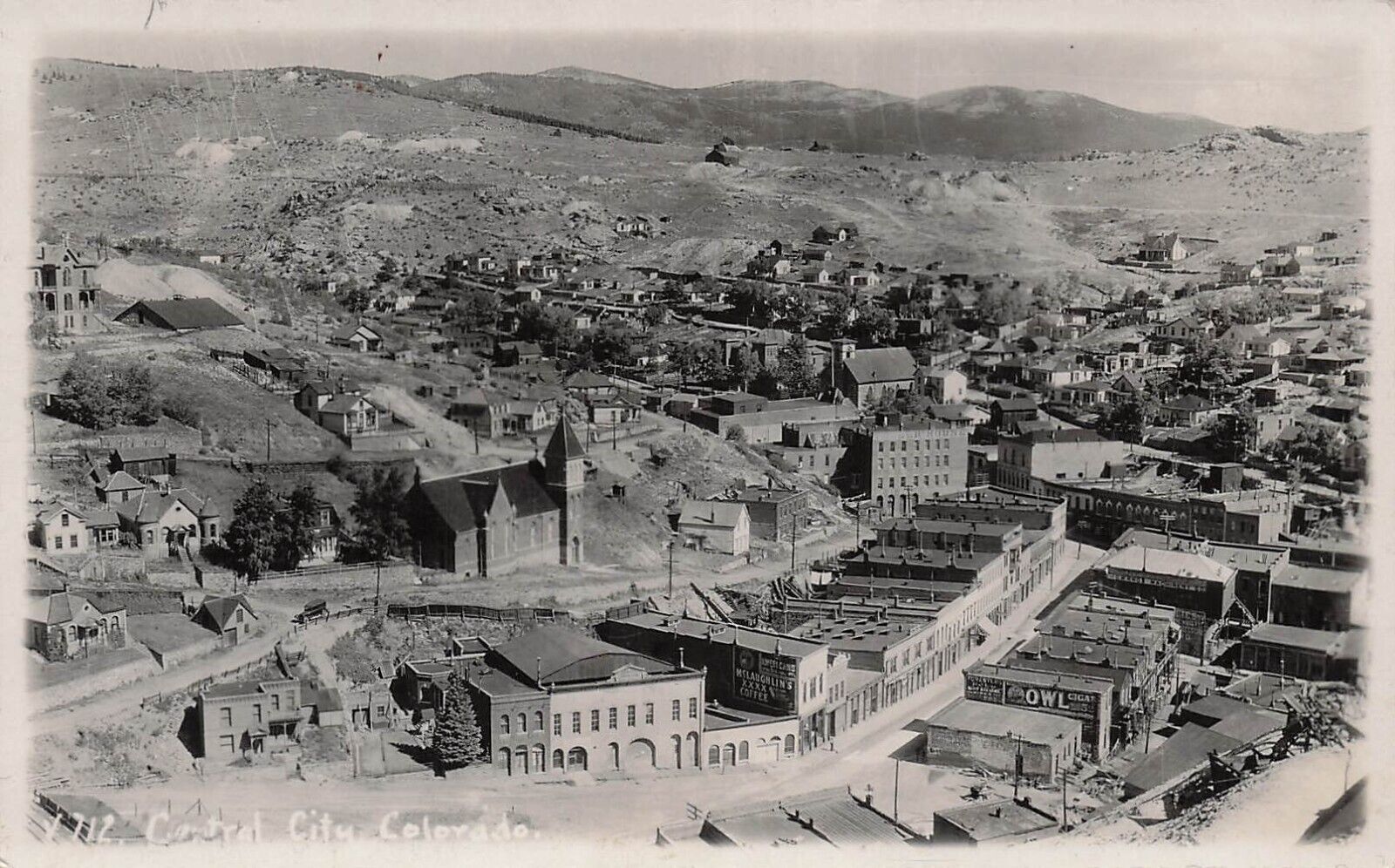
A comparison Postcard view posted by Ken Martin; see: http://c-sng-discussion-forum.254.s1.nabble.com/Vehicles-tp2435p2996.html
DPL  X-2550 (cropped)


DPL X-2507 (cropped)


The Temple of Fashion billboard sign remained on the North side into the thirties as shown in that  X-2546 photo, confirmed by the Chain o' Mines mill tailings.

DPL photo X-2573 contradicts this with a notation "Temple of Fashion" and was torn down and replaced by the Parteli blocks in the late 1890s." which led me to look a little closer at the building details.

Examining some of the photos in Dave's great thread again; see: http://c-sng-discussion-forum.254.s1.nabble.com/Central-City-photo-chronology-exercise-tp10258p10380.html

It seems to either have had a major facade rebuild rather than being replaced(as per X-2573), given the size comparison..

DPL X-11600


DPL X-11600 (cropped)
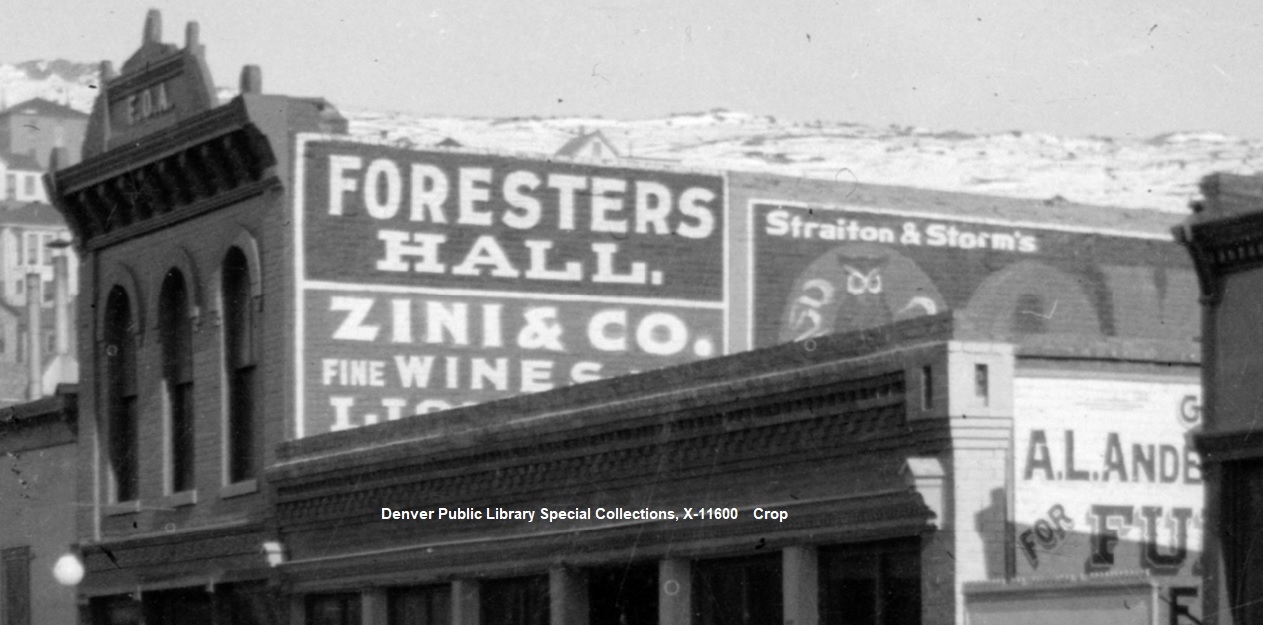

DPL X-2587


DPL X-78607


DPL X-2604 (cropped)
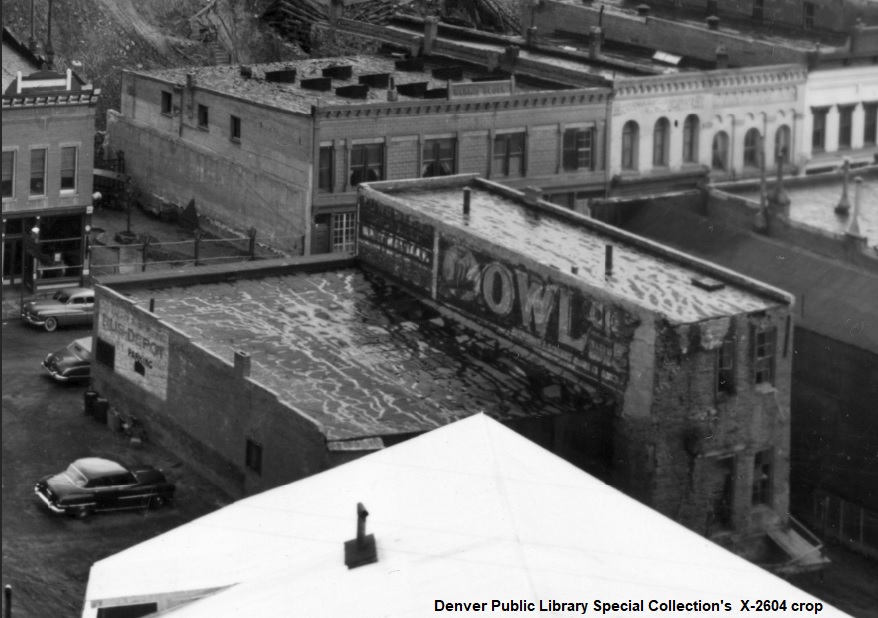
Lots of food for thought, eh!

UpSideDownC
in New Zealand
Reply | Threaded
Open this post in threaded view
|

Re: Whatever happened to the temple of fashion dry goods and carpets

Rick Steele
In reply to this post by ROMO
The Temple of Fashion was torn down in the 1960's according to the locals. The Central City Development Company figured that it and the building next door to the South (known as the White House) were unsafe and they were demolished and replaced by the Little Triangle Parking Lot.

Nothing was built to replace them until the advent of Gambling and the buildings built then did not follow the historical outlines of the buildings that they replaced. There was a dining room addition to Johnson's Smorgasbord that encroached onto the footprint of the Temple of fashion.

I talked to Angelo DiBenidetto about this building and he said "Yes that lovely old building with the three story fire escape, it was a pity when they tore it down".

Oh Yes, Great photos Chris.

Rick
Reply | Threaded
Open this post in threaded view
|

Re: Whatever happened to the temple of fashion dry goods and carpets

ROMO
Greetings, Rick Steele. Can you explain why the Temple of Fashion, along with the adjacent building, was deemed unsafe? What were the various factors contributing to their lack of safety? Additionally, was there any potential for repurposing them to ensure their safety? Could they have been saved? Who determined their unsafe condition, and was there a chance they both could have been restored, revitalized, renovated, or even revamp or even-modernized? Would these actions have preserved them, or were they simply beyond saving? How much funding would have been required to restore both of these 2 public structures?

I am seeking this information because if they had been secure and in excellent, good or OK or Great or wonderful or rough, or even fair condition—perhaps just slightly worn—could they have been salvaged? Regardless of the situation, I am curious about who declared them both unsafe. I hope this decision wasn’t driven by a desire for a parking lot in that location, as was common during the urban renewal efforts of the 1960s and 1970s. I genuinely hope that isn’t the case.

I have one final inquiry regarding these two buildings. How did they meet their demise? Did they collapse under a demotion project that involved blowing them both to be blown up and having it collapse in on it self with a person counting the down curtains before they were both gone hole entire 9 yards like just like they did in Denver, Colorado?

Did the fire department utilize them for fire practice? Were they featured in a film, with assurances that they would be demolished afterward or during the movie? for the benefit of the community, particularly for the government of Central City, Gilpin County, Colorado? Did bulldozers come in, or were they taken down by a wrecking ball? Were they blown up, or did the police department use them for training purposes? Did the bomb squad conduct practice sessions there, or perhaps the tactical team, commonly known as the SWAT team or Special Response Team, use them for drills? Whatever the circumstances of their demolition, and also whoever said they both were not safe I need to know. Signed, Andrew Wolf.
Reply | Threaded
Open this post in threaded view
|

Re: Whatever happened to the temple of fashion dry goods and carpets

Rick Steele
Hi There ROMO (Andrew)

I will try to answer these questions as you asked them.

Central City has a problem with its historic Brick Buildings. They are mostly built of local or "Hooper" Brick. This was not a high-fired brick but sun dried. When I lived in the Hawley Block (Downtown) the gentleman who lived down the hall from me and I were cleaning one day using a vacuum cleaner on his window sill, as we were vacuuming, the bricks began to become part of the detrius in the bag. We figured that with a big shop vac and enough bags, we could vacuum the building down to street level in a matter of days. In many cases downtown, the paint was holding the brick in place.

This is the reason that I was given when I asked the President of the Central City Development Company why the Temple of Fashion and White House were torn down. This was before the advent of the weekend tourism that Central City experienced in the late 1960's and 1970's. As far as saving their facades and rebuilding the body of the buildings behind them, that takes money, something that Central City didn't have a lot of back then. The flat roofed buildings up there take constant maintenance and upkeep to remain water-tight and solid. It is my understanding that these two buildings were not. Now looking back from today and seeing what was done when the Gambling dollars were involved, it seems a pity that they were demolished. But you are looking at technology from over 60 years ago and it was no where near as advanced as todays. That being said, the structures were and are not public. They never have been. All of the buildings in Downtown Central City, with the exception of the Gilpin County Court House, and the Volunteer Fire Department are privately owned.

The question was asked before Bullwhackers built their large casino on the corner whether they were going to replicate the historic facades of the Temple of Fashion and the White House. The answer was "NO!" From what I was told they tried to match the architecture, but wanted the two story buildings with the tall facades to cover the modern amenities like Air Conditioning.

There might have been some "Inspiration" from Denver Ruin-It-all Authority's run on lower downtown, which I remember distinctly, but the residents of Central City also realized that Main Street Central City was unique in the fact that some of the buildings, like the Sauer-McShane Downtown building, pre-date the 1878 fire.

From what I understand and what I saw in snapshots, the buildings were torn down in the usual manner for the time, Using manpower and deconstruction crews. The photo that I saw was the remaining first floor of the Temple of Fashion building. No spectacular explosions or Fire Department drills, just a deconstruction crew tearing it down floor by floor.

The man who told me that the buildings were not safe is long dead so his identity doesn't need to be known as the only information that you will get on him is from his gravestone in Fairmont Cemetery in Denver.

Rick