Flanger 015

Previous Topic Next Topic
 
classic Classic list List threaded Threaded
124 messages Options
1 ... 4567
Reply | Threaded
Open this post in threaded view
|

Re: Flanger SG Coupler Pocket

Chris Walker
Adding to this thrashed out missive....a little late, there's lots to get done.

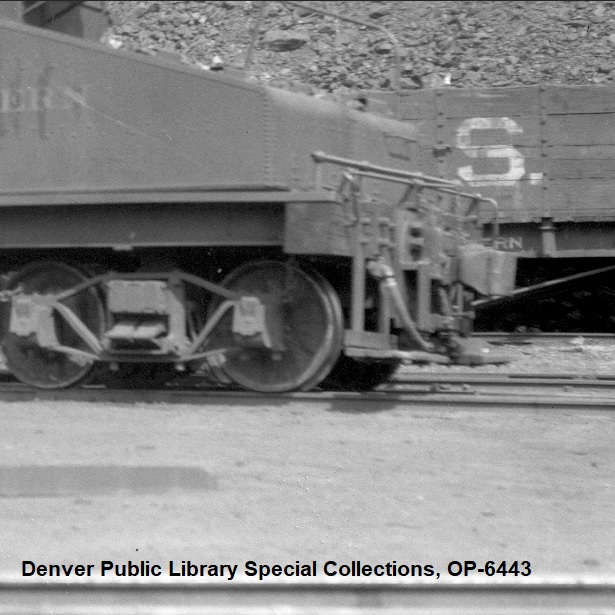
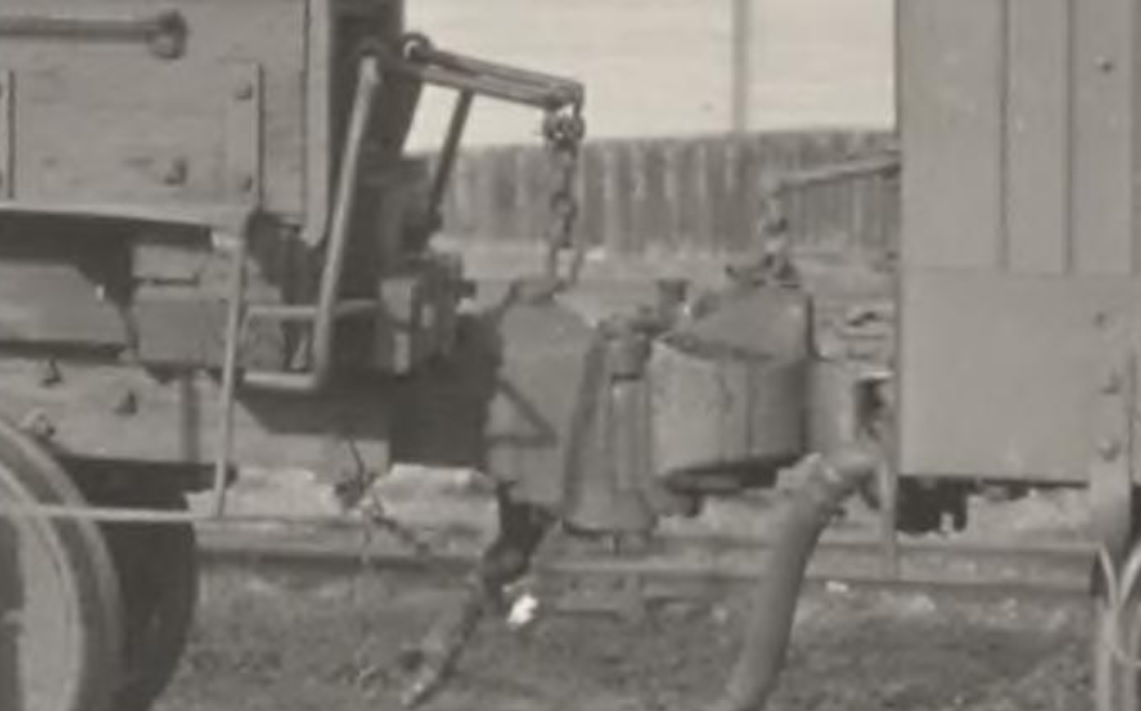
The 015 pockets are Wood/Steel composite construction, not cast.  I do believe that IF the C&S was to need a 3-Way cast pocket, they'd find one of their own style.

DPL OP-6443


However with a little magic helper, the details revealed themselves


Changing out the coupler head may need a trip to the Roundhouse and a block 'n tackle, or support same with a stout beam placed above.

UpSideDownC
in New Zealand
Reply | Threaded
Open this post in threaded view
|

Re: Flanger 015

Keith Hayes
In reply to this post by Mike Trent
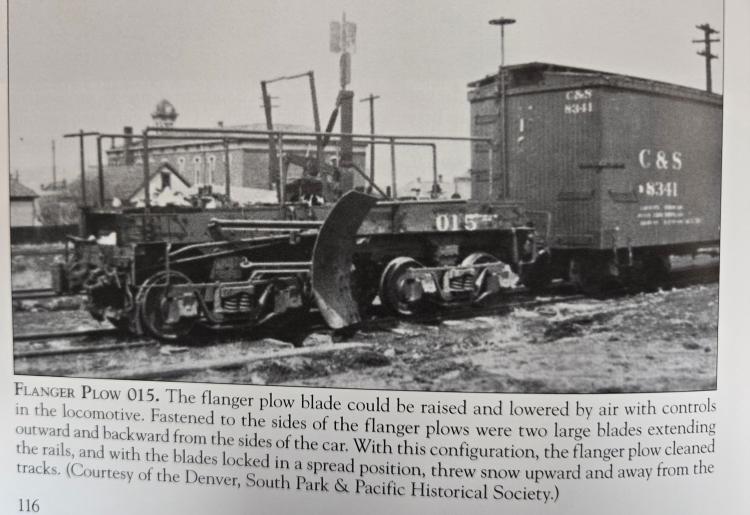
Mike will certainly be interested in this. I have one of those local history books on Summit County Narrow Gauge Railroads sitting on my bench. I grabbed it to show a visitor and inspiration image and happened to flip to this pic:

I was gobsmacked! Mike and I have been puzzling over the blade braces on 015--not to mention the plumbing--as we had not found a photo. Well here it is, and from the DSP&P collection,  no less!
Keith Hayes
Leadville in Sn3
Reply | Threaded
Open this post in threaded view
|

Re: Flanger 015

Mike Trent
Administrator
Wow! Thanks, Keith!

Very interesting indeed!

This was taken at a somewhat earlier date than other pictures we've seen. In this picture, the lever handle is still operational as it is vertical and the blade is resting on the rails. Maybe 1935 or so. Before the wreck on Boreas. Maybe after the wreck they immobilized the lever to the structure to keep the blade permanently raised.

Every little bit helps!
Reply | Threaded
Open this post in threaded view
|

Re: Flanger 015

Keith Hayes
I don't know, Mike.

Yes, an earlier image. The horizontal handle is connected to a couple of levers that are like field hockey sticks. When the handle is in the raised position--as in the photos, the blade is down. When the handle is down, the sticks rotate (rather like a cam) and raise the blade. There is a bracket on the deck that the handle slides into. The handle can be secured in the bracket with a cotter pin.

The several photos we have show the handle raised, and I infer that the blade is in the lowered position--I guess the way to confirm would be to study the position of the target. I don't know how you would disable the handle without removing it entirely.

Also, I don't have personal experience, but I bet the blade is darn heavy! I think it would take both of us and your son-in-law to lean on that lever and lift it!
Keith Hayes
Leadville in Sn3
1 ... 4567