|
Administrator
|
This post was updated on .
At 11:30AM in the morning of Monday, January 20, 1936, 90 years ago today, Extra #537-#75-#73 with Car Flanger 015, left Leadville Eastbound with the Monday Freight for Como. At Climax, they switched out empty boxcars and picked up 8 loads of Molybdenum bound for Denver. Weather had been bad, and the crew had a rough time clearing snow and switching at Climax. They arrived very late at Dickey and eventually left and made it to Breckenridge, the last open station at that time of evening. They left Breckenridge at 9:50PM and soon encountered heavy wind and snow, blizzard conditions. At Belmont, they had to split the train and double the hill to Boreas, even with three engines.
By the time they left Boreas, Conductor Dave Sanches sent engines #73 and #75 with the flanger coupled between them ahead of #537, which was following behind. At 3:30AM, now January 21st, the crew passed the 16 hour law since leaving Leadville. The crew had determined to press on to Como, 9 miles ahead at the bottom of the hill.
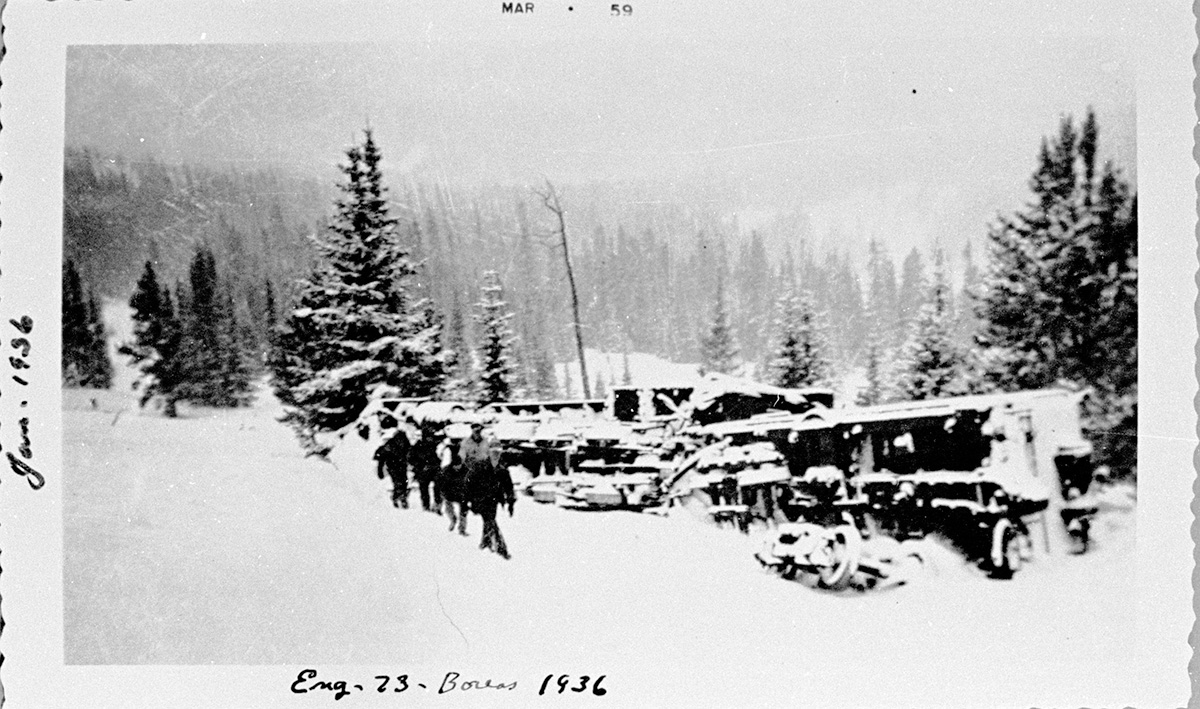
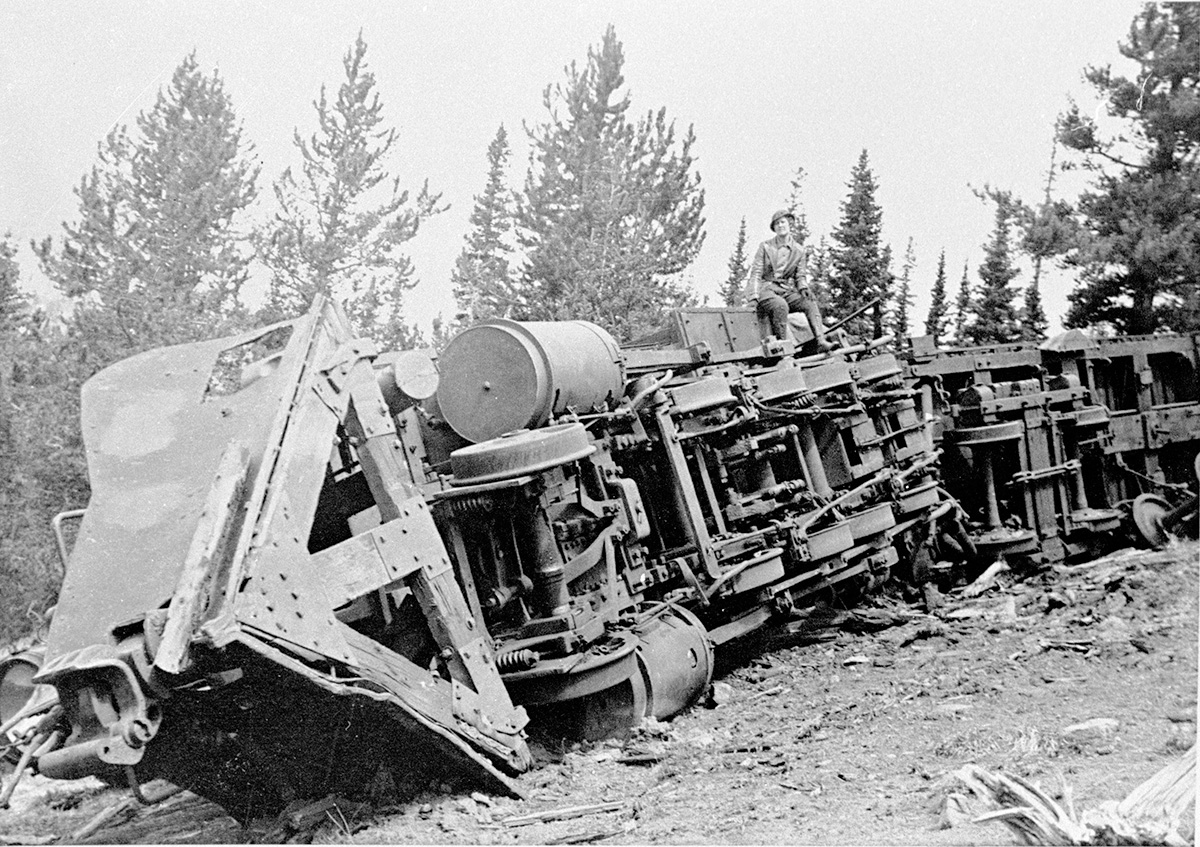
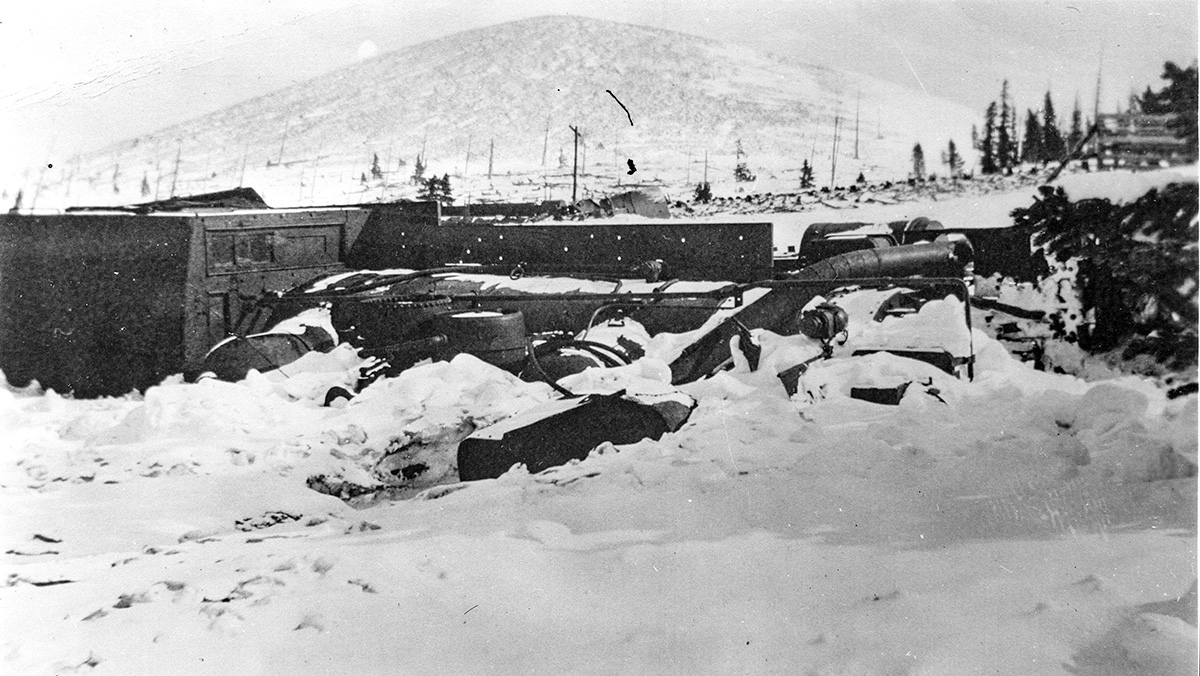
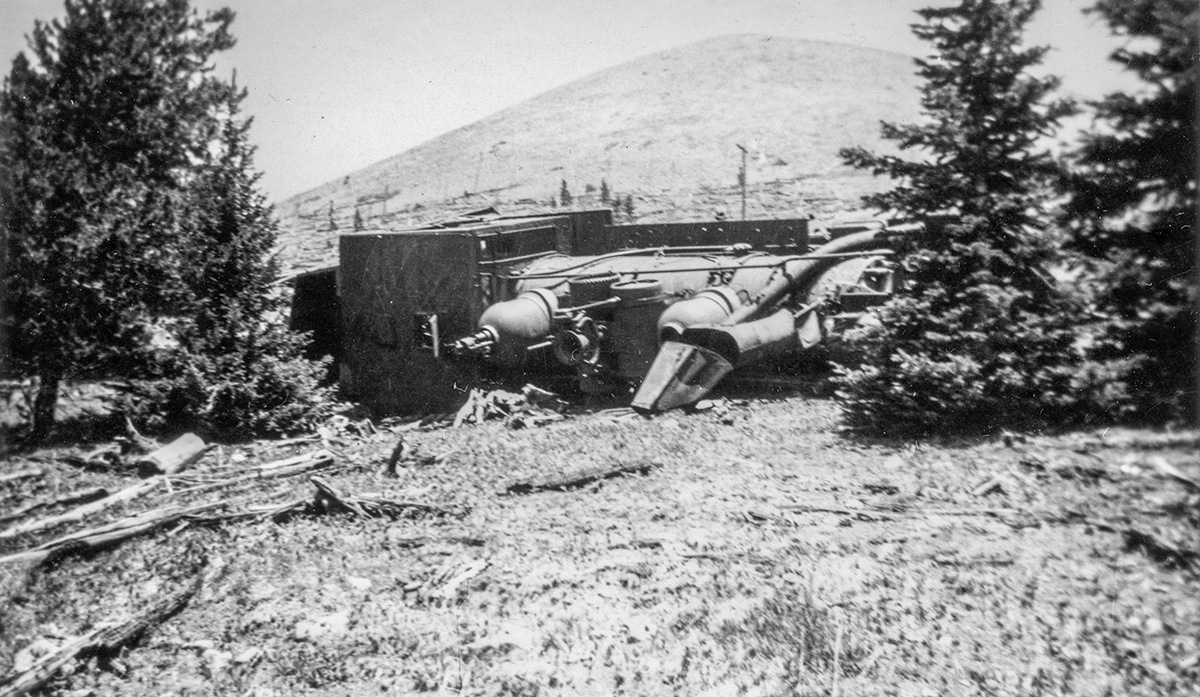
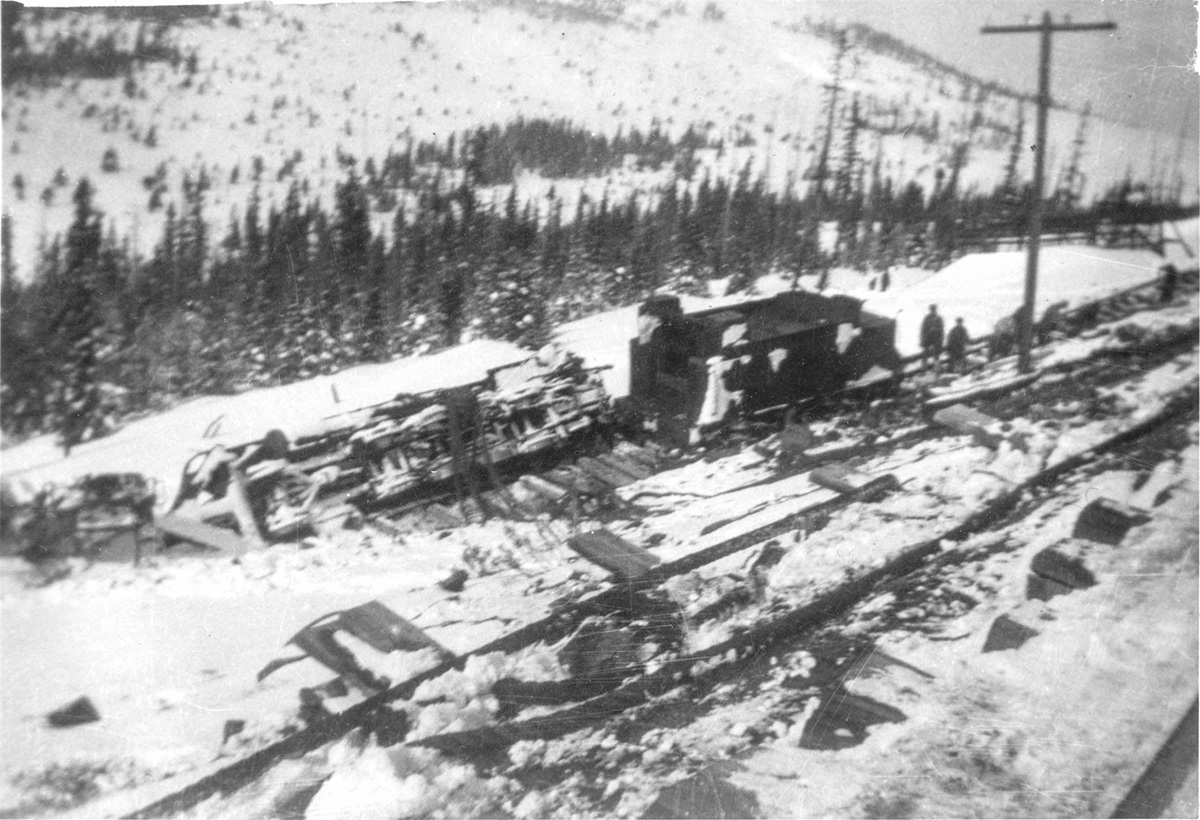
Shortly after passing Windy Point, at 3:40AM, the Car Flanger derailed, which derailed #73's tender and locomotive, and pulled #75 over as well. Engine #73 remained upright far down the hill on the right side of the grade and then went sideways to the left and settled in the snow on it's right side. Fireman Doug Schnarbush went into the right side of the cab, closed the throttle, and shoveled snow into to firebox. He found Engineer Charlie Thomas sitting dazed on a tree stump. Not knowing what had become of Engine #75, he climbed the 250 hill to the grade and found Fireman Clinton Eshe near the top with #75. He reported that #75 had rolled hard on its right side and had killed Engineer Charlie Williamson. Their immediate concern was to get upgrade and stop #537 with it's heavy load of ore cars.
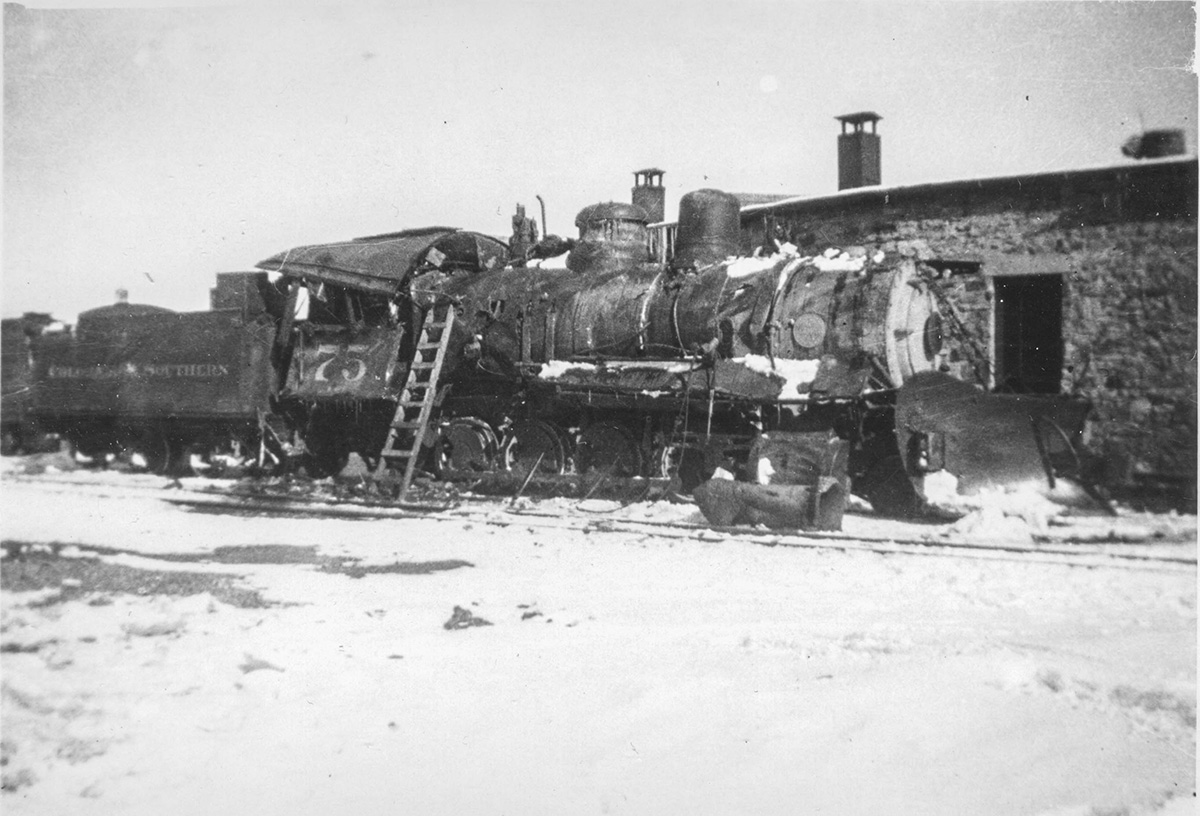
Doug said when he came up to #537 and swung up into the cab, he scared Engineer Tom Gibbony half to death looking like a ghost covered with ice and snow. They got the train stopped and tried to use 537's whistle to alert Como. But they had a phone that could be clamped to the telegraph and called the agent at Como to get help. They got the line open soon, replacing 20 ties and securing the rails. They had to shovel snow into #537's tender for water and brought Williamson's body back to the caboose. A spur was laid behind #75, and with the help of the Derrick, it was rolled upright and carefully brought to Como, and then to Denver for repairs. #73 was not able to be recovered until the following July.
With two engines out of service, the C&S leased three C-19 class 2-8-0's from the D&RGW. These included #343, #345, and #346.
Most of this is well chronicled in Tom Klinger's "C&S Highline Memories", with many photographs in Chapter 7.
If anyone is interested in a copy of the ICC Accident Report of this wreck, I can email a PDF to you. mtrent476 at gmail dot com.
|


 Locked