Re: The C&S Pine Grove Sandhouse.
Posted by Jim Courtney on
URL: http://c-sng-discussion-forum.254.s1.nabble.com/The-C-S-Coal-Chutes-Pine-Como-Dickey-Pitkin-and-almost-Breckenridge-tp4269p4355.html
This inter-hemispheric discussion is getting interesting!
To recap John's TOTC station facilities list for Pine:
Pine Grove 1898
Depot 24’ x 38’ of wood
Coal Bin 14’ x 226’ wood
Coal Chutes 10’ x 25’ wood
Road Masters Office 10’ x 14’ wood
Tool House 10’ x 14’ wood
Sand House 6’ x 9’ wood
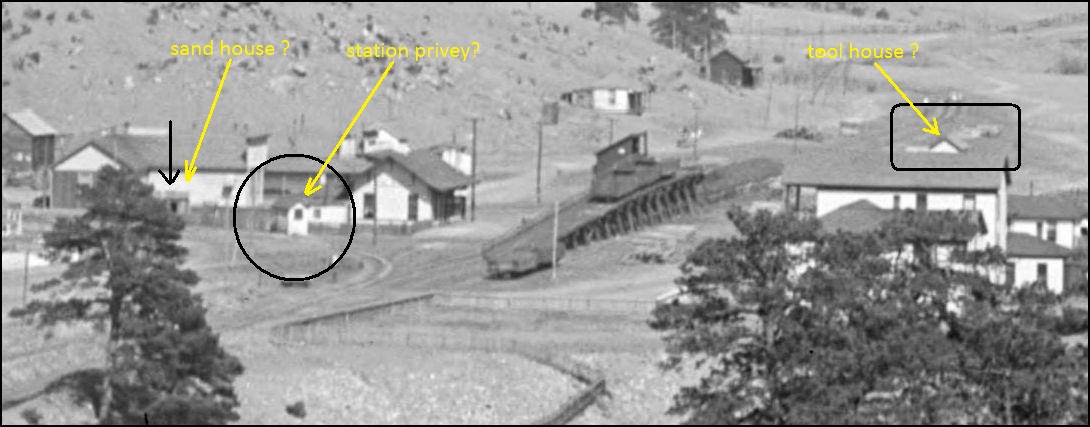
I think you're right, I was confusing 2 small buildings. I think the sand house (6'x9') is way back behind the depot, near the crotch of the wye. The similar sized building closer to the front of the depot, out near the west wye turnout was more likely the depot privy, even a small southwest facing window, to help see what your doing! The tool house was more likely on the far side of the coal chutes to the east.
In the McClure photos, all the railroad buildings, except what I think of as the sand house, are freshly painted:
This view from the south seems to be contemporary to the first (and I've been suspecting that it is also by McClure):
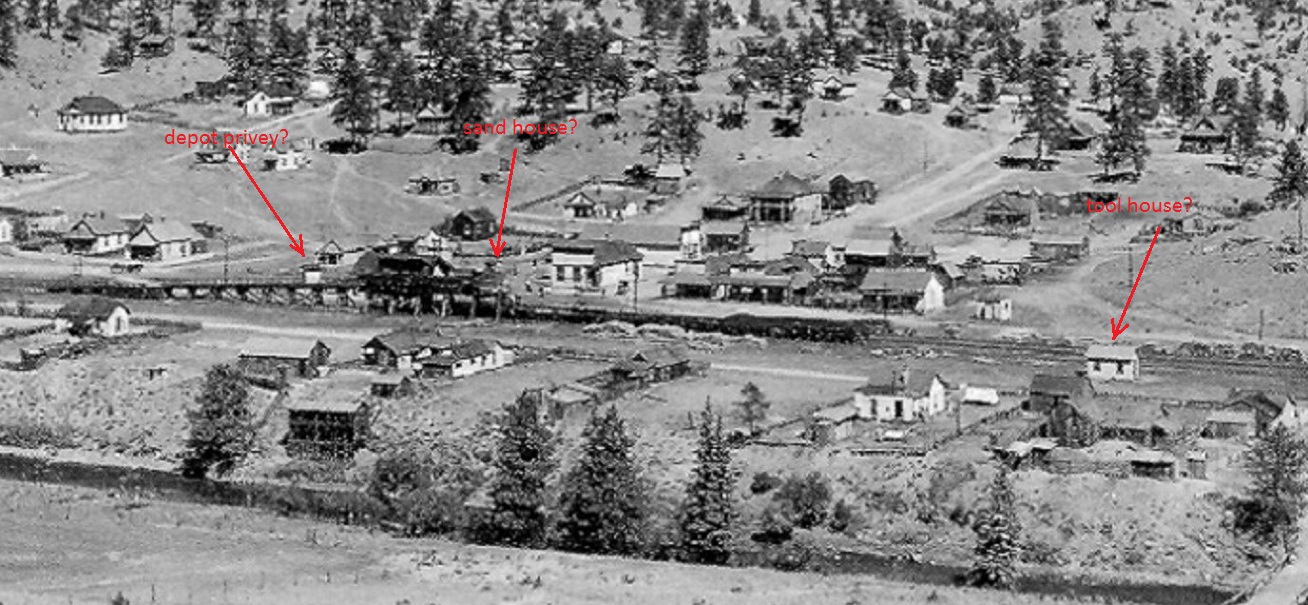
I guess what I'm calling the "tool house" could be "Road Master's Office" as they were the same size, and the building as viewed from the south has windows. A companion photo to the 1929 Denver Water Board special at the coaling tower, shows the "Tool House" vs "Road Master's Office" from the north, likely painted CB&Q red:
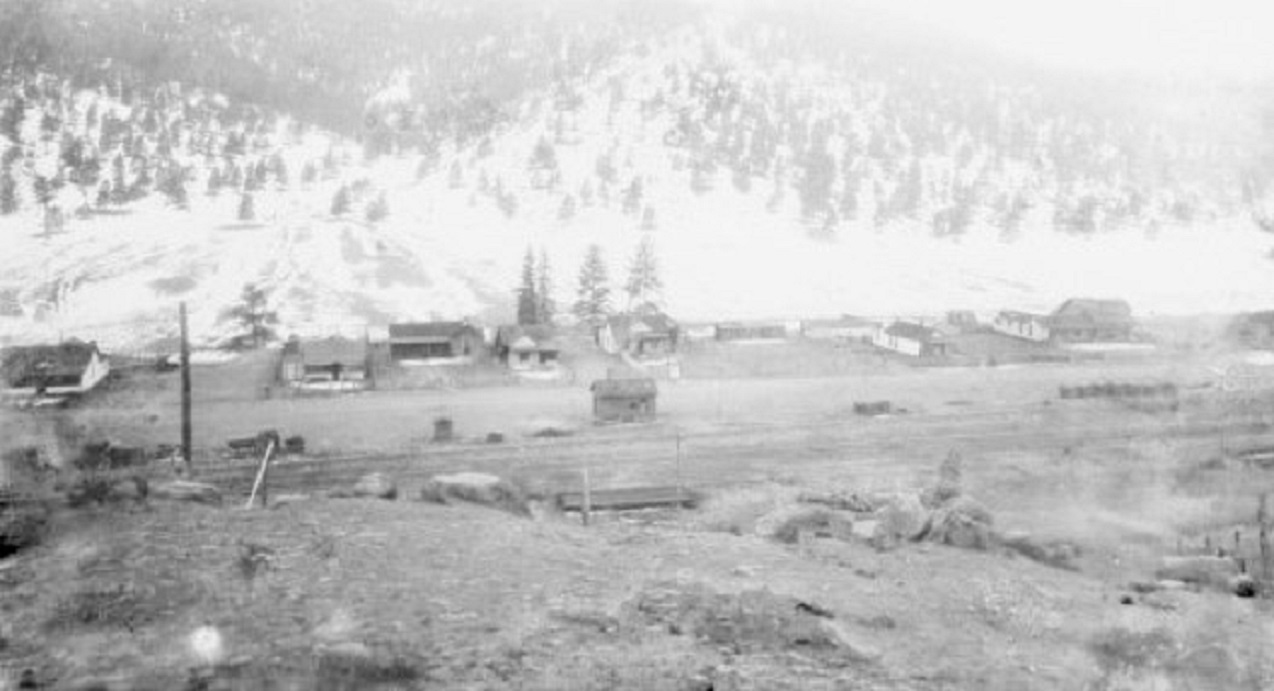
To put things together, I think the depot privy is missing in the 1929 Sanborn photo because it is hiding (and not in plain sight):
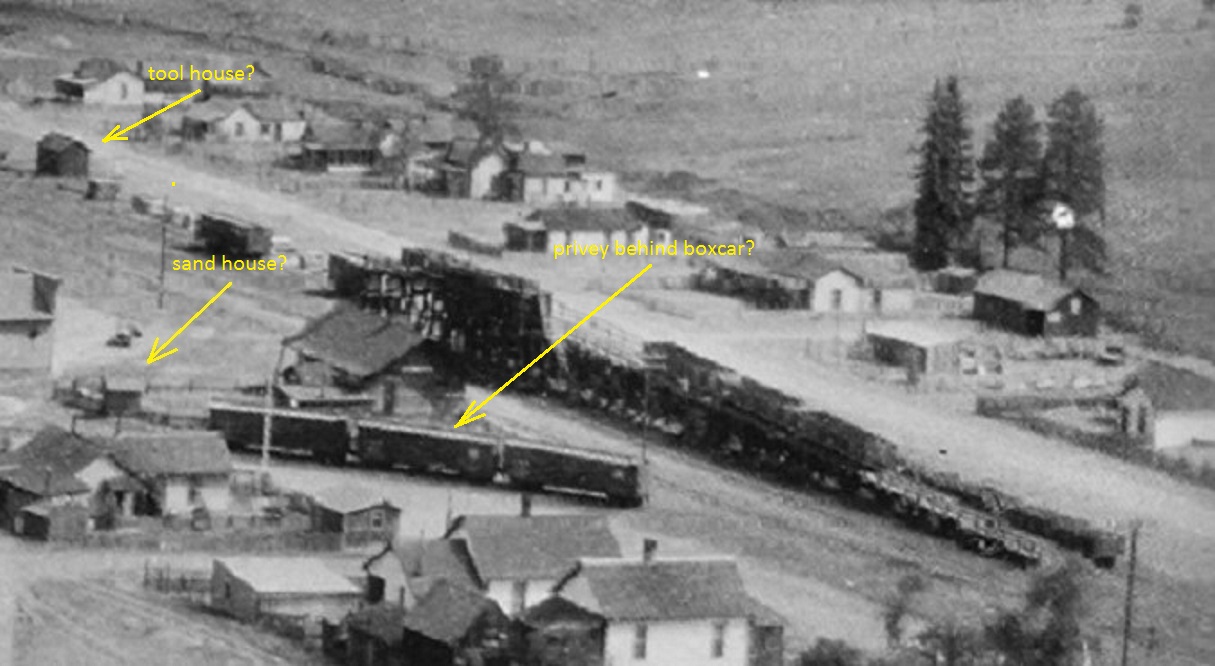
The privy is present in the contemporary 1929 Denver Water Board special at the coaling tower that you posted above.
It makes more sense to me that the sand house would have been originally located near the ash pit, to allow idle helper engines to be serviced while spotted on the west leg of the wye. Remember, there was a full time hostler stationed at Pine to tend to all the helper engines. That practice began long before the coaling chutes were built, my best present guess being 1890 for chute construction. It probably ended when traffic declined in the 19teens and helpers began running through, out of Denver.
Thanks for helping me sort all this out.
URL: http://c-sng-discussion-forum.254.s1.nabble.com/The-C-S-Coal-Chutes-Pine-Como-Dickey-Pitkin-and-almost-Breckenridge-tp4269p4355.html
This inter-hemispheric discussion is getting interesting!
To recap John's TOTC station facilities list for Pine:
Pine Grove 1898
Depot 24’ x 38’ of wood
Coal Bin 14’ x 226’ wood
Coal Chutes 10’ x 25’ wood
Road Masters Office 10’ x 14’ wood
Tool House 10’ x 14’ wood
Sand House 6’ x 9’ wood
I think you're right, I was confusing 2 small buildings. I think the sand house (6'x9') is way back behind the depot, near the crotch of the wye. The similar sized building closer to the front of the depot, out near the west wye turnout was more likely the depot privy, even a small southwest facing window, to help see what your doing! The tool house was more likely on the far side of the coal chutes to the east.
In the McClure photos, all the railroad buildings, except what I think of as the sand house, are freshly painted:
This view from the south seems to be contemporary to the first (and I've been suspecting that it is also by McClure):
I guess what I'm calling the "tool house" could be "Road Master's Office" as they were the same size, and the building as viewed from the south has windows. A companion photo to the 1929 Denver Water Board special at the coaling tower, shows the "Tool House" vs "Road Master's Office" from the north, likely painted CB&Q red:
To put things together, I think the depot privy is missing in the 1929 Sanborn photo because it is hiding (and not in plain sight):
The privy is present in the contemporary 1929 Denver Water Board special at the coaling tower that you posted above.
It makes more sense to me that the sand house would have been originally located near the ash pit, to allow idle helper engines to be serviced while spotted on the west leg of the wye. Remember, there was a full time hostler stationed at Pine to tend to all the helper engines. That practice began long before the coaling chutes were built, my best present guess being 1890 for chute construction. It probably ended when traffic declined in the 19teens and helpers began running through, out of Denver.
Thanks for helping me sort all this out.
Jim Courtney
Poulsbo, WA
Poulsbo, WA
| Free forum by Nabble | Edit this page |