Re: Eight wheel Caboose on C&Sng?
Posted by Derrell Poole on
URL: http://c-sng-discussion-forum.254.s1.nabble.com/Eight-wheel-Caboose-on-C-Sng-tp488p1932.html
First things first; Derrell is in full blow geezerfication. Yep! I've been working on the process all of my life and it is finally catching up with me. Well, actually it has been in affect for some time but I swan to remember how long....
What were we talking about? Oh yeah.
Previously I said - out of a pseudo moment of lucidity - that there were 4 cabooses with cupolas at Como in a late 1890s Scott photo. Magically - just to make a bonehead out of ol' Derrell - one of those cars has disappeared and now I can only count three! I posted this photo elsewhere and y'all trusted me because no one hunted it down and verified what I said. Bad on you...
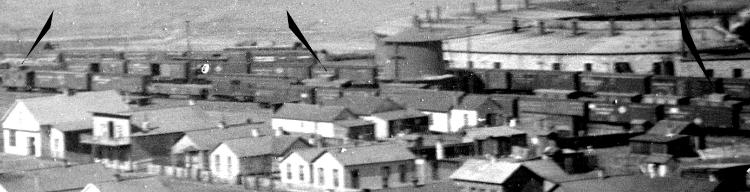
I'm reposting the photo here because I want to make an observation; the arrows make it easier for you to find the 3 cars. There are 6 cars total that I see. That is at least half the fleet so in this view alone half the cars have cupolas. What I want to point out is this; every known photo of a pre 1890s waycar has two windows that top off at the fascia board. Even in the above photo all of the "waycars" (no lookout) have windows to the fascia. But the caboose (with lookout) to the far left has the little windows like those on 306 (and the photo of 1612). The car at the arrow in the middle also looks to have small windows. However the car on the right has windows to the fascia.
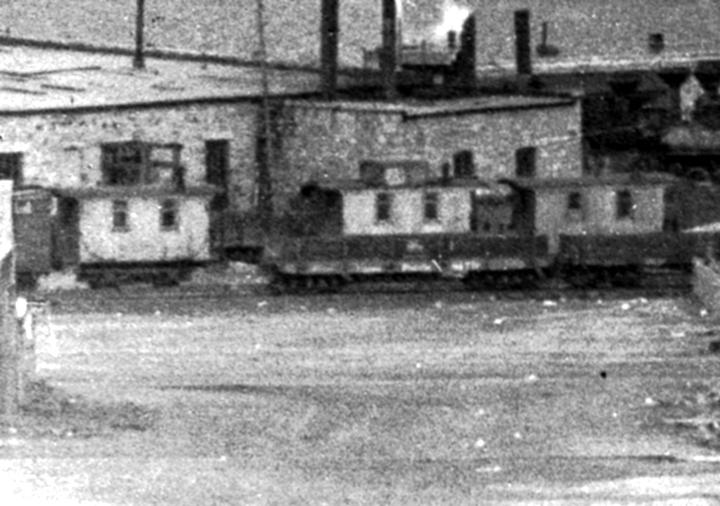
In this photo all three cars have windows to the fascia.
There are 4 waycars in this photo and they all strike me as having windows to the fascias. The car on the right appears bigger than the others and may have 3 windows. There is an accompanying photo that puts the total of 6 cars in the yard that day;
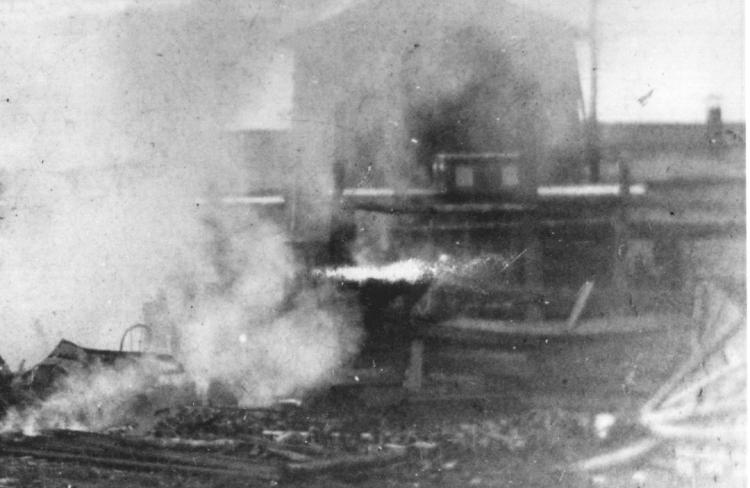
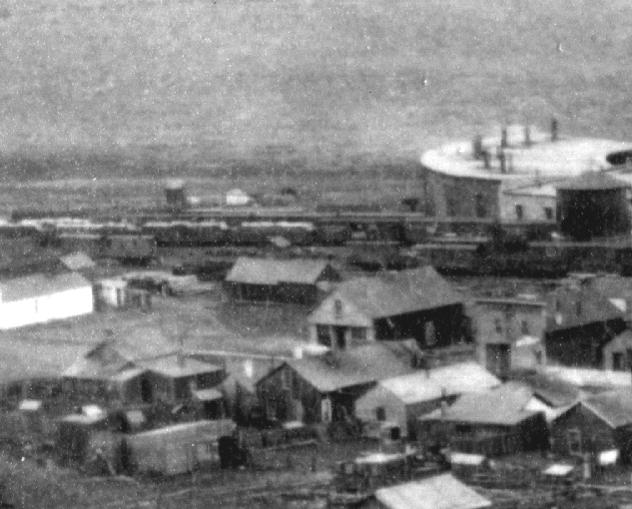
That would be this photo. Certainly the car on the right was a "caboose" while the car next to it is questionable. However there appears to be a break in the roof that suggests a lookout. Unfortunately we cannot see the windows.
So what might all of this mean? Well, first I suggested there could have been cars originally built with cupolas - and there could have been. But it seems unlikely, or at least that such cars were sold or leased off line right away. More likely there were no such cars. But the windows in the '90s could suggest that some cars were rebuilt at different times from others and that tall windows suggest earlier occurrences while later rebuilds installed the small windows. OR. It could suggest that the cars with small windows did indeed come from a foreign road.
Of course my primary question still stands - Where did they come from?
The last Annual Report from the UP that listed the DL&G was 1893 with 11 cars. We assume this is correct and we tend to assume that this was the roster from that point to perhaps early 1898 (or whenever a 12th car would have been added). In support of Richard's argument about 1005 and 1008 coming from another road - and perhaps in support of Ron's suggestion 1601 returned to Utah - we cannot disprove that more cars were off roster after 1893 - even to the extent that 2 or even 3 were finally added (to make a total of 12).
There are "logic" issues with this primus, specifically the inexplicable way the new cars were inserted into the vacancies of the roster. For instance, why would the new cars not be placed as consecutively as possible - that is why fill 1507 and then jump to 1514 when there were 1509, 1510, and 1512 vacant between 1005 and 1008? Why not 1501 and 1502 both of which were vacant? Furthermore, if the last listings of DL&G equipment in 1893 ORER included 1500 - and they do - and they listed the total at eleven, it makes no sense that they could have filled that number and gained a car (unless more than one car was added). The original 1500 would have had to vacate the spot in order for a new car to take its place. If 1500 was vacated and two cars were added why fill 1500 and then skip 1501 and 1502?
Hmmmmmm?
What if the UP AR was incorrect - remember how much trouble the DL&G Auditors were having concluding just how many cabooses they had? What if in reality there were still 12 cars physically on line in 1894 and that when the cars were relettered C&S there were NO new cars on line?
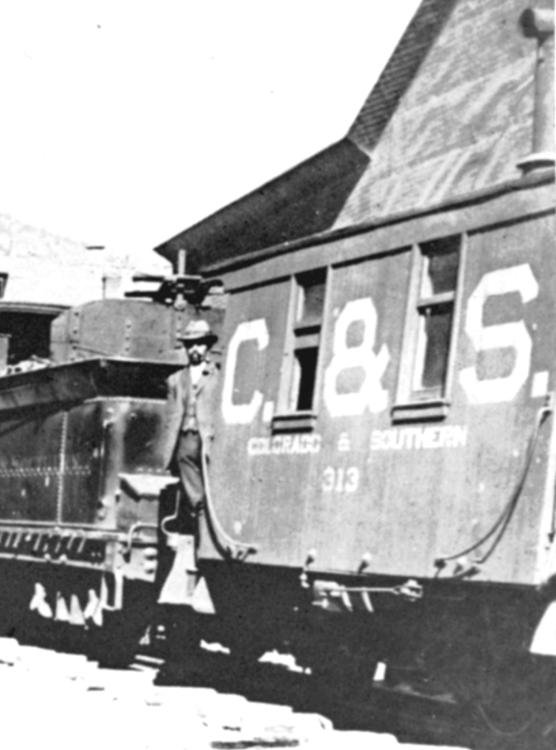
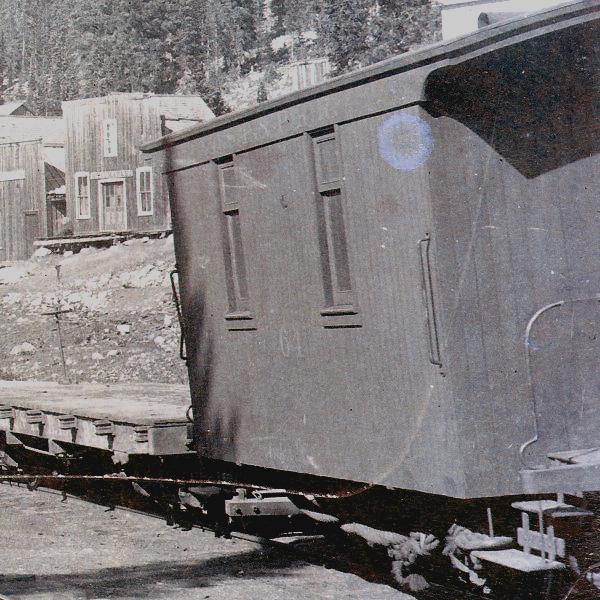
I also want to point out how the brake cylinder is mounted on this pre-rebuilt C&S "waycar". And that there are other unexplained bolts near the bottom edge of the body. We really don't know what the frame gear looks like do we? We assume it is much like the later cars and very different from what we see on 306, but is it?
This is how a modernized car looked;
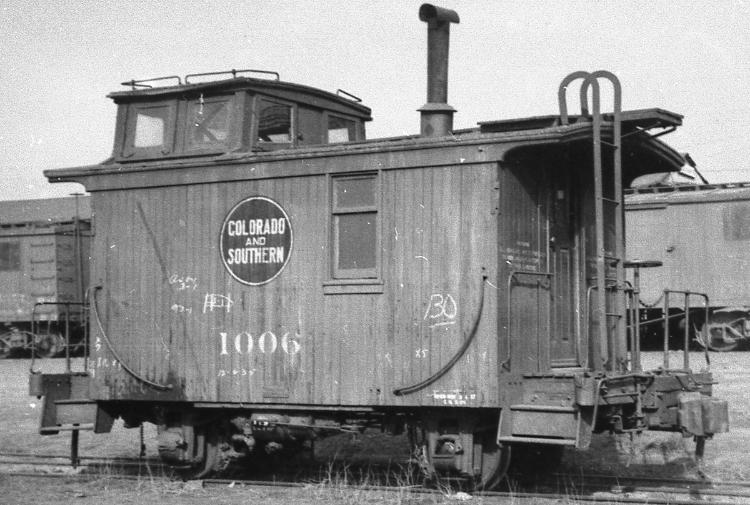
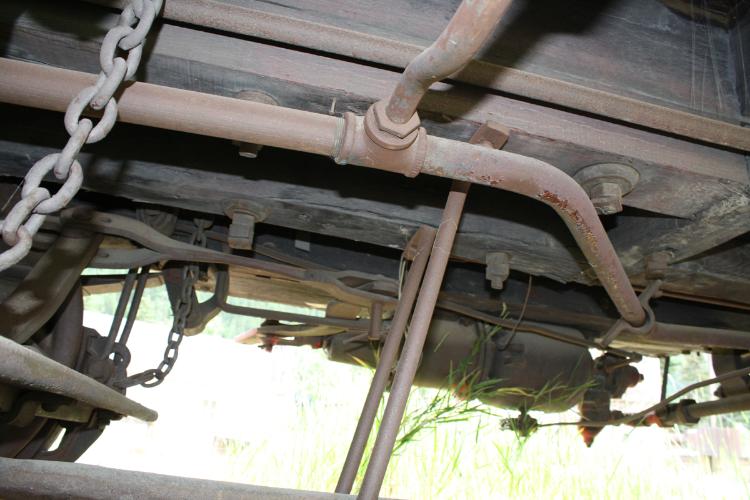
In fact, in both old and modernized cases the brake cylinder would have been well clear of the suspension gear.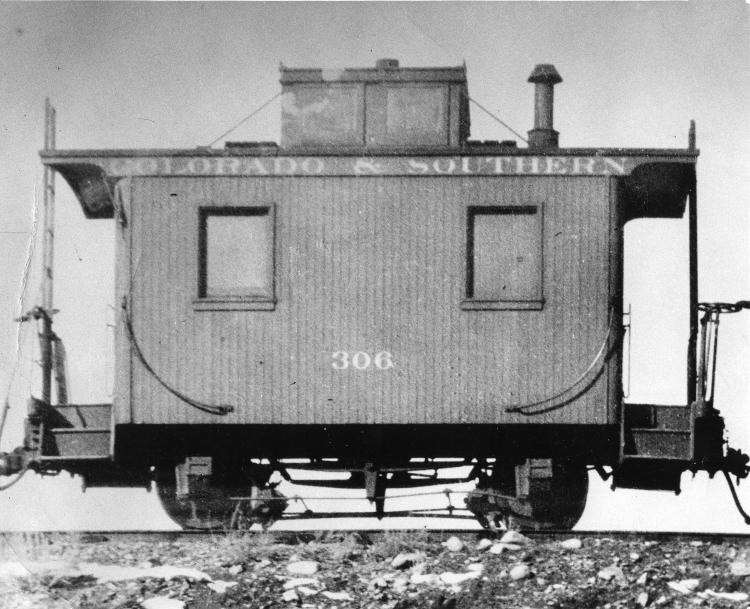
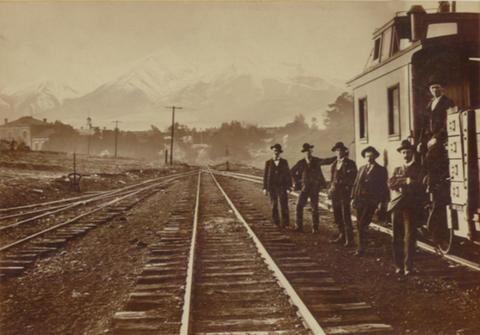
And btw I submit that what appears to be a wheel out of place is simply an air hose strategically drooping over the rail... Nor can we be certain this isn't 310.
URL: http://c-sng-discussion-forum.254.s1.nabble.com/Eight-wheel-Caboose-on-C-Sng-tp488p1932.html
First things first; Derrell is in full blow geezerfication. Yep! I've been working on the process all of my life and it is finally catching up with me. Well, actually it has been in affect for some time but I swan to remember how long....
What were we talking about? Oh yeah.
Previously I said - out of a pseudo moment of lucidity - that there were 4 cabooses with cupolas at Como in a late 1890s Scott photo. Magically - just to make a bonehead out of ol' Derrell - one of those cars has disappeared and now I can only count three! I posted this photo elsewhere and y'all trusted me because no one hunted it down and verified what I said. Bad on you...
I'm reposting the photo here because I want to make an observation; the arrows make it easier for you to find the 3 cars. There are 6 cars total that I see. That is at least half the fleet so in this view alone half the cars have cupolas. What I want to point out is this; every known photo of a pre 1890s waycar has two windows that top off at the fascia board. Even in the above photo all of the "waycars" (no lookout) have windows to the fascia. But the caboose (with lookout) to the far left has the little windows like those on 306 (and the photo of 1612). The car at the arrow in the middle also looks to have small windows. However the car on the right has windows to the fascia.
In this photo all three cars have windows to the fascia.
There are 4 waycars in this photo and they all strike me as having windows to the fascias. The car on the right appears bigger than the others and may have 3 windows. There is an accompanying photo that puts the total of 6 cars in the yard that day;
That would be this photo. Certainly the car on the right was a "caboose" while the car next to it is questionable. However there appears to be a break in the roof that suggests a lookout. Unfortunately we cannot see the windows.
So what might all of this mean? Well, first I suggested there could have been cars originally built with cupolas - and there could have been. But it seems unlikely, or at least that such cars were sold or leased off line right away. More likely there were no such cars. But the windows in the '90s could suggest that some cars were rebuilt at different times from others and that tall windows suggest earlier occurrences while later rebuilds installed the small windows. OR. It could suggest that the cars with small windows did indeed come from a foreign road.
Of course my primary question still stands - Where did they come from?
The last Annual Report from the UP that listed the DL&G was 1893 with 11 cars. We assume this is correct and we tend to assume that this was the roster from that point to perhaps early 1898 (or whenever a 12th car would have been added). In support of Richard's argument about 1005 and 1008 coming from another road - and perhaps in support of Ron's suggestion 1601 returned to Utah - we cannot disprove that more cars were off roster after 1893 - even to the extent that 2 or even 3 were finally added (to make a total of 12).
There are "logic" issues with this primus, specifically the inexplicable way the new cars were inserted into the vacancies of the roster. For instance, why would the new cars not be placed as consecutively as possible - that is why fill 1507 and then jump to 1514 when there were 1509, 1510, and 1512 vacant between 1005 and 1008? Why not 1501 and 1502 both of which were vacant? Furthermore, if the last listings of DL&G equipment in 1893 ORER included 1500 - and they do - and they listed the total at eleven, it makes no sense that they could have filled that number and gained a car (unless more than one car was added). The original 1500 would have had to vacate the spot in order for a new car to take its place. If 1500 was vacated and two cars were added why fill 1500 and then skip 1501 and 1502?
Hmmmmmm?
What if the UP AR was incorrect - remember how much trouble the DL&G Auditors were having concluding just how many cabooses they had? What if in reality there were still 12 cars physically on line in 1894 and that when the cars were relettered C&S there were NO new cars on line?
I also want to point out how the brake cylinder is mounted on this pre-rebuilt C&S "waycar". And that there are other unexplained bolts near the bottom edge of the body. We really don't know what the frame gear looks like do we? We assume it is much like the later cars and very different from what we see on 306, but is it?
This is how a modernized car looked;
In fact, in both old and modernized cases the brake cylinder would have been well clear of the suspension gear.
And btw I submit that what appears to be a wheel out of place is simply an air hose strategically drooping over the rail... Nor can we be certain this isn't 310.
| Free forum by Nabble | Edit this page |