C&S RPO / Coach 43 in C&Sn3 -- An Adventure in Resin-Printed Rolling Stock
Posted by Jim Courtney on
URL: http://c-sng-discussion-forum.254.s1.nabble.com/C-S-RPO-Coach-43-in-C-Sn3-An-Adventure-in-Resin-Printed-Rolling-Stock-tp18723.html
History:
In the spring of 1906, C&S management decided to rebuild three second-class coaches and create a new class of narrow gauge passenger car, the RPO / Coach. The coaches (146, 147 and 148) had originally been Pullman sleepers (Bonanza, Rambler (U&N) and Leadville. Pullman had rebuilt the three cars as coaches in the 1890s and sold them to the UPD&G. The C&S contracted the rebuilding to Pullman, the three cars were delivered to the Pullman Car Shops in Denver in May 1906.
Pullman removed several rows of seats and windows and constructed a new RPO compartment on one end of the car. The platform and clerestory roof overhang were removed from the RPO end, beginning a new trend for C&S baggage, RPO and baggage/coach combines:
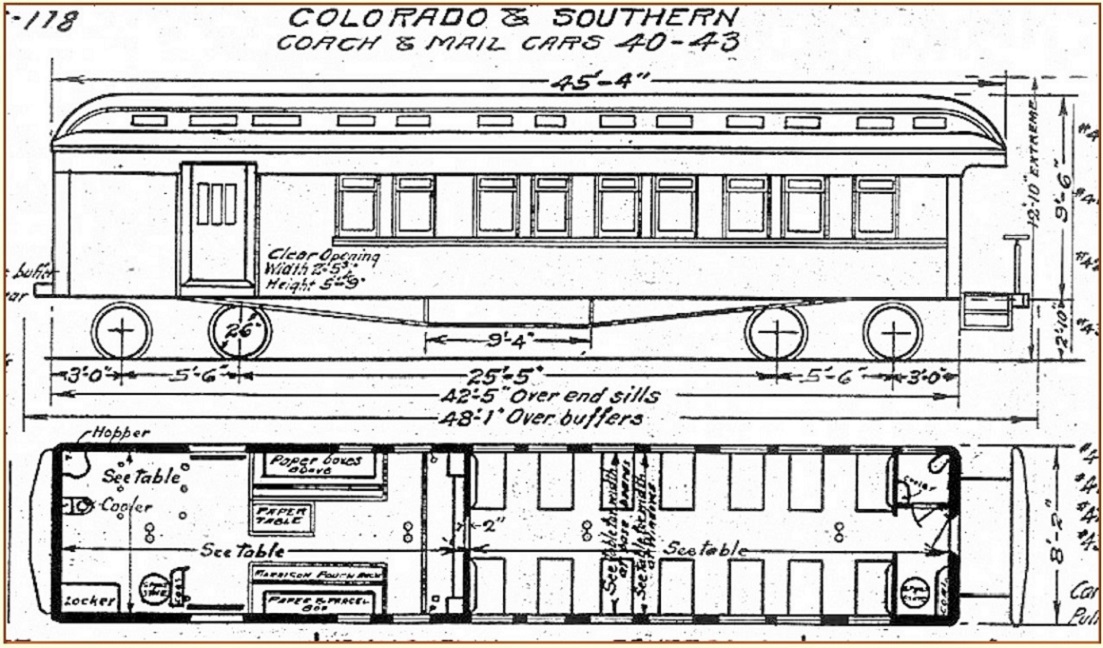
The three cars were out shopped to the C&S on July 14, 1906, with an average cost per car of about $2,300 for the conversion. They left Pullman numbered C&S 116, 117, and 118. For more info on the rebuilding see Hendrick Hayes discussion: https://www.midcontinent.org/rollingstock/CandS/dsp-passenger/coach-rpos.htm.
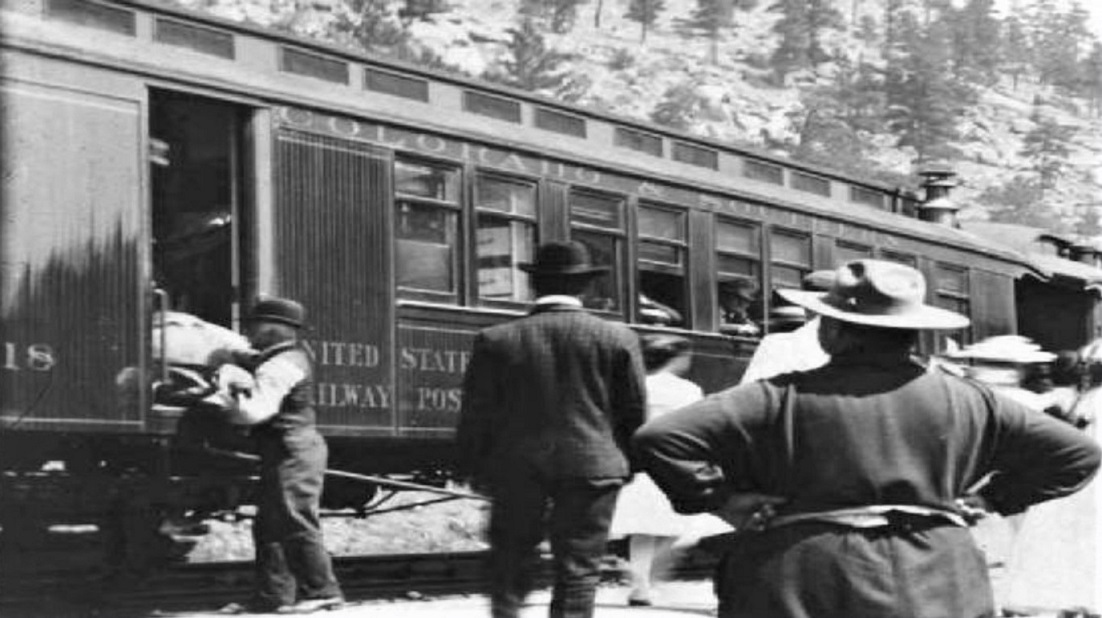
There are a couple of photos of one of the RPO/coaches as built, C&S 118:
Buffalo:
Shawnee:
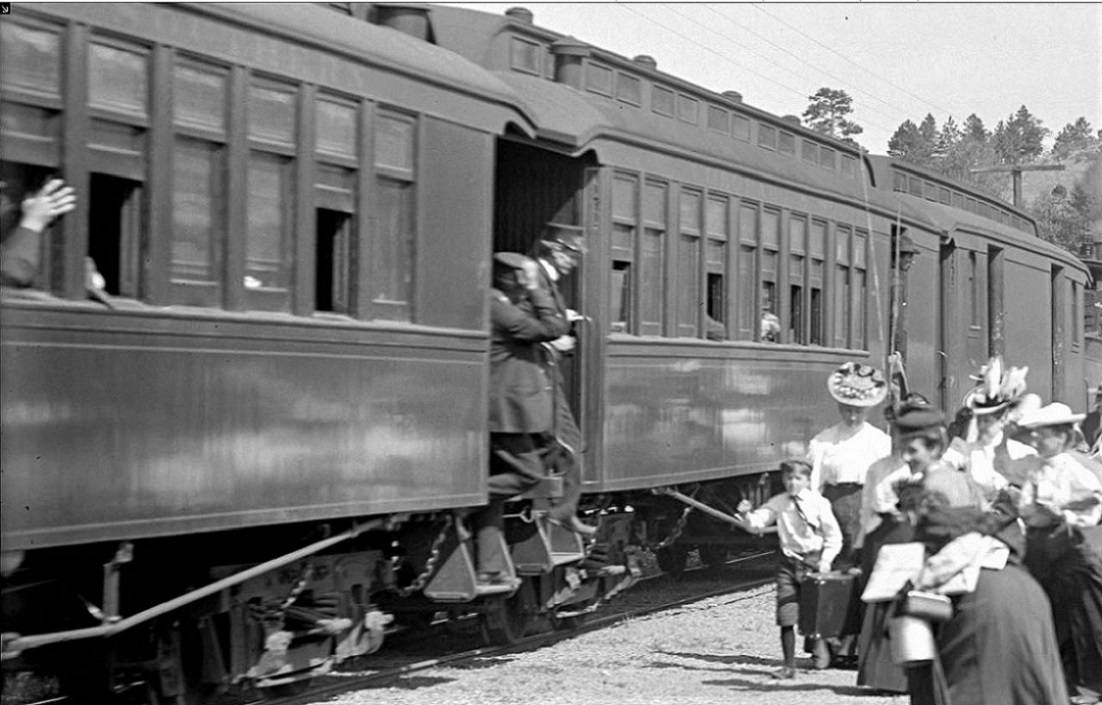
McClure Photo, DPL
Both photos may be dated to mid to late Summer of 1906. In later 1906 the C&S undertook a complete renumbering of the passenger car fleet, with all narrow gauge cars renumbered to less than 200. The RPO coaches were repainted and renumbered 41, 42 and 43 by the end of the year. Note the absence of safety bars on the RPO compartment windows, and no rain gutters over the RPO side door. These requirements by USPO didn't come along until the new 1912 standards. Although the three cars were eventually equipped with the new Commonwealth style 5'-6" passenger trucks by the early-mid 'teens, the McClure photo shows 118 / 43 as riding on trucks with outside brake beams, possibly the original Pullman 6'-0" wheelbase trucks.
Two authors, Hendrick Hayes and Bob Stears state that when the USPO issued new standards for narrow gauge RPOs in 1912, the C&S hurriedly rebuilt RPOs 10-13 to conform. The C&S chose not to rebuild the RPO/coaches, thus they contend that the RPO/Coaches thereafter lost their railway post office status.
But the plot thickens. Chappell, et al., in Colorado Rail Annual No. 12, state that RPO service west of Como was abolished in 1917. From that year until the institution of the familiar tri-weekly passenger schedule in May, 1931, the RPO ran only Denver to Como and was so stamped by the onboard postal clerk.
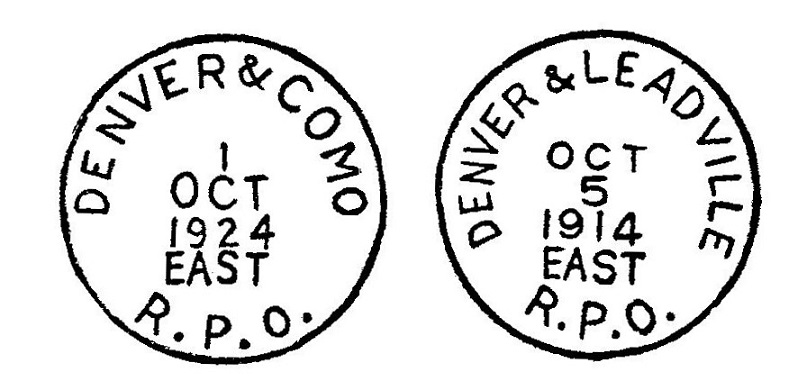
One would expect to see the use of only the regular RPOs on the Denver to Leadville run, but multiple photos from the late 'teens and 'twenties show the RPO/Coaches in use as functional RPOs:
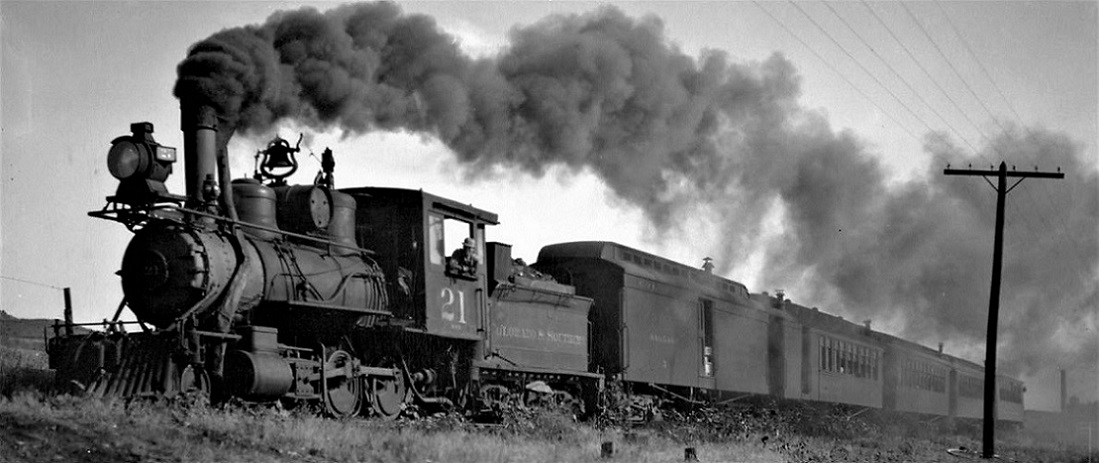
1918, Otto Perry photo, DPL
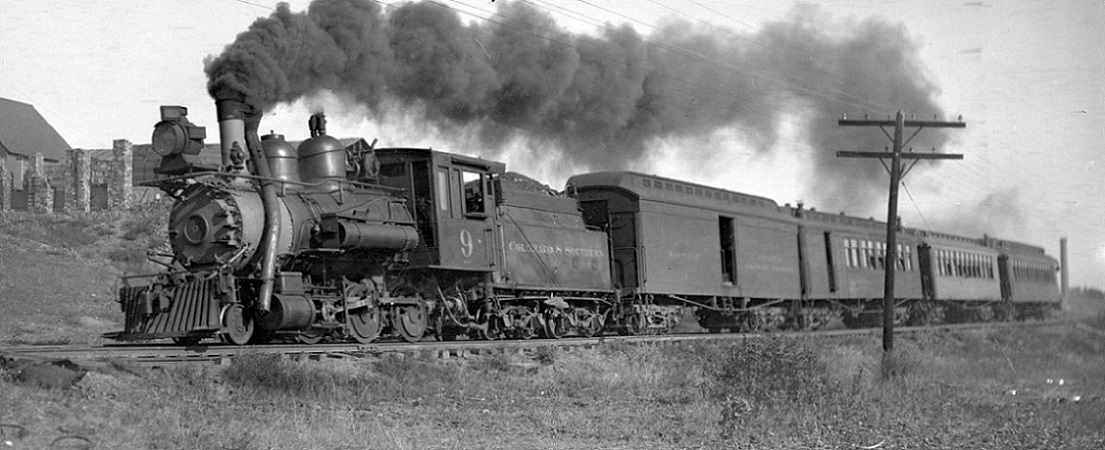
1922, Otto Perry photo, DPL
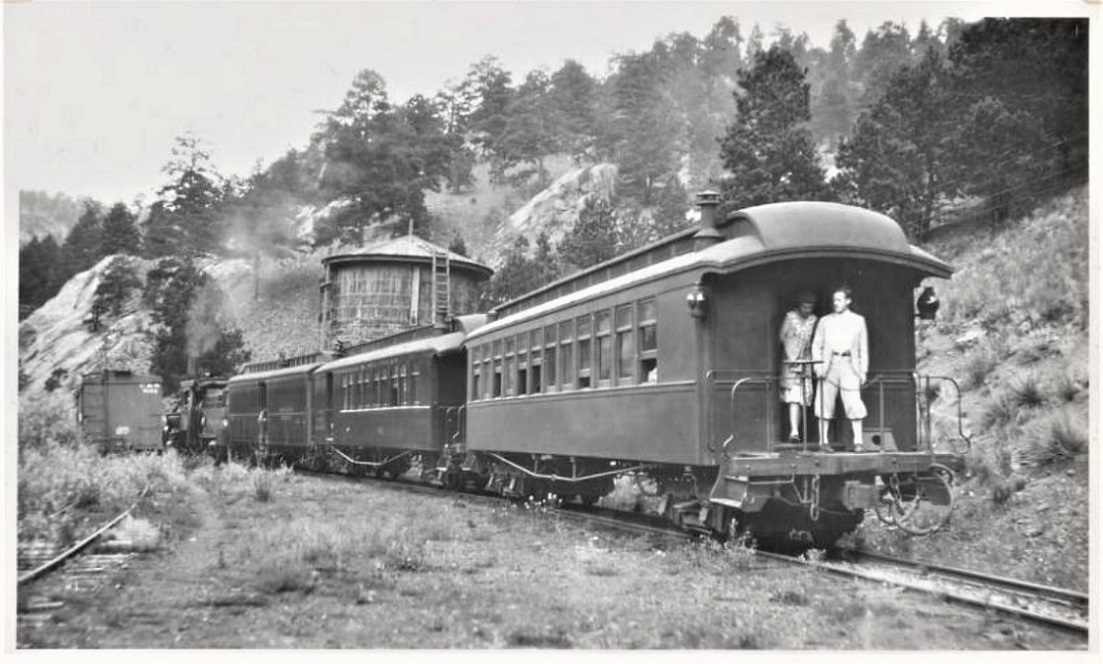
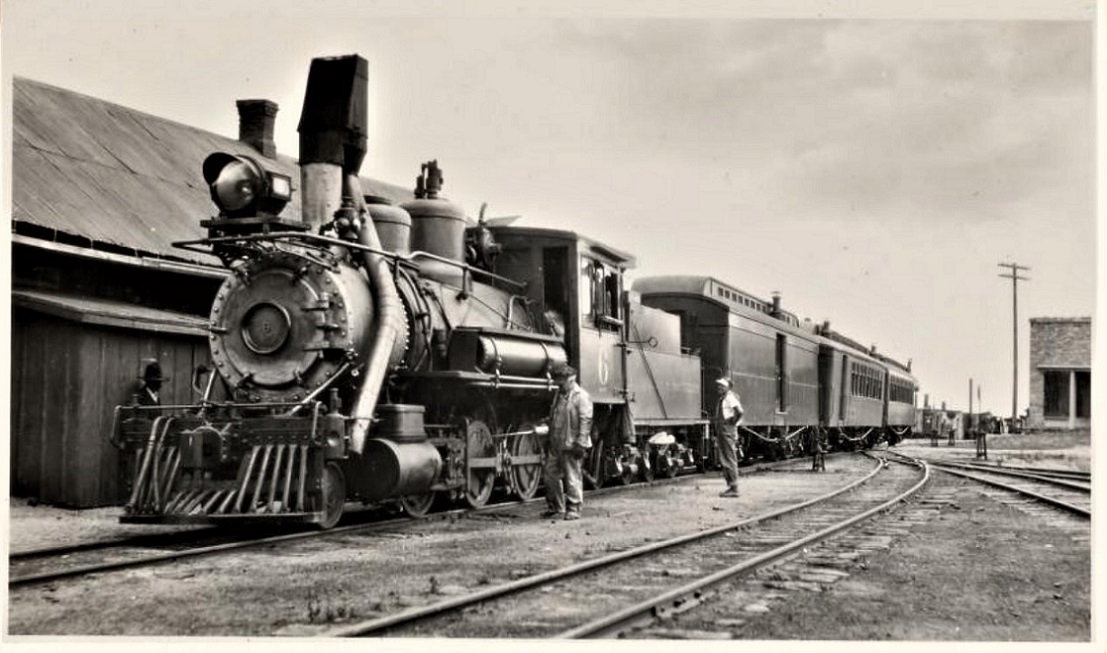
Both August 1929, Richard B. Jackson photos.
The RPO/Coach is usually the second car in the consists, following an express car. The express car ran through to Leadville, while the RPO/coach, with postal clerk aboard, was cut out at Como and returned to Denver on the eastbound afternoon passenger train.
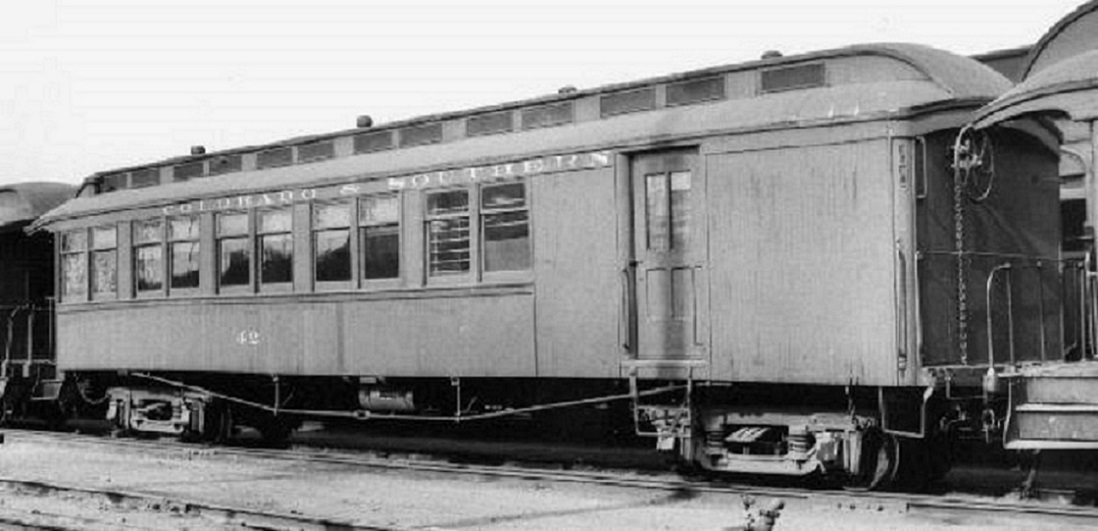
By the 1930s the RPO coaches saw little use, as sister car 42 is depicted in the Denver Coach Yard:
The Sn3 Model of C&S 43:
I'v long wanted a model of a C&S RPO/coach for my 1909 passenger consist. Then, back in April, Roy Stevens released an HOn3 resin print of the car. I contacted Roy, asked if he could scale it up to Sn3. He said sure -- a few days later his eBay store listed the Sn3 version, less trucks: https://www.ebay.com/itm/304892387369?hash=item46fd00a029:g:Mh4AAOSw3BtkMgA-. Out of curiosity, I bought one.
When the printed car arrived, I was pleasantly surprised.
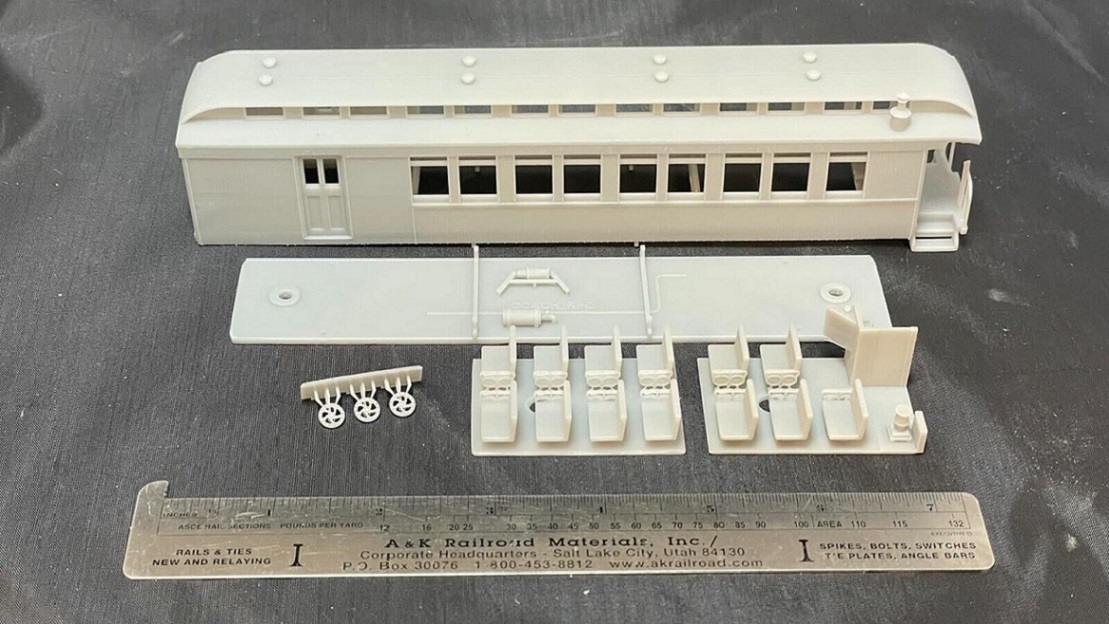
The paired Pullman windows, RPO side doors and coach end door are beautifully rendered. The best part was the clerestory roof, with the different end overhangs, the paired clerestory windows and all the roof details, the stove smoke jack, the lamp vents and the toilet vent. Printed interior seats are included. All surfaces are smooth, without the usual fuzzy artifacts of Shapeways prints.
Any downsides to the print? Yes, a few.
1. Dimensionally, compared to the folio drawings, the print is about 4 scale inches too short in the height department, and a tad short in length, 15-16 scale inches over the roof and body. But hey . . . I can live with that!
2. The roof, sides and ends are all printed square in relationship to each other, but due to some peculiarity in the printing process, the lower 3/16" of the ends curve gently toward the center of the car. This also effects the scribed sheathing a bit on each end of the sides. I only noticed this while working with my loops--don't know if it will be noticeable when painted.
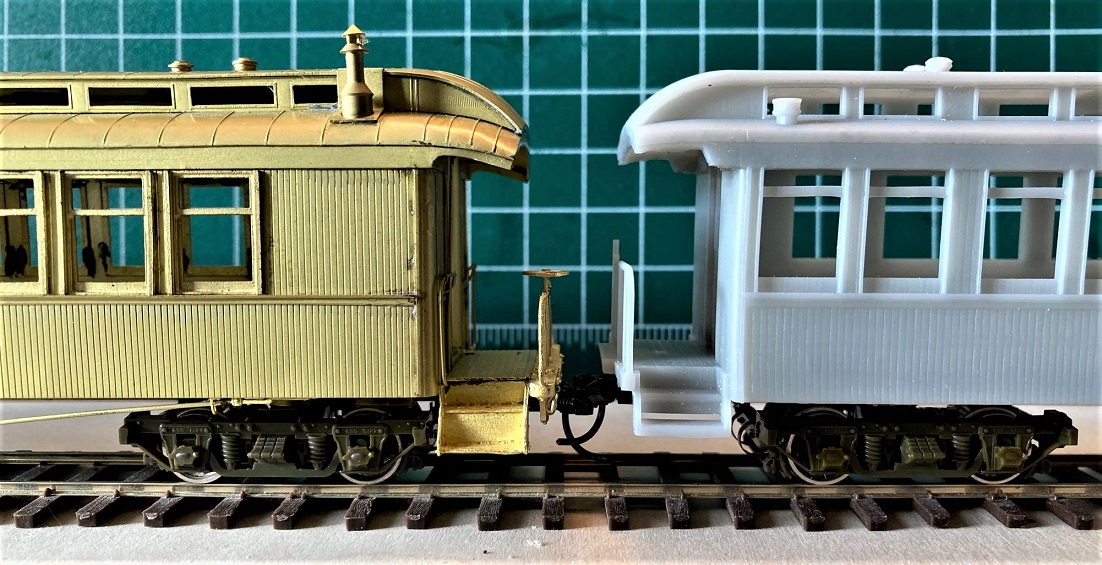
3. The coach end platforms and railing are overscale. I suspect that in the design for the HO version of the car these were beefed up a bit for strength. When scaled up to 1/64th scale, they look toy like.
But I finally have a well printed body of a car that I've always wanted, with all the hard work (clerestory and windows) done. Since I turned 72 last month, I figured that if I want an Sn3 model of a C&S RPO/coach in this lifetime, this is probably my best bet. So I sat about modifying and detailing the printed car.
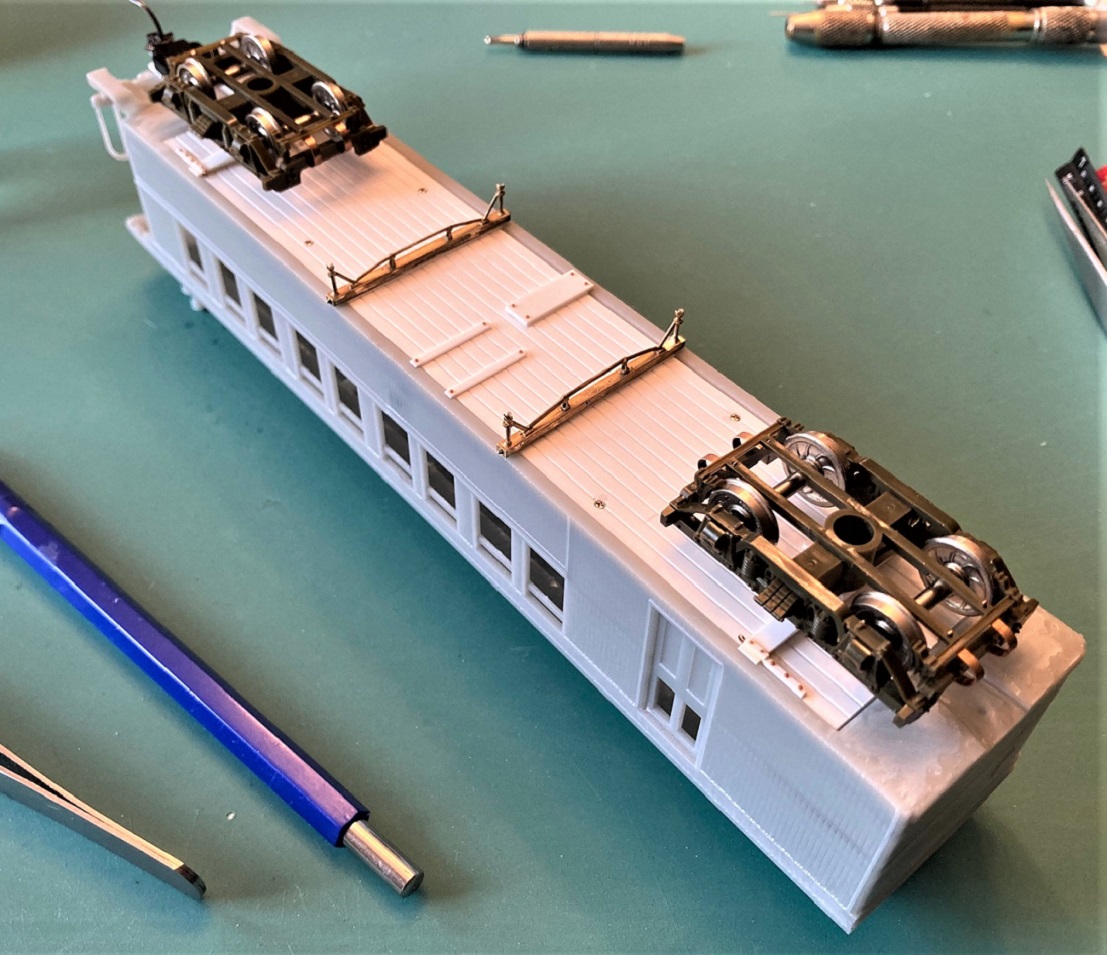
The whole project was contingent on building a new floor that could be firmly attached to the body, yet still be removable for later interior painting, window glazing and installation of the printed seats. Fortunately, there are two horizontal braces (to keep the side walls parallel) printed as part of the recessed lip for the floor. They are wide enough to drill and tap for 1.2 mm screws. I built up a new floor from styrene sheet, and used my Overland brass coaches as guides to fabricate similar bolsters for correct car height, and coupler draft gear mounting pads of a thickness that would place the Kadee couplers at the right height.
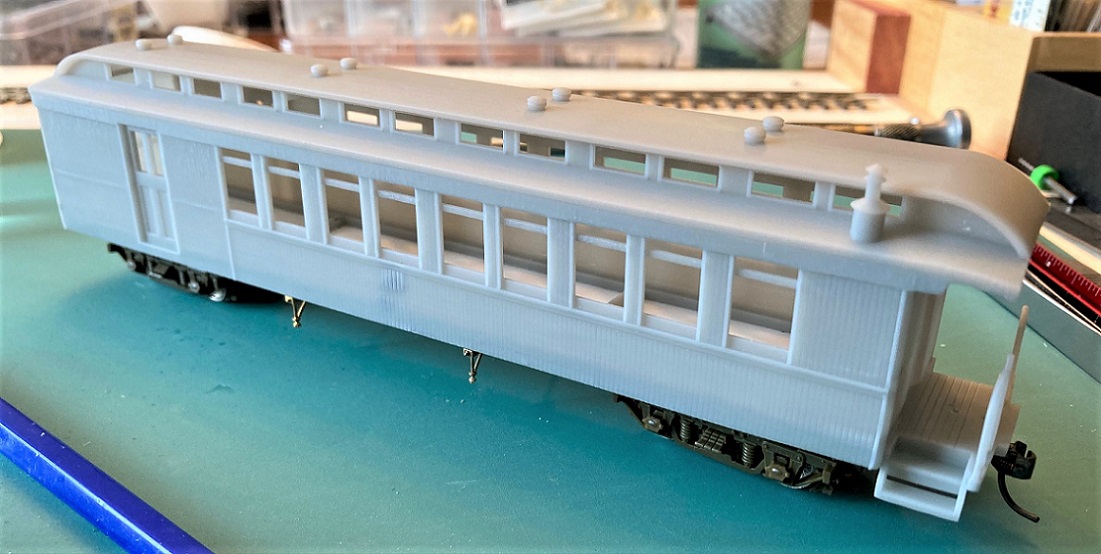
But when coupled up to Overland C&S coach 74, the overly thick steps and railing still bugged me:
About then, my Leadville Designs Pullman coach kits arrived. Bill Meredith's kits provide wonderful etched nickel-silver Pullman steps, printed end beams and brake fixtures and brass etchings for all the underframe brake rigging. A quick email to Bill confirmed I could buy extra sets of prints and etchings, enough parts for one passenger car in each set. I purchased three sets. So, I summoned my courage, cut off the printed end platform, and began rebuilding the printed car. Armed with Bob Stears' plans for the RPO/Coaches from a recent issue of the Gazette (Nov/Dec 2018), I began adding parts, grab irons and Bill's great detailing parts. Rather than describe what I've done, I think photos will suffice:
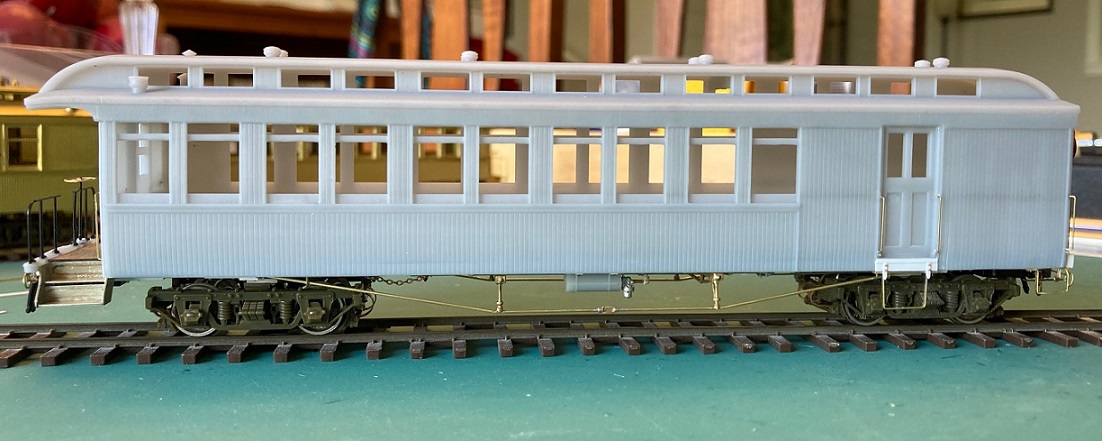
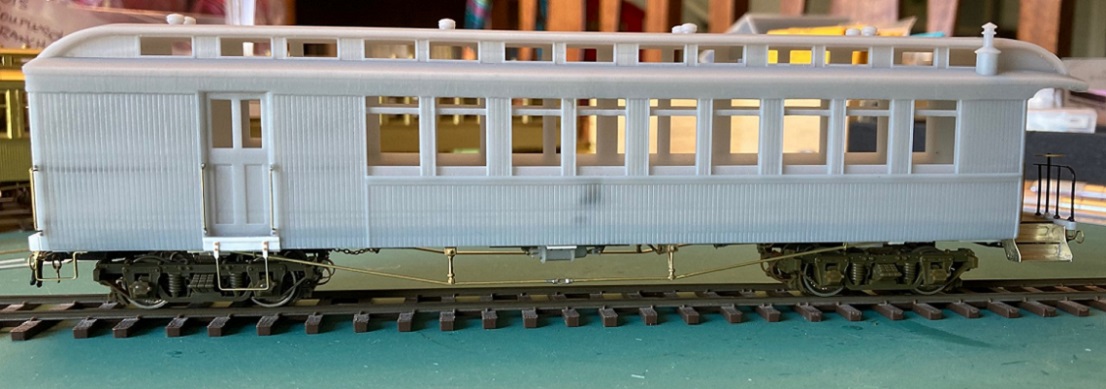
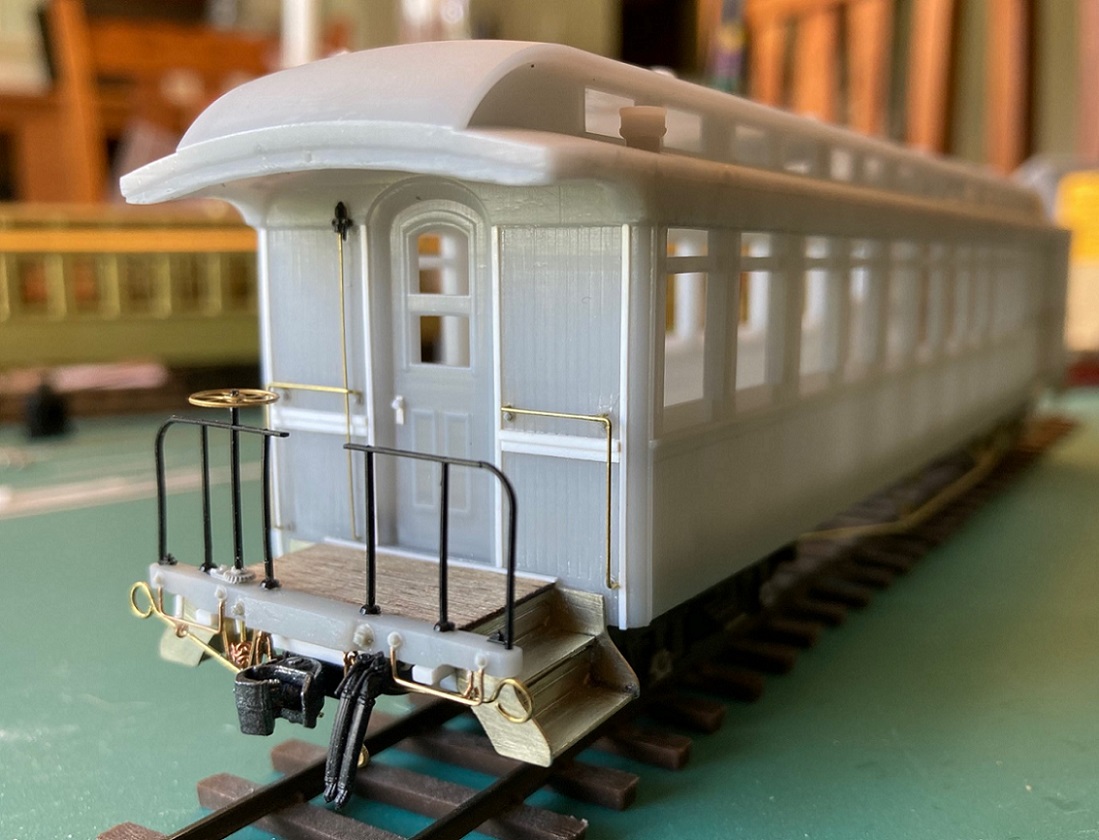
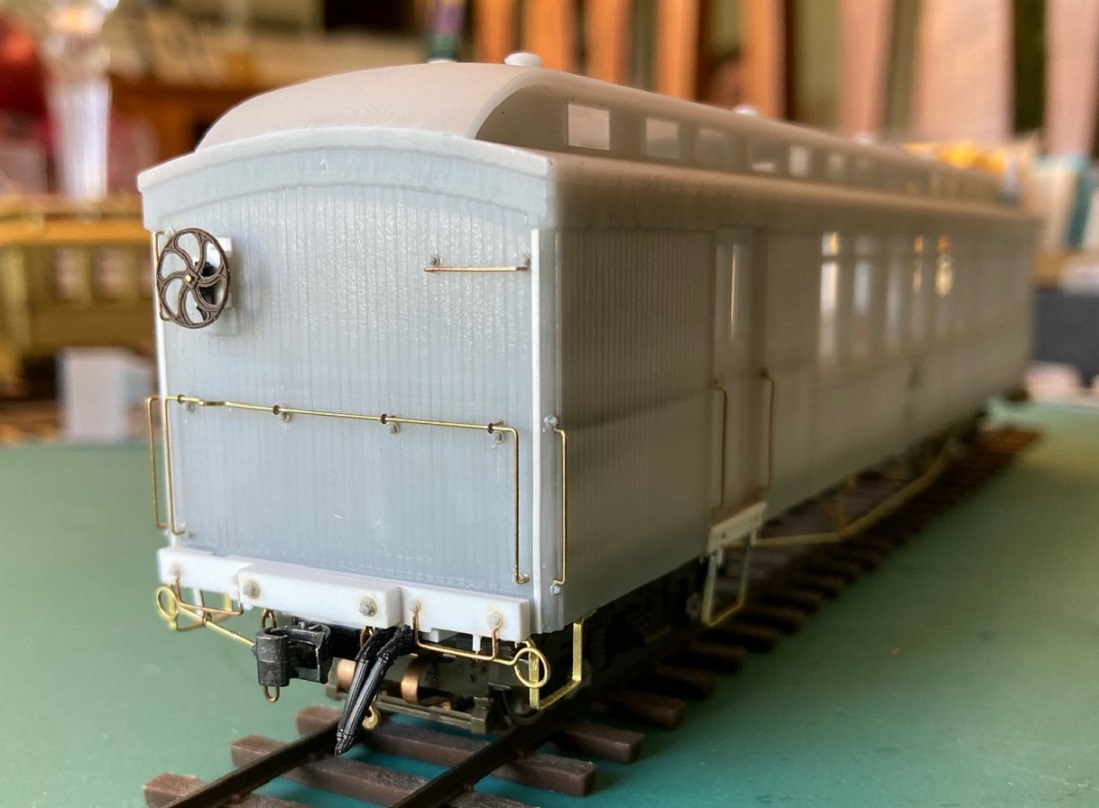
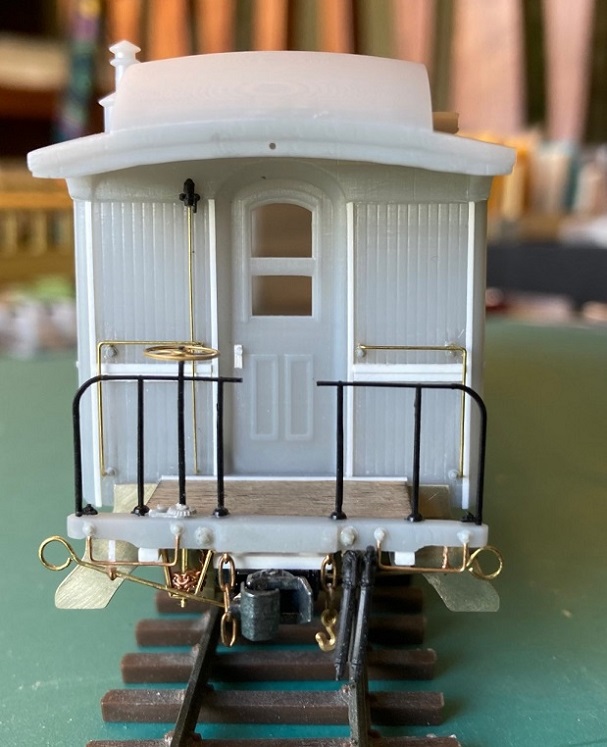
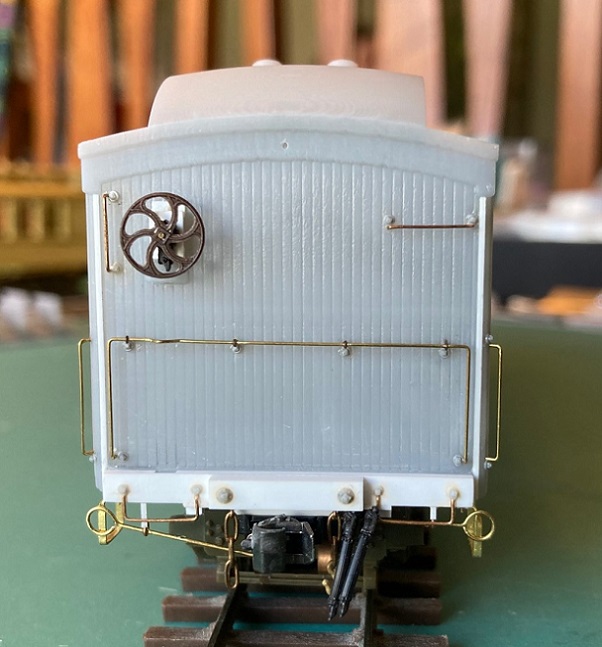
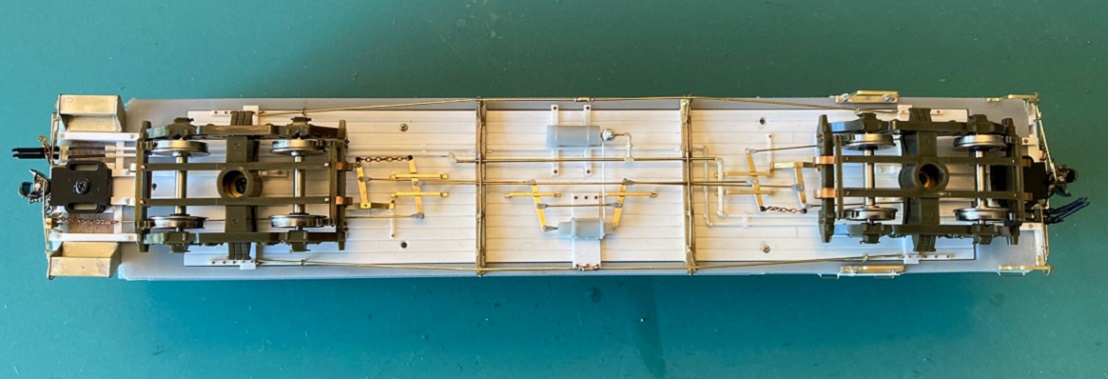
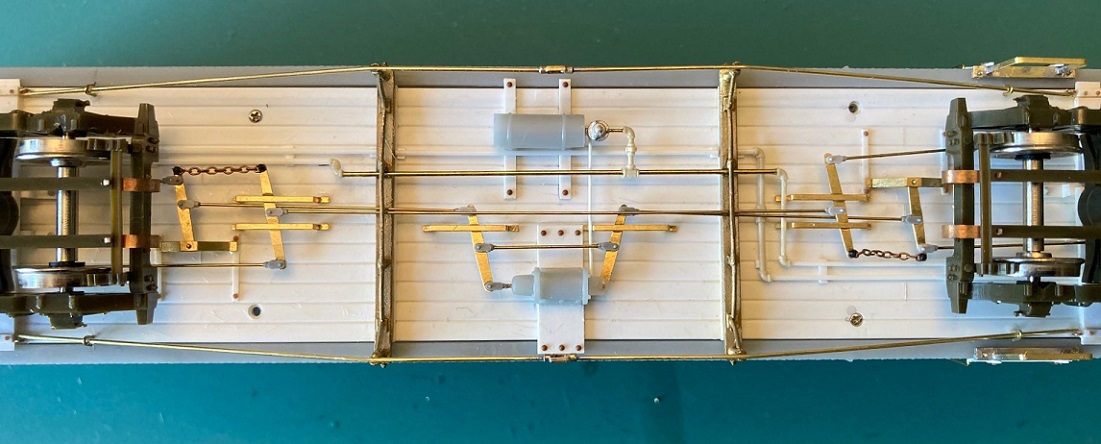
The underframe brake hardware is from Bill's printed and etched parts, with PBL clevises, 0.015 wire for brake rods and trainline/signal line of styrene rod with Grandt plumbing fixtures.
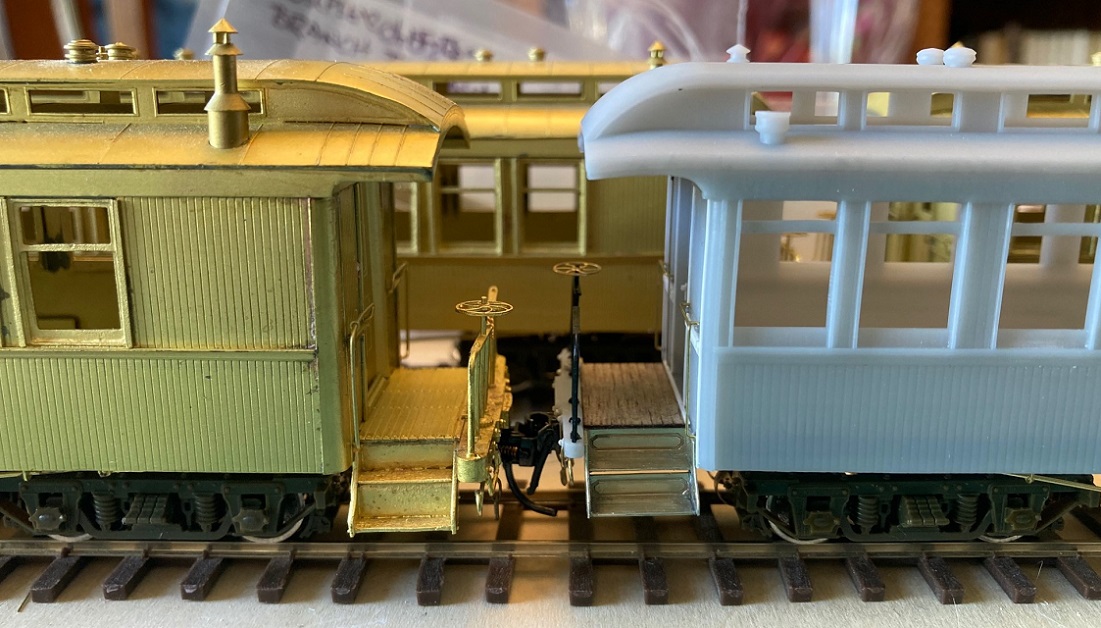
I'm pleased with how the project is turning out, the car pretty much finished and ready to paint. Here is how C&S 43 looks coupled to C&S 70 in the Denver unpainted coach yard:
I've learned a few things about working with resin prints. MEK will bond styrene to the resin but it will not weld styrene to resin, as in styrene to styrene attachments. Any joint to be handled or requiring strength needs to be reinforced with thin ACC. And the resin doesn't like to be drilled. The resin tends to "grab" the drill bit and break off the tip in the work. With lots of patience and profanity, I made it through all the grab iron holes to be drilled, but have had to replace my stash of #80 drill bits.
That's all for now, next up is the intimidating job of painting, inside and out. The folio sheet says the RPO interior was painted white, while the coach interior was finished mahogany. I'll post more photos of progress as it occurs.
I'm pretty much a freight car kind'a guy, but this has been a very enjoyable project so far! If anyone has built up the HOn3 version of the RPO/Coach, please post your photos here . . .
URL: http://c-sng-discussion-forum.254.s1.nabble.com/C-S-RPO-Coach-43-in-C-Sn3-An-Adventure-in-Resin-Printed-Rolling-Stock-tp18723.html
History:
In the spring of 1906, C&S management decided to rebuild three second-class coaches and create a new class of narrow gauge passenger car, the RPO / Coach. The coaches (146, 147 and 148) had originally been Pullman sleepers (Bonanza, Rambler (U&N) and Leadville. Pullman had rebuilt the three cars as coaches in the 1890s and sold them to the UPD&G. The C&S contracted the rebuilding to Pullman, the three cars were delivered to the Pullman Car Shops in Denver in May 1906.
Pullman removed several rows of seats and windows and constructed a new RPO compartment on one end of the car. The platform and clerestory roof overhang were removed from the RPO end, beginning a new trend for C&S baggage, RPO and baggage/coach combines:
The three cars were out shopped to the C&S on July 14, 1906, with an average cost per car of about $2,300 for the conversion. They left Pullman numbered C&S 116, 117, and 118. For more info on the rebuilding see Hendrick Hayes discussion: https://www.midcontinent.org/rollingstock/CandS/dsp-passenger/coach-rpos.htm.
There are a couple of photos of one of the RPO/coaches as built, C&S 118:
Buffalo:
Shawnee:
McClure Photo, DPL
Both photos may be dated to mid to late Summer of 1906. In later 1906 the C&S undertook a complete renumbering of the passenger car fleet, with all narrow gauge cars renumbered to less than 200. The RPO coaches were repainted and renumbered 41, 42 and 43 by the end of the year. Note the absence of safety bars on the RPO compartment windows, and no rain gutters over the RPO side door. These requirements by USPO didn't come along until the new 1912 standards. Although the three cars were eventually equipped with the new Commonwealth style 5'-6" passenger trucks by the early-mid 'teens, the McClure photo shows 118 / 43 as riding on trucks with outside brake beams, possibly the original Pullman 6'-0" wheelbase trucks.
Two authors, Hendrick Hayes and Bob Stears state that when the USPO issued new standards for narrow gauge RPOs in 1912, the C&S hurriedly rebuilt RPOs 10-13 to conform. The C&S chose not to rebuild the RPO/coaches, thus they contend that the RPO/Coaches thereafter lost their railway post office status.
But the plot thickens. Chappell, et al., in Colorado Rail Annual No. 12, state that RPO service west of Como was abolished in 1917. From that year until the institution of the familiar tri-weekly passenger schedule in May, 1931, the RPO ran only Denver to Como and was so stamped by the onboard postal clerk.
One would expect to see the use of only the regular RPOs on the Denver to Leadville run, but multiple photos from the late 'teens and 'twenties show the RPO/Coaches in use as functional RPOs:
1918, Otto Perry photo, DPL
1922, Otto Perry photo, DPL
Both August 1929, Richard B. Jackson photos.
The RPO/Coach is usually the second car in the consists, following an express car. The express car ran through to Leadville, while the RPO/coach, with postal clerk aboard, was cut out at Como and returned to Denver on the eastbound afternoon passenger train.
By the 1930s the RPO coaches saw little use, as sister car 42 is depicted in the Denver Coach Yard:
The Sn3 Model of C&S 43:
I'v long wanted a model of a C&S RPO/coach for my 1909 passenger consist. Then, back in April, Roy Stevens released an HOn3 resin print of the car. I contacted Roy, asked if he could scale it up to Sn3. He said sure -- a few days later his eBay store listed the Sn3 version, less trucks: https://www.ebay.com/itm/304892387369?hash=item46fd00a029:g:Mh4AAOSw3BtkMgA-. Out of curiosity, I bought one.
When the printed car arrived, I was pleasantly surprised.
The paired Pullman windows, RPO side doors and coach end door are beautifully rendered. The best part was the clerestory roof, with the different end overhangs, the paired clerestory windows and all the roof details, the stove smoke jack, the lamp vents and the toilet vent. Printed interior seats are included. All surfaces are smooth, without the usual fuzzy artifacts of Shapeways prints.
Any downsides to the print? Yes, a few.
1. Dimensionally, compared to the folio drawings, the print is about 4 scale inches too short in the height department, and a tad short in length, 15-16 scale inches over the roof and body. But hey . . . I can live with that!
2. The roof, sides and ends are all printed square in relationship to each other, but due to some peculiarity in the printing process, the lower 3/16" of the ends curve gently toward the center of the car. This also effects the scribed sheathing a bit on each end of the sides. I only noticed this while working with my loops--don't know if it will be noticeable when painted.
3. The coach end platforms and railing are overscale. I suspect that in the design for the HO version of the car these were beefed up a bit for strength. When scaled up to 1/64th scale, they look toy like.
But I finally have a well printed body of a car that I've always wanted, with all the hard work (clerestory and windows) done. Since I turned 72 last month, I figured that if I want an Sn3 model of a C&S RPO/coach in this lifetime, this is probably my best bet. So I sat about modifying and detailing the printed car.
The whole project was contingent on building a new floor that could be firmly attached to the body, yet still be removable for later interior painting, window glazing and installation of the printed seats. Fortunately, there are two horizontal braces (to keep the side walls parallel) printed as part of the recessed lip for the floor. They are wide enough to drill and tap for 1.2 mm screws. I built up a new floor from styrene sheet, and used my Overland brass coaches as guides to fabricate similar bolsters for correct car height, and coupler draft gear mounting pads of a thickness that would place the Kadee couplers at the right height.
But when coupled up to Overland C&S coach 74, the overly thick steps and railing still bugged me:
About then, my Leadville Designs Pullman coach kits arrived. Bill Meredith's kits provide wonderful etched nickel-silver Pullman steps, printed end beams and brake fixtures and brass etchings for all the underframe brake rigging. A quick email to Bill confirmed I could buy extra sets of prints and etchings, enough parts for one passenger car in each set. I purchased three sets. So, I summoned my courage, cut off the printed end platform, and began rebuilding the printed car. Armed with Bob Stears' plans for the RPO/Coaches from a recent issue of the Gazette (Nov/Dec 2018), I began adding parts, grab irons and Bill's great detailing parts. Rather than describe what I've done, I think photos will suffice:
The underframe brake hardware is from Bill's printed and etched parts, with PBL clevises, 0.015 wire for brake rods and trainline/signal line of styrene rod with Grandt plumbing fixtures.
I'm pleased with how the project is turning out, the car pretty much finished and ready to paint. Here is how C&S 43 looks coupled to C&S 70 in the Denver unpainted coach yard:
I've learned a few things about working with resin prints. MEK will bond styrene to the resin but it will not weld styrene to resin, as in styrene to styrene attachments. Any joint to be handled or requiring strength needs to be reinforced with thin ACC. And the resin doesn't like to be drilled. The resin tends to "grab" the drill bit and break off the tip in the work. With lots of patience and profanity, I made it through all the grab iron holes to be drilled, but have had to replace my stash of #80 drill bits.
That's all for now, next up is the intimidating job of painting, inside and out. The folio sheet says the RPO interior was painted white, while the coach interior was finished mahogany. I'll post more photos of progress as it occurs.
I'm pretty much a freight car kind'a guy, but this has been a very enjoyable project so far! If anyone has built up the HOn3 version of the RPO/Coach, please post your photos here . . .
Jim Courtney
Poulsbo, WA
Poulsbo, WA
| Free forum by Nabble | Edit this page |