Re: arc headlights and dynamos
Posted by Jim Courtney on
URL: http://c-sng-discussion-forum.254.s1.nabble.com/arc-headlights-and-dynamos-tp15165p15202.html
John, thanks for starting this thread. You have a knack for asking simple but clarifying questions.
Being an OCD kinda guy, I spent several hours last night looking through my collection of C&S narrow gauge locomotive photos. I can find no photo, dated to before 1915, with a generator visible on the boiler or behind the headlight bracket. Nor can I find any photo with what looks like an electrical cable or conduit attaching to the headlight housing, regardless of type.
The earliest dated photo I can find, of a generator on a C&S narrow gauge locomotive is this Otto Perry photo of number 7. It is not surprisingly dated to 1915, the year electric head lights were mandated:
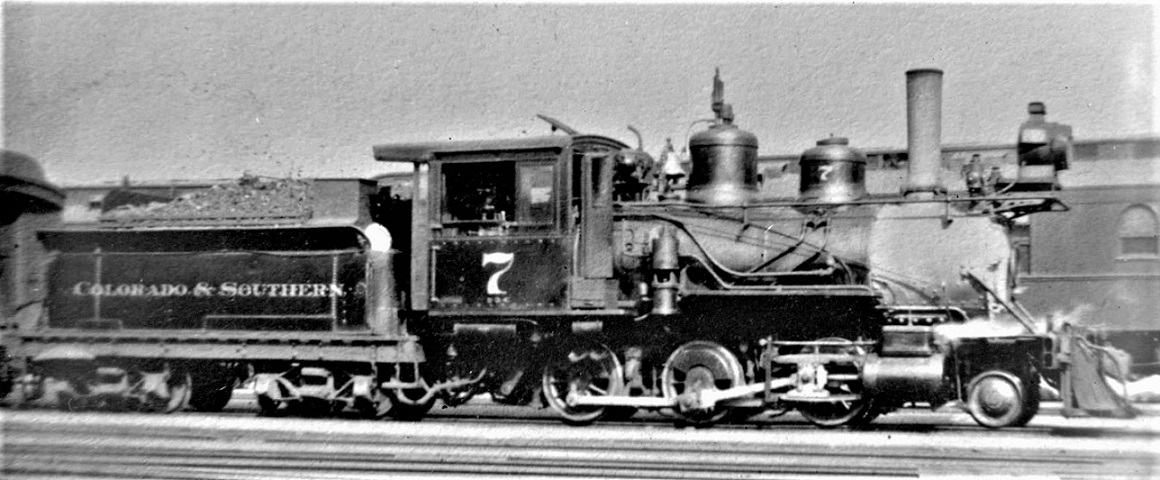
So, I am convinced that the C&S narrow gauge locomotives used kerosene lamps from its inception until electrification was added in 1915.
I wondered when the C&S standard gauge got around to electrifying headlights, figuring that new stuff would occur on the standard gauge before making it the the narrow gauge. So I spent some time studying Hol Wagner's book and DPL photos during the 1900-1915 era.
The earliest C&S locomotives to carry electric lights were ten-wheelers of the C-3H1 and C-3H classes, built by Schenectady and Baldwin in 1906 and 1907 respectively:
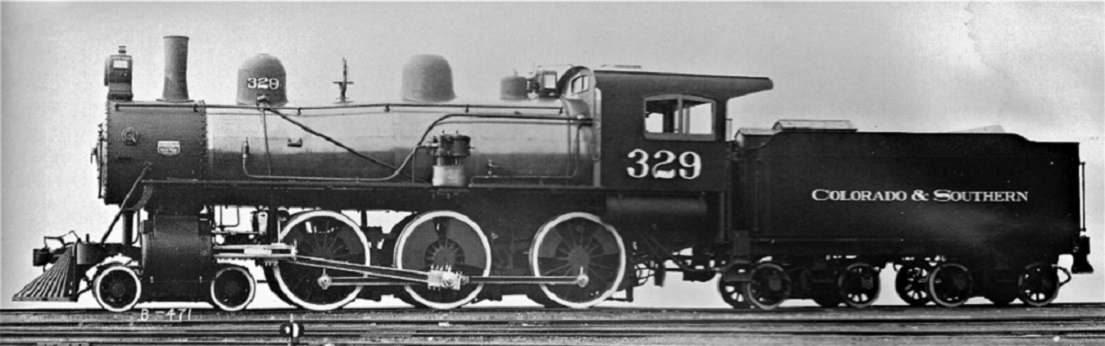
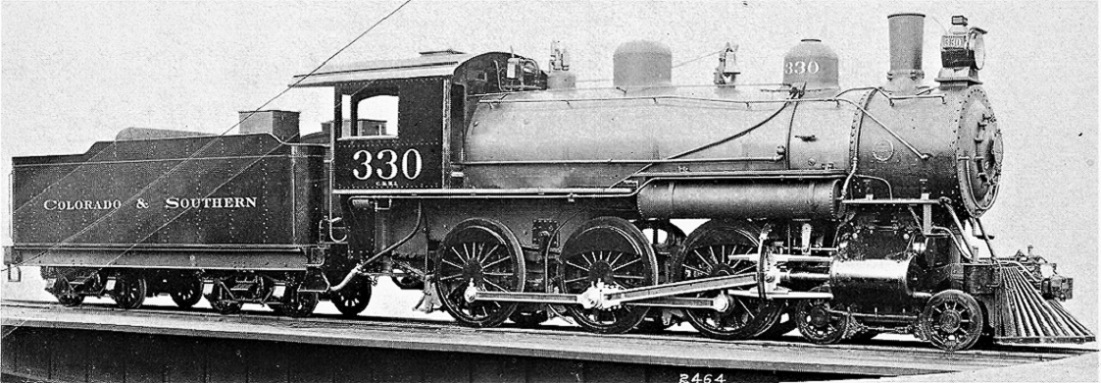
Both classes had round headlight housings similar to those on narrow gauge engines. Since this was prior to the 1913 date of tungsten filament incandescent bulbs, and 330 is equipped with blinds, does this mean these are carbon arch powered lights? If so, carbon arch equipment appears to be able to fit in any headlight housing. Perhaps Skip can compare the generators to the illustrations in his catalog.
These ten-wheelers were the heavy passenger power of the day, used south of Denver to Trinidad and on to Texas, and use of electric lights makes sense. By 1914, even the earlier, lighter ten-wheelers had picked up electric lights:
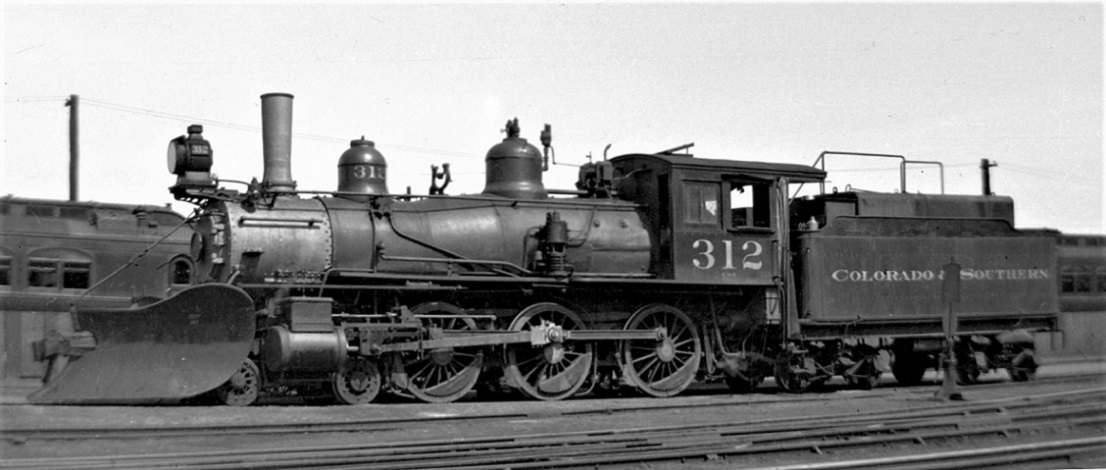
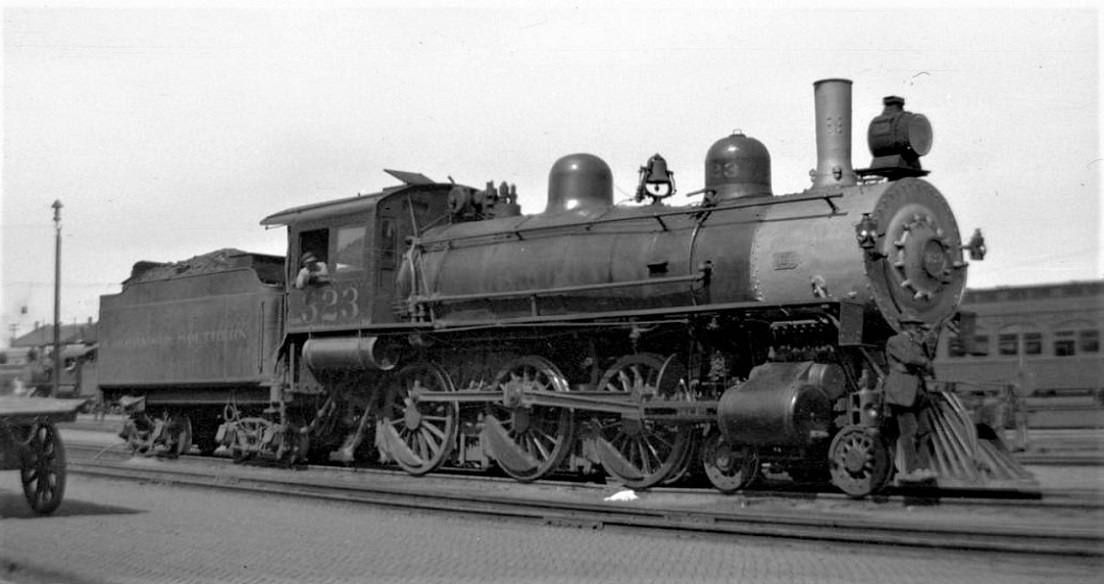
Both Otto Perry photos from DPL
On the other hand, freight locomotives continued to be delivered without evidence of a generator, suggesting that kerosene lamps were still in common use. The class B-4R heavy 2-8-0's were delivered in 1907 and 1908:
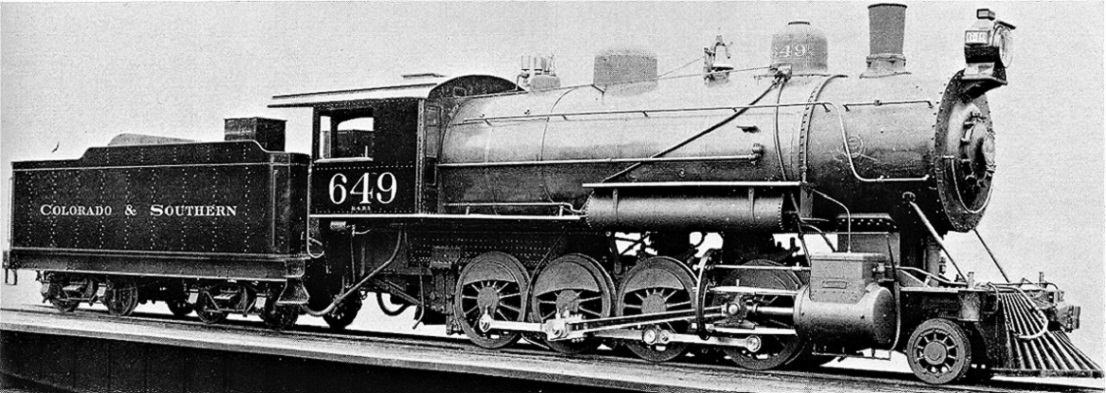
The headlight casing looks identical to those on narrow gauge locomotive and were delivered with headlight blinds, no generator and no visible wiring to the headlight.
Even the first 2-8-2's, the E-4A class locomotives built by Baldwin in January, 1911, were delivered without visible generators, though featured a new style of box headlight, with small cylindrical vent on top. The same type of headlight housing became something of a new standard, many of the C&S narrow gauge locomotives equipped in the 1920's to early 1930's. Number 69 kept its box headlight, sans vent, until the early 1940's.
C&S 802 was photographed in October of 1912 during road tests with a CB&Q dynamometer car. Note the new box headlight, but no generator or wiring to the headlight. Did it use kerosene??
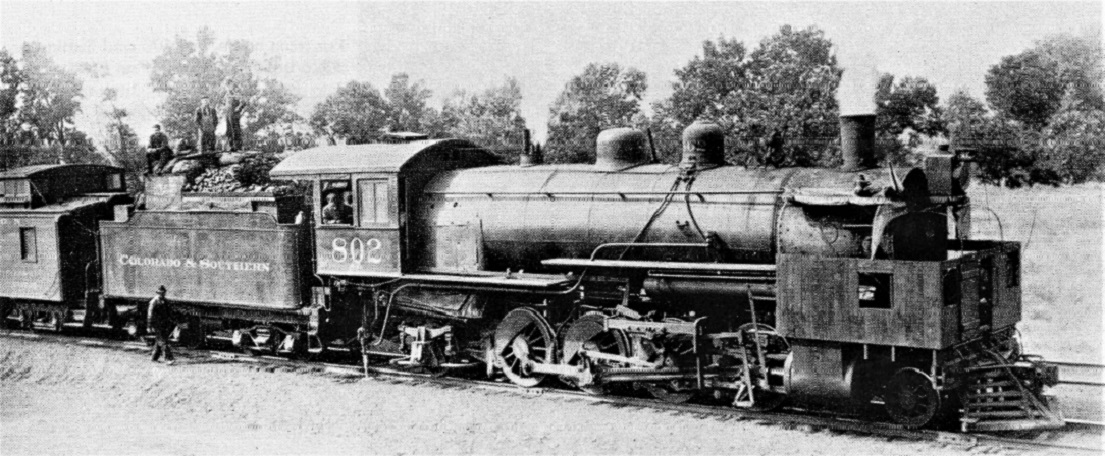
B.G. Corbin Collection in Wagner's The Colorado Road
The first 4-6-2 passenger locomotives, the F-3A class, was built at about the same time 1910-1911, and like the ten-wheelers, were equipped with generators and electric lights, although used the same new box headlight style as the 800's:
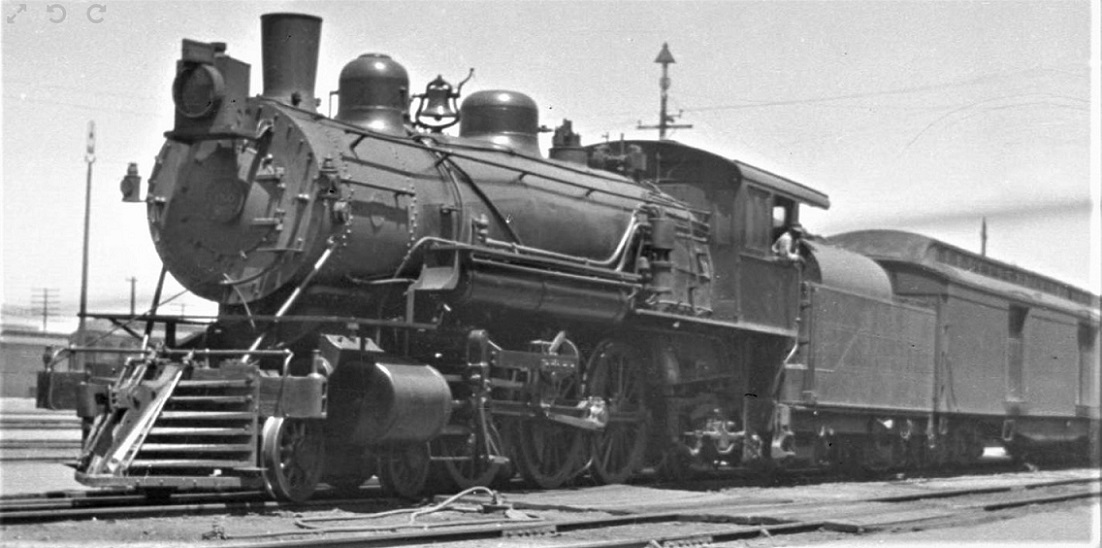
One of Otto Perry's first photographs, dated to 1912 by Wagner, but dated to 1915 by DPL.
So the new style box headlight housing apparently used both kerosene and electric lighting, depending on the locomotive.
The earliest photo of a C&S freight locomotive with generator and presumably electric headlight were the big E-5A class 2-10-2's delivered by Baldwin in May, 1915, the mandated year of compliance for electric lights on all locomotives:
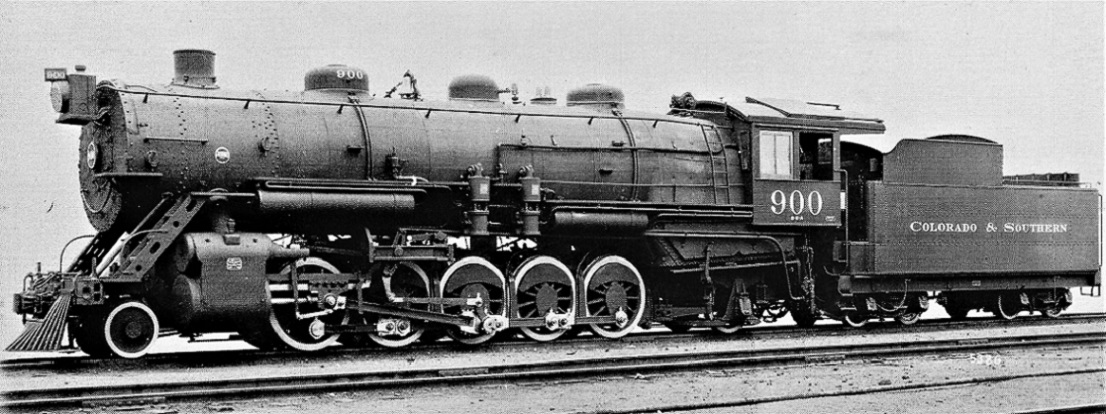
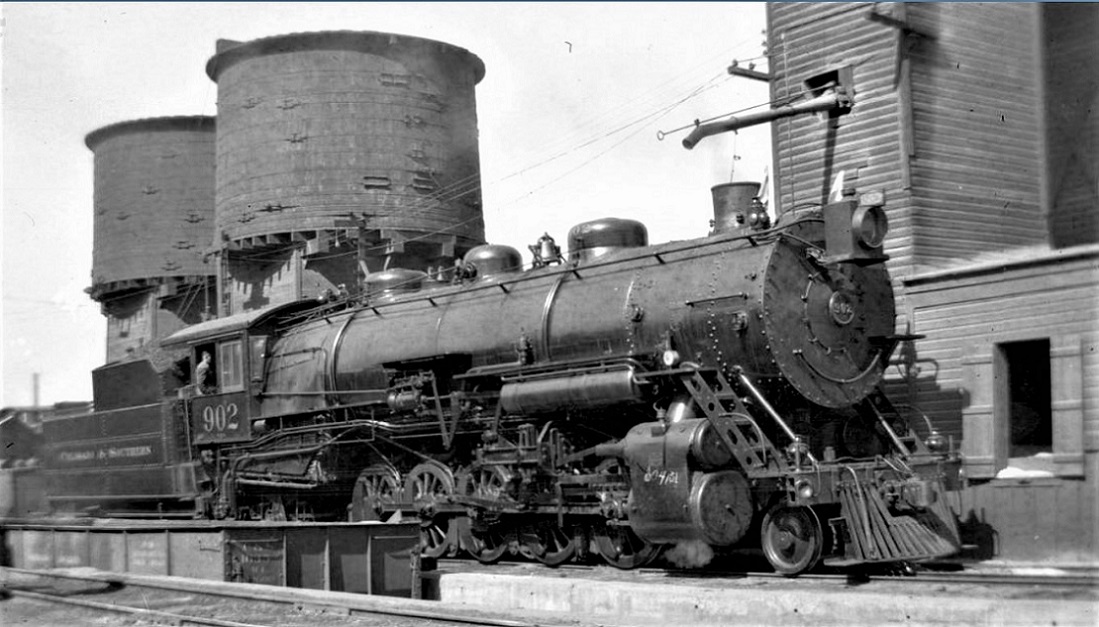
Builders photo by Baldwin, lower photo by Otto Perry, 1915, on DPL.
So, the technology for electric lights was available on the C&S as early as 1906, but it appears the railroad drug its feet in installing electric lights on the narrow gauge locomotives until forced to in 1915.
The new style box headlight seem to make it to the narrow gauge, as a kerosene head lamp by 1912-1914. Two photos from the C&S 9 derailment near Garos demonstrate the late, pre-electrification headlights:
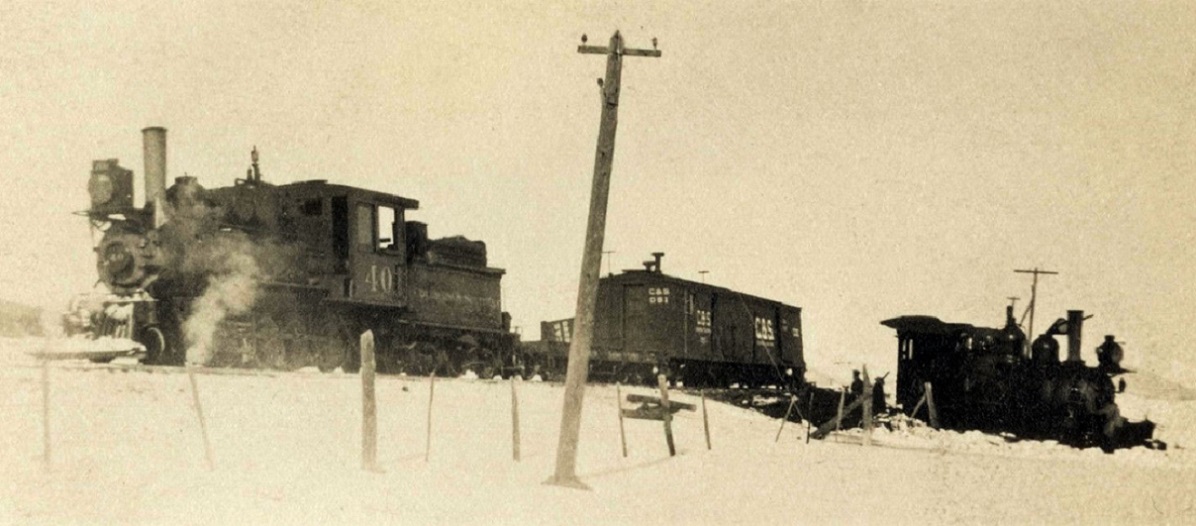
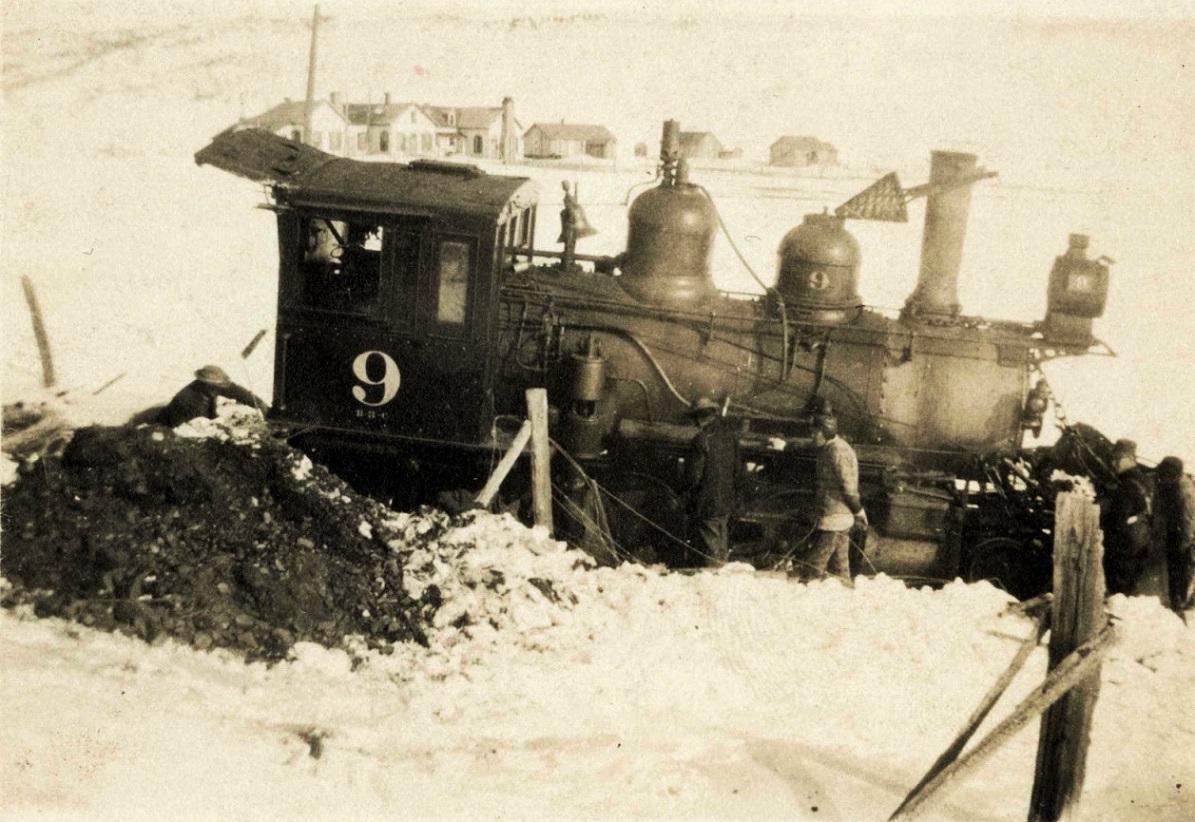
Cooke 2-8-0 number 40, on the work train, has the new style box headlight, while number 9 still has the round style headlight housing with blinds.
Anyhow, I have promised myself to never use the term "arc headlight" again. It seems that we need a new nomenclature as to C&S narrow gauge headlight styles. I'll make some suggestions next time . . .
URL: http://c-sng-discussion-forum.254.s1.nabble.com/arc-headlights-and-dynamos-tp15165p15202.html
John, thanks for starting this thread. You have a knack for asking simple but clarifying questions.
Being an OCD kinda guy, I spent several hours last night looking through my collection of C&S narrow gauge locomotive photos. I can find no photo, dated to before 1915, with a generator visible on the boiler or behind the headlight bracket. Nor can I find any photo with what looks like an electrical cable or conduit attaching to the headlight housing, regardless of type.
The earliest dated photo I can find, of a generator on a C&S narrow gauge locomotive is this Otto Perry photo of number 7. It is not surprisingly dated to 1915, the year electric head lights were mandated:
So, I am convinced that the C&S narrow gauge locomotives used kerosene lamps from its inception until electrification was added in 1915.
I wondered when the C&S standard gauge got around to electrifying headlights, figuring that new stuff would occur on the standard gauge before making it the the narrow gauge. So I spent some time studying Hol Wagner's book and DPL photos during the 1900-1915 era.
The earliest C&S locomotives to carry electric lights were ten-wheelers of the C-3H1 and C-3H classes, built by Schenectady and Baldwin in 1906 and 1907 respectively:
Both classes had round headlight housings similar to those on narrow gauge engines. Since this was prior to the 1913 date of tungsten filament incandescent bulbs, and 330 is equipped with blinds, does this mean these are carbon arch powered lights? If so, carbon arch equipment appears to be able to fit in any headlight housing. Perhaps Skip can compare the generators to the illustrations in his catalog.
These ten-wheelers were the heavy passenger power of the day, used south of Denver to Trinidad and on to Texas, and use of electric lights makes sense. By 1914, even the earlier, lighter ten-wheelers had picked up electric lights:
Both Otto Perry photos from DPL
On the other hand, freight locomotives continued to be delivered without evidence of a generator, suggesting that kerosene lamps were still in common use. The class B-4R heavy 2-8-0's were delivered in 1907 and 1908:
The headlight casing looks identical to those on narrow gauge locomotive and were delivered with headlight blinds, no generator and no visible wiring to the headlight.
Even the first 2-8-2's, the E-4A class locomotives built by Baldwin in January, 1911, were delivered without visible generators, though featured a new style of box headlight, with small cylindrical vent on top. The same type of headlight housing became something of a new standard, many of the C&S narrow gauge locomotives equipped in the 1920's to early 1930's. Number 69 kept its box headlight, sans vent, until the early 1940's.
C&S 802 was photographed in October of 1912 during road tests with a CB&Q dynamometer car. Note the new box headlight, but no generator or wiring to the headlight. Did it use kerosene??
B.G. Corbin Collection in Wagner's The Colorado Road
The first 4-6-2 passenger locomotives, the F-3A class, was built at about the same time 1910-1911, and like the ten-wheelers, were equipped with generators and electric lights, although used the same new box headlight style as the 800's:
One of Otto Perry's first photographs, dated to 1912 by Wagner, but dated to 1915 by DPL.
So the new style box headlight housing apparently used both kerosene and electric lighting, depending on the locomotive.
The earliest photo of a C&S freight locomotive with generator and presumably electric headlight were the big E-5A class 2-10-2's delivered by Baldwin in May, 1915, the mandated year of compliance for electric lights on all locomotives:
Builders photo by Baldwin, lower photo by Otto Perry, 1915, on DPL.
So, the technology for electric lights was available on the C&S as early as 1906, but it appears the railroad drug its feet in installing electric lights on the narrow gauge locomotives until forced to in 1915.
The new style box headlight seem to make it to the narrow gauge, as a kerosene head lamp by 1912-1914. Two photos from the C&S 9 derailment near Garos demonstrate the late, pre-electrification headlights:
Cooke 2-8-0 number 40, on the work train, has the new style box headlight, while number 9 still has the round style headlight housing with blinds.
Anyhow, I have promised myself to never use the term "arc headlight" again. It seems that we need a new nomenclature as to C&S narrow gauge headlight styles. I'll make some suggestions next time . . .
Jim Courtney
Poulsbo, WA
Poulsbo, WA
| Free forum by Nabble | Edit this page |